

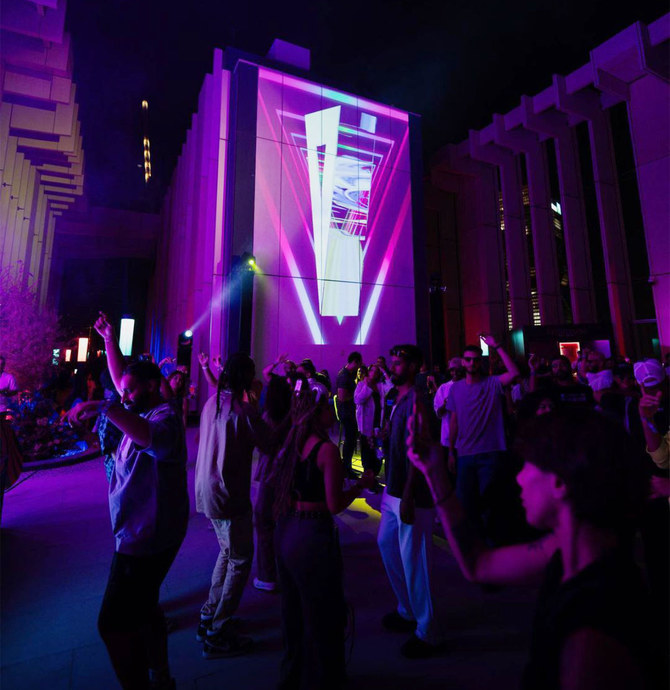
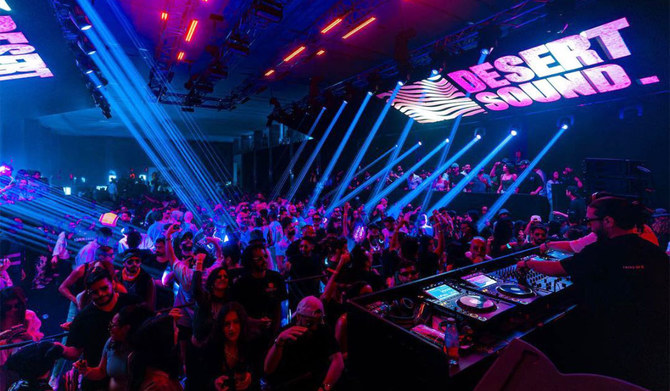
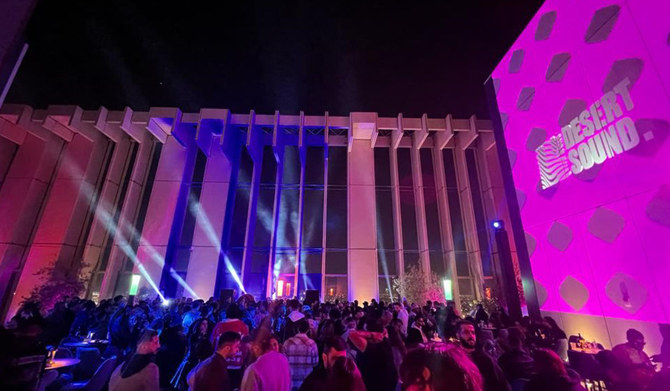

RIYADH: At the weekend in Riyadh’s King Abdullah Financial District, a rooftop event featuring dancing and music with Italian DJ Lehar at the forefront attracted a packed house.
A handful of years ago, a scene like this was only a distant possibility in Saudi Arabia, but today MDLBeast and local creatives have left no stone unturned to make it a reality.
“It’s something beautiful when you have this impact … It was a dream, and now we see it on the rooftops,” Ayman Al-Zurayer told Arab News. He is the founder of the local music events company Desert Sound Entertainment, which brought the festivities to life.
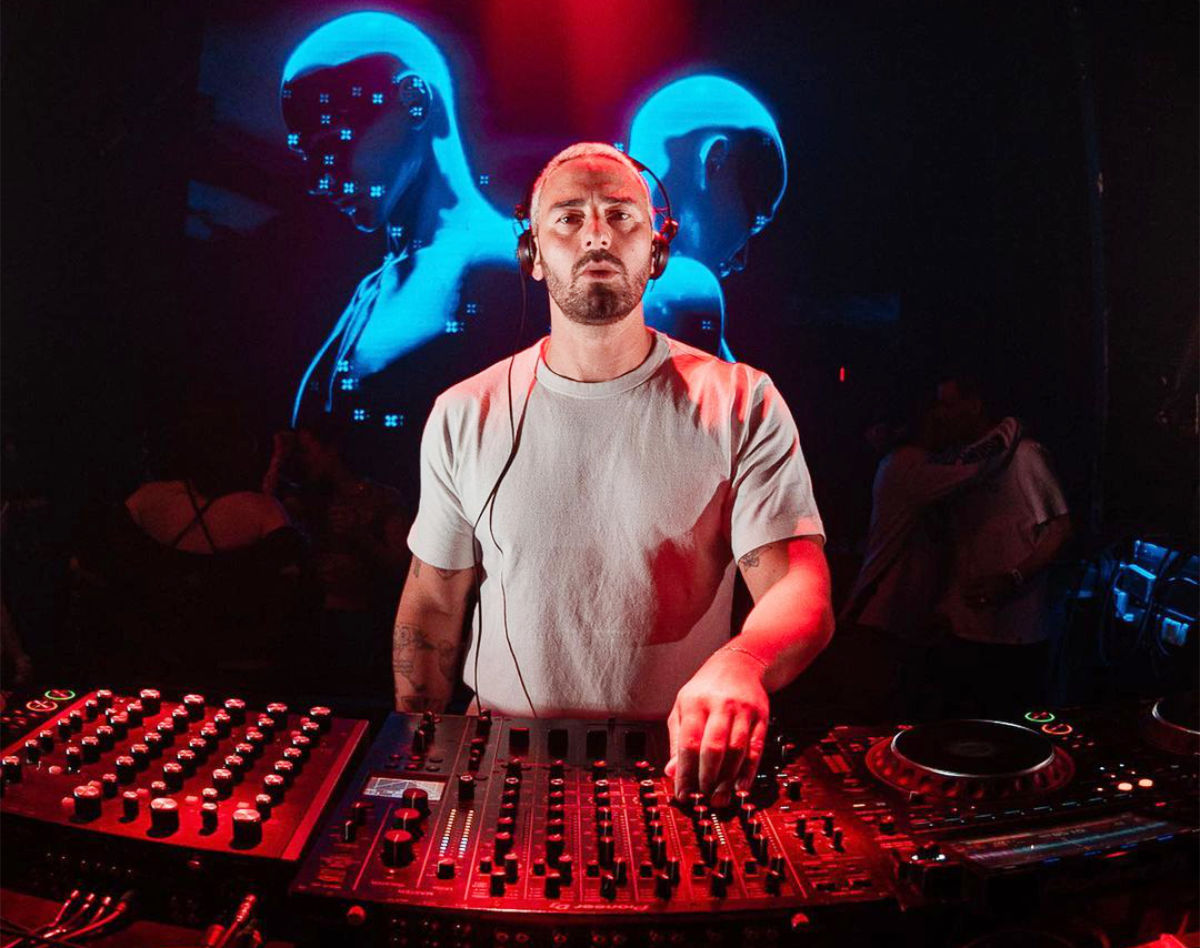
Italian DJ Lehar headlined at Fowg during his third visit to Saudi Arabia. (Instagram/leharmusic)
Lehar, the well-known Italian DJ and producer who grew up in Venice and has performed at events like Tomorrowland, debuted some new tracks as well as ones from his labels. Having performed in Jeddah and Riyadh during his third visit to Saudi Arabia, Lehar said that even Europeans can learn from the booming music scene in the Kingdom.
“In just three years, I have to tell you I see things changing, especially the electronic music scene. It’s become one of the top capitals in the Middle East,” Lehar told Arab News. “The crowd understands everything; they can’t wait to dance. It’s a fantastic crowd.”
For the past few months, MDLBeast, the region’s music and entertainment platform, has made Thursdays a staple for weekly nights out at a unique location overlooking skyscrapers and eye-catching architecture through its first small venue activation Fowg, the Arabic word for “up” or “above.”
HIGHLIGHTS
• Fowg music venue by MDLBeast is a unique location overlooking skyscrapers.
• For event updates check the Instagram @desertsound.co and @mdlbeast.
Rayan Al-Rasheed, senior artist booking and operations manager at MDLBeast, told Arab News: “We’re really trying to show that there’s a nightlife here in Riyadh … it’s been amazing. We collaborated with a lot of local brands to make this happen. We really wanted to integrate rather than compete with small businesses that are already on the ground and have communities.
“Desert Sound’s reputation (precedes them) — the amount of activations, the quality, the standard that they deliver. It just made sense to have them as the closing of this edition of Fowg.”
While MDLBeast has been pushing the envelope in the region to host international names, such as headlining its flagship annual music festival Soundstorm, this event sheds light on the locals, Al-Rasheed said.
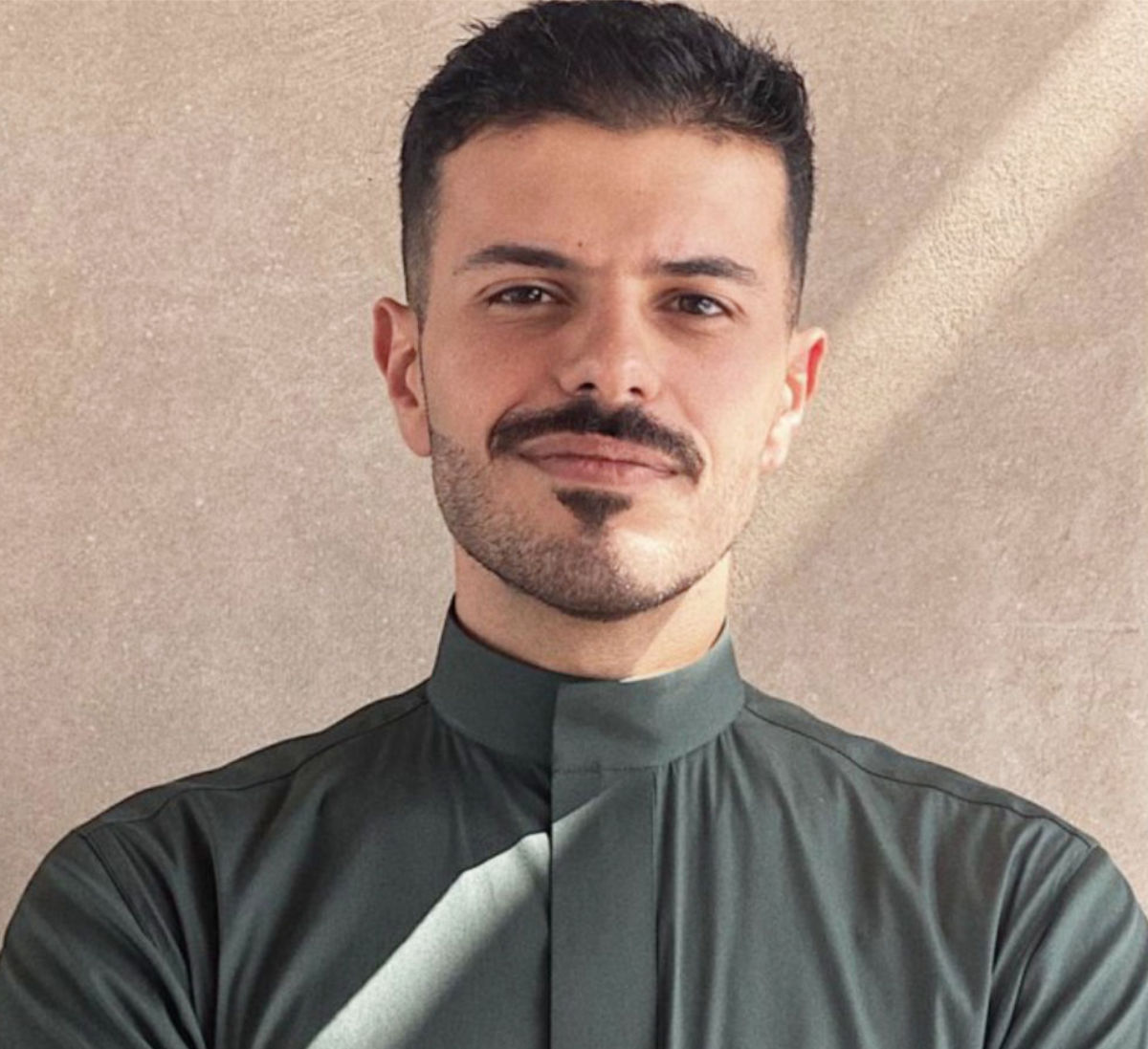
Rayan Al-Rasheed, MDLBeast senior artist booking and operations manager
Desert Sound champions the same goal through smaller venues that host various artists within the EDM (electronic dance music) genre.
Unlucky partygoers were turned away at the gate of the sold-out show due to the enormous turnout, despite the event only being announced five days previously.
But it was not by accident that the house filled up. The majority of participants are ardent fans of Desert Sound, which distinguished itself by refusing to limit itself to a single-sound brand.
We really wanted to integrate rather than compete with small businesses that are already on the ground and have communities.
Rayan Al-Rasheed, MDLBeast senior artist booking and operations manager
Al-Zurayer added: “Since day one we’ve been trying to provide different experiences for people to trust the brand itself. No matter what we bring, where we go they will follow, and come because they know they’re going to have fun.”
Inaugural event Mars Escape headlined Dutch artist Satori and transported around 1,000 attendees to another dimension made distinct by live art, festival makeup and fire performances within a valley in Riyadh.
Reema Al-Saud, the brand’s co-founder, told Arab News: “We started small (with) whatever we could handle in order to make people safe, so we could control and see the community and make girls and guys feel safe. You can’t do that with a big number so we started there and slowly evolved until we reached 2,500 — and it’s not going to stop there.”
Al-Zurayer added: “Music is education. It connects people from different languages, different cultures, and here in Saudi Arabia developing our culture in this way … that’s such an amazing way to use music.”
Desert Sound’s next event will take place on Jan. 5 in yet another distinct location. The company champions bringing new names, whether local or international, to the stage through the platform it has created.
Al-Saud said: “We want to orchestrate every preference … Every day someone new comes up but they don’t get the chance because they’re not famous enough, or whatever. But when you give them the opportunity, they exceed in every way.”
Artist and DJ Joj was looking for a medium a year ago to focus on and she eventually found her calling to music. At Desert Sound’s milestone Fowg event, she opened up the night.
“I was going through a tough time and I needed this thing (music) to keep me going ... Tonight, I loved that there were a lot of women on the dance floor who gave me the push to go further,” she told Arab News.
Her set preceded musicians ANT. and Misha Saied, who played back to back before handing gears over to Lehar.
Desert Sound brings the underground scene to the public. It built its brand by hosting acclaimed international names, who are also part of the change to leverage the local scene.
Al-Zurayer said: “This is one of the keys to unlocking internationals to seeing Saudi Arabia as a country that has love and peace. We’ve been a secret country for many years, but now is the time to show them this love. Come and discover us.”
While Fowg has just concluded its gleaming nightlife series, Al-Rasheed said that other experiences will soon surface, including one to be held in the abandoned Irqah Hospital.
To keep up with updates and upcoming events, check the Instagram @desertsound.co.


