

A journey through time: Tahlel Museum’s tribute to Asir’s culture 

1 / 8
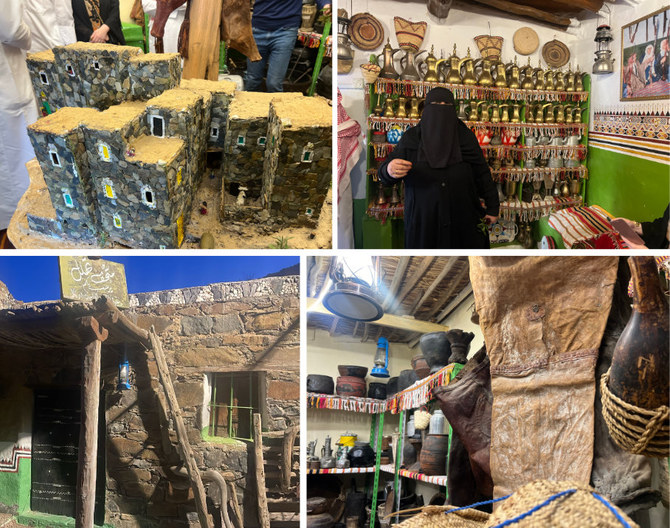
The Tahlel Museum, located in a small traditional house atop Soudah Mountain, was created by an Asiri woman named Halima Asiri. (AN photos by Rahaf Jambi)
2 / 8
3 / 8
4 / 8
5 / 8
6 / 8
7 / 8
8 / 8
Short Url
Updated 25 May 2024
Follow

A journey through time: Tahlel Museum’s tribute to Asir’s culture 

  • The museum is home to many heritage pieces, including coins, traditional costumes, wood art, and agricultural tools
  • It also includes the owner's artistic works of Al-Qatt Al-Asiri, geometric shapes, and tribal symbols painted in vibrant colors 

ASIR: Perched atop the Souda Mountains in the Abha region of Asir province in southern Saudi Arabia is a modest museum created by an Asiri woman called Halima Asiri. 

Passionate about old Saudi heritage, Asiri established the Tahlel Museum in a small traditional house. 
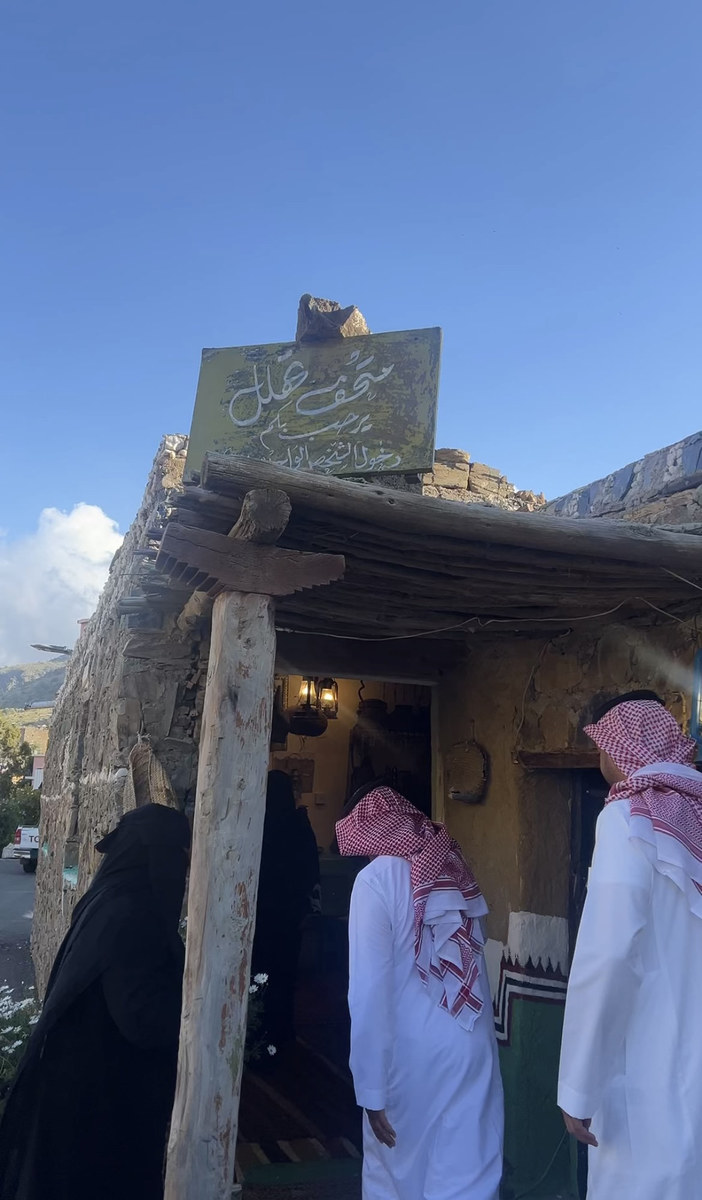


Halima Asiri is a woman who is passionate about old Saudi heritage, which led her to establish the Tahlel Museum. The museum is a small house in the shape of old Saudi buildings. (AN photo by Rahaf Jambi)

It includes many heritage pieces, including coins, traditional costumes, wood art, and agricultural tools. It also includes her artistic works of Al-Qatt Al-Asiri, geometric shapes, and tribal symbols painted in vibrant colors. 

“This is my small museum, where I exhibit the work of Al-Qatt Al-Asiri, a kind of natural color painting that have been certified by UNESCO as part of the list of the Intangible Cultural Heritage of Humanity. Each pattern has a name and a symbolic meaning. Men do not practice this art, thus women are the only ones who specialize in it,” Asiri told Arab News. 

Asiri is one of the few women who still uses natural materials to create the art of Al-Qatt Al-Asiri. These colors are extracted from coal, rice, turmeric, pomegranate peel, stones and other sources. 

“I take 24 colors from nature, such as clover, coal, stone, and leaves, grind them into a paste, and use that paste to paint canvases and walls,” she said.

Ancient coffee and teapots, clay cups, copper household utensils, and other artifacts are on display in one of the rooms. 
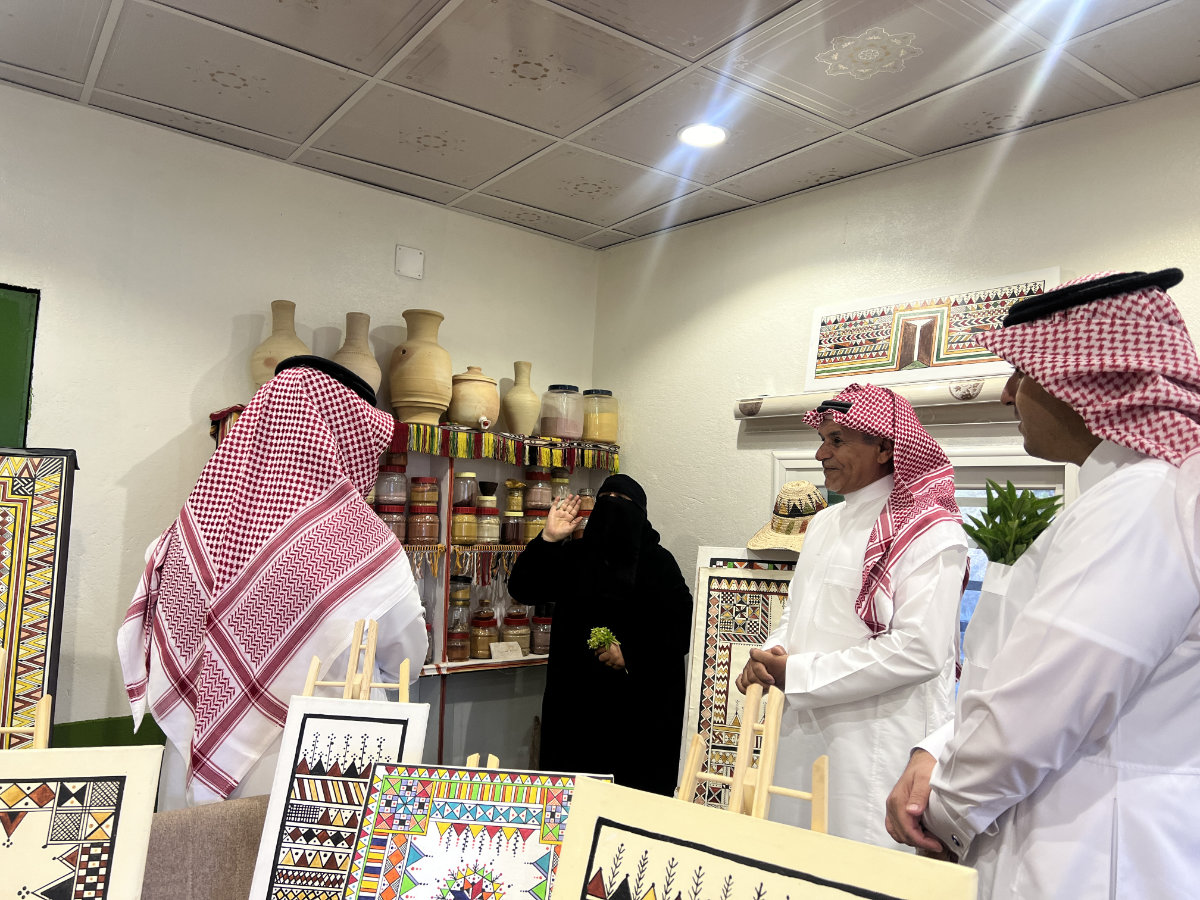


Tahlel Museum owner Halima Asiri is one of the few women who still uses natural materials to create the art of Al-Qatt Al-Asiri. (AN photos by Rahaf Jambi)

“The handcrafted items found here date back to 400-500 years, and the people of the Asir region used them all,” Asiri said. 

She incorporated a model of the old town in which she formerly resided in the museum. The town has since fallen into ruin. 

“The old roads were difficult, and women had to carry wood, walk, and climb mountains to get to their homes. The model that I constructed depicts the hardship and strength of women in Asir,” she explained. 

The museum also features the traditional attire worn by women in the Asir region. 

“I have items of clothing that Asir women wear on their wedding night. I also have regular clothes, like straw hats,” she added. 

Asiri started collecting antiques that date back centuries when she was young, and she made sure to collect antiques and present them in her museum in a unique way. 

There are numerous kinds of swords, weapons, and clothing that the locals used in battle displayed on the walls. 

The location also features a workshop where guests can learn how to paint Al-Qatt Al-Asiri works, in addition to selling her artwork on commission. 

“I teach Al-Qatt Al-Asiri art as a trainer. I frequently get big groups of people, and not so long ago, I trained a group of foreign women,” she said. 

The museum is also linked to a cafe where she serves traditional Asiri dishes like areekah using natural honey. 

“Many foreigners have visited, including ambassadors and ministers,” she said. 

Asiri greets visitors when entering the museum with a famous Asiri phrase, “a thousand welcomes.”

Owing to its natural beauty and rich cultural heritage, the Asir region is highly sought-after by those seeking to explore unspoiled landscapes, wander through charming villages, and explore historic castles. 


Experimental farm in Al-Lith looks into future of Saudi Arabian agriculture

Updated 58 min 22 sec ago
Follow

Experimental farm in Al-Lith looks into future of Saudi Arabian agriculture

  • Research initiative reflects strategic transformation

JEDDAH: An experimental farm in Saudi Arabia’s Al-Lith Governorate is one of the research initiatives reflecting the strategic transformation taking place in the Kingdom’s agricultural sector.

The farm uses highly efficient, sustainable production models that combine scientific research with commercial application, contributing to strengthening the country’s food security system and the sustainability of water resources.

Located in the Ghumaiqa Center on an area of about 10 hectares, the cutting-edge farm is a testing platform for modern agricultural technologies that tackle the challenge of water scarcity.

The farm includes developed open fields and modern greenhouses, supported by smart irrigation encompassing drip and sprinkler irrigation alongside surface and subsurface technologies.

All the systems operate via smart controls that enable the monitoring of water consumption and ensure improved efficiency, thereby achieving a balance between agricultural production and water conservation.

The farm also uses treated and diluted low-salinity seawater.

It aims to diversify agricultural water sources, reduce reliance on freshwater, and open new horizons for agriculture in coastal and semi-arid environments.

The project represents a promising investment opportunity in the field of smart agriculture, enabling the development of commercially scalable production models, particularly for high-value vegetables and fruits, while reducing operational costs associated with water and energy, enhancing the economic feasibility of future agricultural projects.

In addition, the project contributes to transferring and localizing agricultural expertise, supporting local food supply chains, and creating an attractive environment for agricultural investment.

This aligns with Sustainable Development Goals and enhances the efficiency of the private sector in adopting innovative agricultural solutions.

Yahya bin Abdulrahman Al-Mahabi, the director of the Ministry of Environment, Water and Agriculture office in Al-Lith Governorate, told the Saudi Press Agency that the project represented the future of agriculture in the Kingdom.

He explained that the vision was based on investing in technology, enhancing the return on water per unit, and integrating scientific research with investment opportunities.

Al-Mahabi spoke of the experimental farm as a modern, scalable and replicable model applicable in several regions of the Kingdom, particularly in coastal environments.

Al-Mahabi highlighted the Ministry of Environment, Water and Agriculture’s commitment to supporting distinctive projects that contributed to achieving food security while developing rural areas and enhancing agricultural production efficiency, in line with the objectives of the Kingdom’s Vision 2030.