

Police register kidnapping case of Pakistani businessman, owner of local cola company

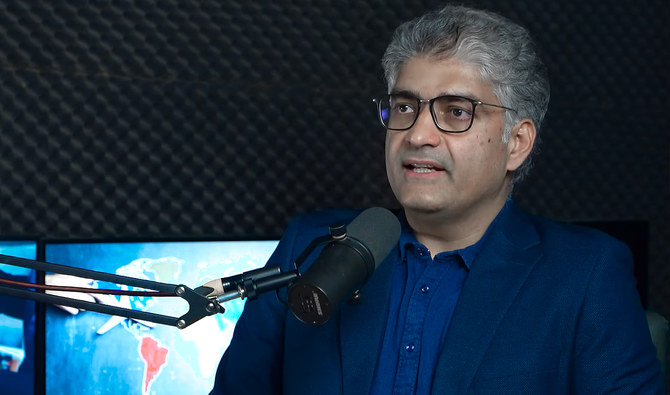
In this screengrab, taken from a video posted by ‘Off The School’ YouTube channel on April, 28, 2023, prominent Pakistani businessman Zulfiqar Ahmed speaks about successful business policies during a podcast. Ahmed, managing director of Paracha Textile Mills and Mezan Group, was kidnapped from Karachi on July 23, 2024, according to the police report. (Photo courtesy: Screengrab/YouTube/@Off-The-School)
Short Url
Updated 27 July 2024
Follow

Police register kidnapping case of Pakistani businessman, owner of local cola company

  • Sindh Police refused to lodge case in disappearance of Zulfiqar Ahmed, case filed after court intervention
  • Ahmed owns Next Cola which gained traction amid push to boycott beverages purportedly fueling Israel’s war

KARACHI: Police in Pakistan’s southeastern province of Sindh have registered a kidnapping case following judicial intervention after a prominent businessman was taken by armed men from Karachi four days ago, his lawyer said on Saturday.

Zulfiqar Ahmed, the owner of Next Cola, which has positioned itself as a substitute for Coca-Cola since October amid a push to boycott products allegedly fueling Israel’s war on Gaza, was kidnapped on July 23 after he left his office in the city.

Ahmed, who is also the managing director of Paracha Textile Mills and Mezan Group, went missing after his white Toyota Surf vehicle was intercepted by eight armed men who abducted him and one of his friends before allowing the latter to go.

Ahmed’s friend shared the details of the incident, prompting the businessman’s family and company management submit an application at the Kalri police station on the same day. However, the police refused to register a complaint, making them go to the Sindh High Court, which ordered the police to lodge the case on Friday.

“The news [of Ahmed’s abduction] somehow gained traction on social media,” Mian Ali Ashfaq, the counsel representing Ahmed’s family, told Arab News. “After the social media spotlight on the court order and my protest, my team of office associates went to the police station, where, after four hours, the FIR [First Information Report] was finally registered and a copy was provided to us by Friday afternoon.”

People widely shared news of Ahmed’s abduction across social media platforms, asking the authorities to take steps for his release.

Asad Raza, deputy inspector-general (DIG) of police in Karachi’s southern district where the incident occurred, dismissed the allegations of police inaction in the case.

“It is immaterial whether the FIR was registered instantly or after one day’s delay,” he told Arab News. “We started working on the case when the abduction took place.”

Ashfaq, the counsel representing Ahmed’s family, said the high court had issued notices to respondents and fixed the matter for a hearing on Tuesday.

“We hope that Zulfiqar Ahmed will be recovered and reunited with the family before the next hearing,” he added.

Karachi Police Chief Javed Alam Odho said on Friday two “high-powered” teams were investigating the case.

“A high-powered team, under the supervision of the DIG of the CIA [Crime Investigation Agency] and another under the DIG of the area, are working on it,” he told Arab News. “I am confident this case will be resolved soon.”

According to the lawyer representing Ahmed’s family, however, the case was further complicated after Friday’s court ruling since two senior staff members associated with Next Cola were also picked up from Lahore and Kasur a day earlier.

He added that a petition would be filed in the Lahore High Court for their recovery.

“Hassan Nawaz, Deputy General Manager of Finance at Meezan Beverage, was picked up from Lahore, and Danial Afzal Khan, General Manager at Meezan Beverage, was abducted from Kasur by armed men in white double-cabin vehicles,” he said.

Launched in 2016, Next Cola struggled to gain traction until Israel’s war that started last October and killed over 39,000 people, mostly women and children. Since then, it acquired greater visibility in supermarkets and wedding halls in different parts of Pakistan.


Pakistan says multilateralism in peril, urges global powers to prioritize diplomacy over confrontation

Updated 8 sec ago
Follow

Pakistan says multilateralism in peril, urges global powers to prioritize diplomacy over confrontation

  • The country tells the UN international security system is eroding, asks rival blocs to return to dialogue
  • It emphasizes lowering of international tensions, rebuilding of channels of communication among states

ISLAMABAD: Pakistan warned the world community on Monday that multilateralism was “in peril” amid rising global tensions, urging major powers to revive diplomacy and dialogue to prevent a further breakdown in international security.

Speaking at a UN Security Council briefing, Pakistan’s ambassador to the UN, Asim Iftikhar Ahmad, said the world was drifting toward confrontation at a time when cooperative mechanisms were weakening.

His comments came during a session addressed by Finland’s foreign minister Elina Valtonen, chairing the Organization for Security and Co-operation in Europe (OSCE), the world’s largest regional security body.

Formed out of the 1975 Helsinki Final Act, the OSCE was designed during the Cold War to reduce tensions, uphold principles of sovereignty and human rights and promote mechanisms for peaceful dispute resolution.

“Today, the foundational ethos of international relations, multilateralism, cooperation and indivisible security, as envisaged in the preamble of Helsinki Final Act, is perhaps facing its biggest challenge in decades,” Ahmed said. “The OSCE, too, is navigating a difficult geopolitical landscape, with conflict raging in the heart of Europe for nearly four years, depletion of trust and unprecedented strains on peaceful co-existence.”

He said a return to the “Helsinki spirit” of dialogue, confidence-building and cooperative security was urgently needed, not only in Europe but globally.

“This is not a matter of choice but a strategic imperative to lower tensions, rebuild essential channels of communication, and demonstrate that comprehensive security is best preserved through cooperative instruments, and not by the pursuit of hegemony and domination through military means,” he said. “Objective, inclusive, impartial, and principle-based approaches are indispensable for success.”

Ahmed’s statement came in a year when Pakistan itself fought a brief but intense war after India launched missile strikes at its city in May following a militant attack in Indian-administered Kashmir. New Delhi blamed Pakistan for the assault, an allegation Islamabad denied while calling for a transparent international investigation.

The Pakistani diplomat said the international system was increasingly defined by bloc politics, mistrust and militarization, warning that such trends undermine both regional stability and the authority of multilateral institutions, including the UN itself.

He urged member states to invest more in preventive diplomacy and the peaceful settlement of disputes as reaffirmed by the Council in Resolution 2788.

Ahmad said Pakistan hoped the OSCE would continue reinforcing models of cooperative security and that the Security Council would back partnerships that strengthen international law and the credibility of multilateral frameworks.

The path forward, he added, required “choosing cooperation over confrontation, dialogue over division, and inclusive security over bloc-based divides.”