



RIYADH: From Nov. 30 to Dec. 16, Noor Riyadh, the largest annual light art festival in the world, returns for its third edition, boasting 120 large-scale works from 100 contemporary artists from over 35 countries.
The festival lets every visitor follow the map to glowing artworks within each location, with pieces spread not just across Riyadh, but throughout the landscapes of the five main festival hubs: King Abdullah Financial District, Salam Park, Wadi Hanifa, Wadi Namar, and Jax District.
“For us, it’s very important that people in Riyadh feel like this is their festival. The main purpose of it is to be part of the fabric of Riyadh … It’s to make the city vibrant, beautiful, and relevant to the citizens and residents,” Miguel Blanco-Carrasco, adviser at the Royal Commission for Riyadh City and Riyadh Art, told Arab News.

From Nov. 30 to Dec. 16, every Riyadh resident will get a chance to forge a path for their own story using illuminating artworks from across the globe. (Arab News)
After running over 20,000 surveys across the Saudi populace, the team found that Riyadh’s citizens and residents preferred a more concise experience.
Nouf Almoneef, director of the festival, told Arab News: “Last year, a lot of people didn’t get the chance to go to the other locations …We want accessibility for everyone.”
Their approach was to create a contained, yet conspicuous experience: last year’s 40 locations became the five main hubs, each containing over 15 artworks, and some partnering activations in other areas.
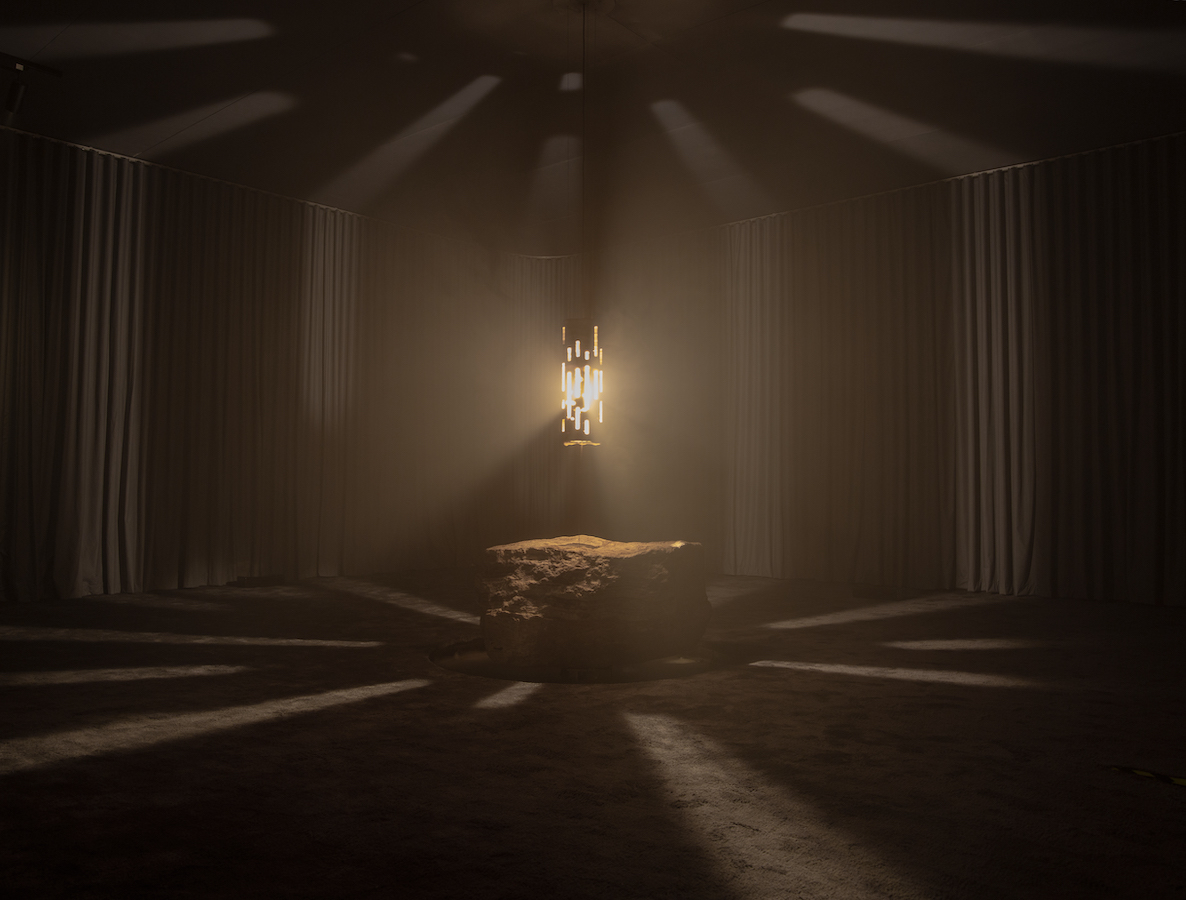
Berlin-based French-Swiss artist Julian Charriere’s artwork “Vertigo.” (Arab News)
“Our mission is to transform the city to a gallery without walls … We’re building this legacy for artists to grow and show their works internationally. Our aim is to highlight our artists and the festival globally and for the people to also come and visit,” Almoneef said.
What truly marks out the festival is its strong curatorial narrative which leaves visitors to build a narrative out of the existing pieces placed across Riyadh.
Jerome Sans, co-founder of Palais de Tokyo in Paris and lead curator of this year’s festival, said: “We invented this as a symphony with different acts. You can take it in any order.
“Here for example, in KAFD, the story starts in the city — from mineral to nature; from the Financial District to the door of the desert, or vice versa. Salam Park is a way for us modern people to create our own garden, to shape it, but then there’s a real nature in itself. So we create all different flavors and steps where you can go from one to the other.”
Sans, supported by curators Pedro Alonzo, Fahad bin Naif, and Alaa Tarabzouni, took six months in curation to orchestrate a symphonic storyline within the city’s multifaceted landscape.

Nouf Almoneef, director of the festival said: “Last year, a lot of people didn’t get the chance to go to the other locations … We want accessibility for everyone.” (Arab News)
On the theme, the lead curator noted that desertification is a growing issue globally, not just within Riyadh, which is located in the heart of the Nafud desert. The theme “Bright Side of the Desert Moon” contemplates the light within the arid.
Like the moon, the hubs physically circle Riyadh. As visitors approach each location, they create a celebratory cross-city bonfire marked by gleaming artworks.
For Sans, the concise number of locations act as members of the “family,” bringing the festival to a much more human scale and “easier for everyone to understand.”
For Bjornstjerne Christiansen, one of the three founders of Copenhagen-based collective SUPERFLEX, the theme lay close to the group’s way of thinking as an expanded collective, that “we need to change our behavior and perspective, and we believe we can do that through art,” he told Arab News.
Public art is an important aspect of SUPERFLEX’s work, bringing unique projects to corners of the globe, like the famous Superkilen Park in Denmark with works from 80 nationalities, The Bank urban park in UAE’s Sharjah, a projection on the UN headquarters in New York City, and many others.
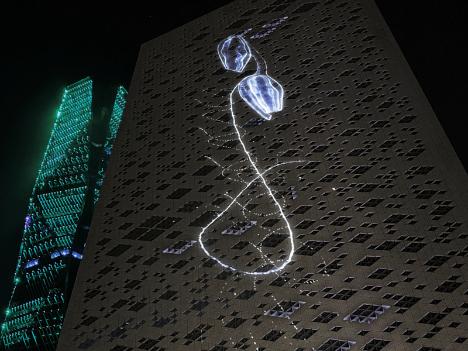
SUPERFLEX’s artwork “Vertical Migration” explores territories buried within the depths of the sea projected on a high-rise building in KAFD. (Arab News)
Noor Riyadh, under the umbrella of Riyadh Art, aims to create space for the city’s populace to engage with art in a much more dynamic way. It strays away from confining the works merely within an art space and incorporates them within everyday locations, such as KAFD, a home to many corporate buildings and popular dining spots, and Salam Park, where families go to picnic and play.
SUPERFLEX’s artwork “Vertical Migration” explores territories buried within the depths of the sea projected on a high-rise building in KAFD. It highlights the importance of understanding the ocean’s health through a siphonophore, a creature that comes in trillions every night from the bottom to the surface to clean.
“It’s very beautiful but has a lot of layers of politics in it. And that’s the good thing about art: you can look at it as beauty or aesthetics while also having many layers,” Christiansen said.
Saudi artist Dur Kattan’s “Closer than They Appear” is a collection of approximately 400 car side mirrors, using the blindspot within them as a metaphor for people’s collective blindness to our own humanity.
“In a city like Riyadh, things are very busy. It’s amazing, all these changes that are happening, but you also have to somehow ground yourself and find time to reflect on yourself, your own blindspots, and that will basically protect you from crashing,” Kattan told Arab news.
Kattan is an emerging artist whose contribution to the festival becomes her second showcase after her debut in the exhibition “Heartache” by Very Public earlier this year. While the festival hosts big-name international artists like Yayoi Kusama, it also acts as a platform for younger contemporary names to surface.
Noor Riyadh has become a staple event in the city’s events calendar, the success of which was made possible by “these amazing, talented (artists) and the teams behind the festival” as well as the interaction of the public, Almoneef said.


