

Saudi Film Confex opens in Riyadh

1 / 8
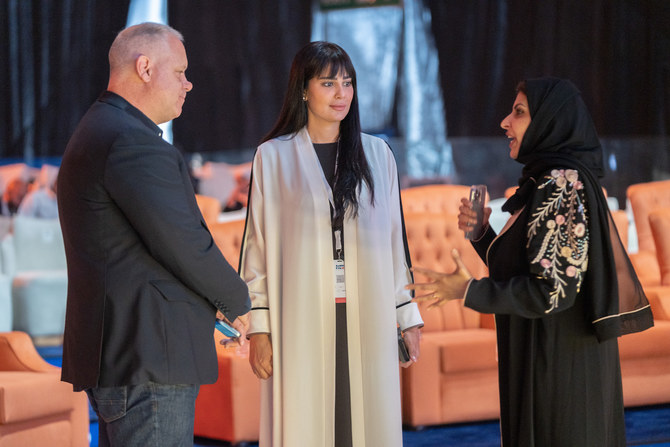
The Saudi Film Confex opened on Sunday at the Riyadh Front Exhibition and Convention Center. (AN photo by Huda Bashatah)
2 / 8
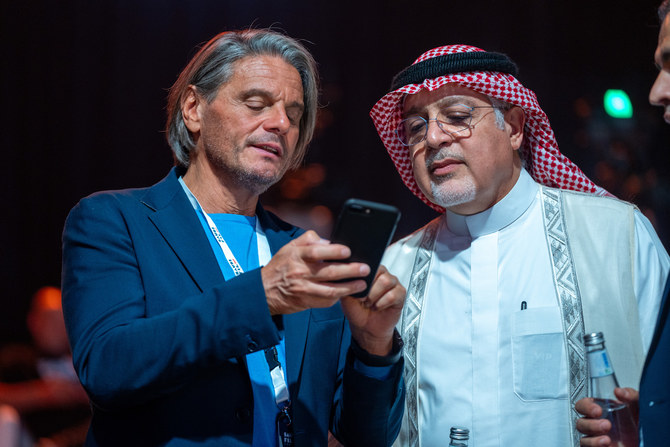
The Saudi Film Confex opened on Sunday at the Riyadh Front Exhibition and Convention Center. (AN photo by Huda Bashatah)
3 / 8
The Saudi Film Confex opened on Sunday at the Riyadh Front Exhibition and Convention Center. (AN photo by Huda Bashatah)
4 / 8
The Saudi Film Confex opened on Sunday at the Riyadh Front Exhibition and Convention Center. (AN photo by Huda Bashatah)
5 / 8
The Saudi Film Confex opened on Sunday at the Riyadh Front Exhibition and Convention Center. (AN photo by Huda Bashatah)
6 / 8
The Saudi Film Confex opened on Sunday at the Riyadh Front Exhibition and Convention Center. (AN photo by Huda Bashatah)
7 / 8
The Saudi Film Confex opened on Sunday at the Riyadh Front Exhibition and Convention Center. (AN photo by Huda Bashatah)
8 / 8
The Saudi Film Confex opened on Sunday at the Riyadh Front Exhibition and Convention Center. (AN photo by Huda Bashatah)
Short Url
Updated 01 October 2023
Follow

Saudi Film Confex opens in Riyadh

  • Experts discuss how industry can help boost national economy

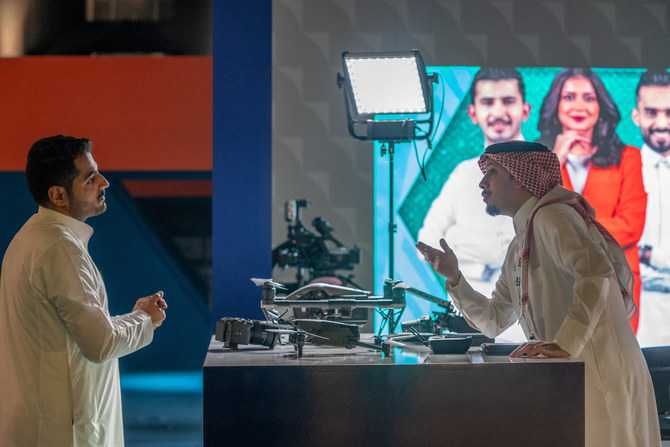
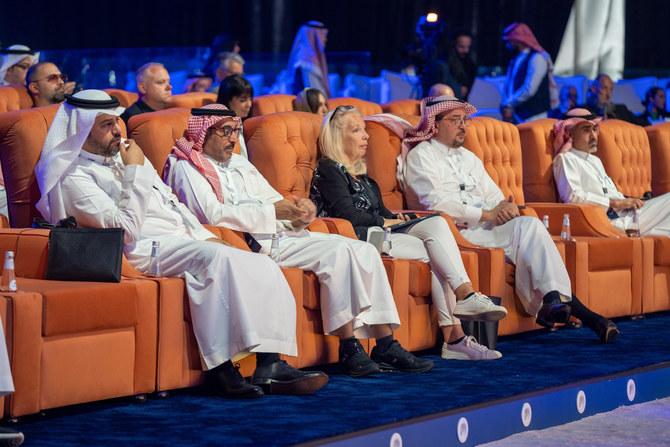
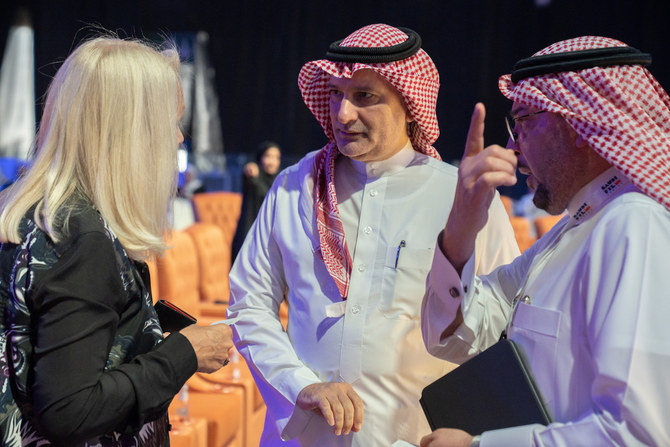
RIYADH: The Saudi Film Confex opened on Sunday at the Riyadh Front Exhibition and Convention Center.

The four-day event, hosted by the Saudi Film Commission, seeks to promote the social, cultural and economic value of cinema and brings together industry experts, executives and investors from around the world.

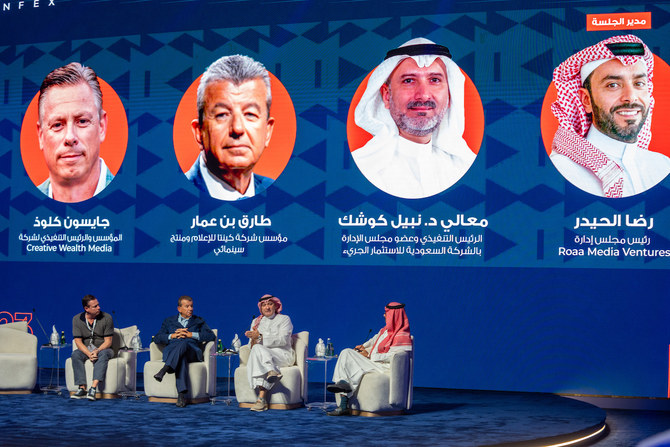
During a discussion titled “Film as a Catalyst for National Economic Growth: Aspects and Features,” the panel explored ways to extend the influence of the film industry on other economic sectors, such as tourism, entertainment, technology and innovation.

Jason Cloth, the founder of film and TV financing company Creative Wealth Media, said the movie industry underwent significant changes during the COVID-19 pandemic, as people increasingly turned to streaming platforms.

“The pandemic changed people’s viewing habits,” he said. “We see box office numbers dropping a bit and transactional numbers increasing quite a bit. The bigger issue with the studio releases is the budget sizes.”

If box office numbers failed to improve, it would be difficult to release some large-budget films, he said.

Tariq Bin Ammar, a Tunisian-French film producer and founder of Quinta Communications, was also on the panel.

“For Tunisia, I spent a billion dollars in foreign currency with never any local finance, because we knew we didn’t have the money,” he said.

“As for Saudi Arabia, it does not need foreign consultants anymore. With all due respect for our American and English friends, Saudi Arabia is capable, and in a very few years it will be totally independent.”

He added: “When Italian, French, English or American producers and directors make movies they make them for themselves, for their people.”

In contrast, Saudi Arabia produced films for both local and international audiences, he said.

Nabeel Koshak, CEO of Saudi Venture Capital Co., said: “I would say the filmmaking movement in Saudi Arabia definitely has funding as a crucial component of this ecosystem.”

Over the past five years, the government had provided $2 billion in funding for the industry, he said.


Carved by time: Saudi Arabia's hidden geotourism gem of Razan

Updated 4 sec ago
Follow

Carved by time: Saudi Arabia's hidden geotourism gem of Razan

  • Long before modern engineering, the geology of Razan functioned as effective natural infrastructure, sustaining life in an arid environment
  • This utility made Razan a strategic landmark, playing a vital role in the ancient Yemeni Hajj Road

AL-LITH: Sixty kilometers north of Al-Lith governorate in the Kingdom's west, rising above the shifting sands and valleys of the Makkah region, lies a place where the earth itself tells a story. This is Razan, a geological wonder where history is not written in ink, but etched into the stone by the patient hands of wind, water, and time.

Perched atop a high rocky mass and flanked by valleys to the northwest and southeast, Razan stands in natural isolation. This geographic solitude has acted as a guardian, preserving a landscape that feels almost otherworldly — a pristine stage set by nature over millennia.

The place is defined by its striking rock formations: dense clusters of stone, stepped ridges that resemble ancient staircases, and natural ceilings sculpted by the relentless flow of seasonal torrents.

The visual impact is one of dramatic contrast — the heaviness of solid rock balanced against open, airy spaces carved by erosion. Fine channels and intricate flow patterns mark the stone, serving as fossilized evidence of the water that once rushed through these corridors, shaping the land into a rugged work of art.
 

In the quiet majesty of Razan, the past is preserved. (SPA)

Nature’s infrastructure 

But Razan is more than just a scenic marvel; for centuries, it served as a lifeline. The same forces that sculpted the cliffs also hollowed out natural rock basins. These geological depressions acted as seasonal reservoirs, catching rainwater and supplementing nearby wells. Long before modern engineering, the geology of Razan functioned as effective natural infrastructure, sustaining life in an arid environment.

This utility made Razan a strategic landmark, playing a vital role in the ancient Yemeni Hajj Road. The sturdy, elevated terrain provided a natural pathway for pilgrims, offering stability and protection on their spiritual journey toward Makkah.

Today, Razan stands at the intersection of heritage and opportunity. No longer just a passage for pilgrims, it is emerging as a valuable asset for geotourism. Its unique topography offers a visual feast for travelers and a treasure trove for scientists studying geological history.

As Saudi Arabia moves toward the goals of Vision 2030, sites like Razan are finding new purpose. By transforming this geological narrative into a tourism destination, the region aims to preserve its natural heritage while breathing new life into the local economy.