

Dubai slashes public debt by $7.89bn  

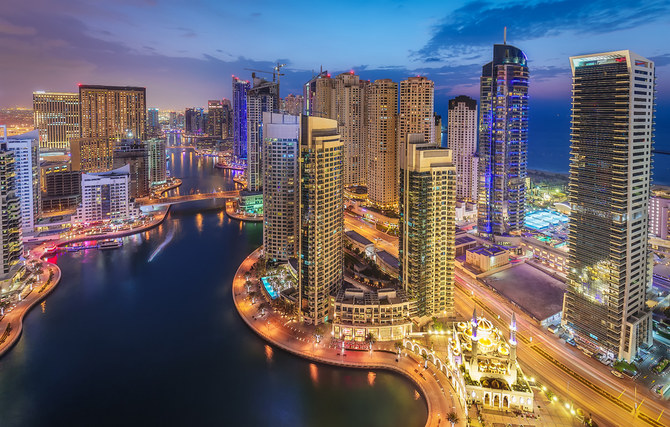
The reduction in public debt is projected to be achieved across all classes in the government’s portfolio. Shutterstock.
Short Url
Updated 27 September 2023
Follow

Dubai slashes public debt by $7.89bn  

RIYADH: The Public Debt Management Office of Dubai’s Department of Finance announced that it expects a reduction of about 29 billion dirhams ($7.89 billion) in public debt by the end of the year. 

This aligns with the office’s Public Debt Sustainability Strategy and its commitment to responsible financial management, reported the Emirates News Agency or WAM. 

The reduction in public debt is projected to be achieved across all classes in the government’s portfolio. 

The strategy includes a 100 percent redemption of sukuk certificates worth 3.3 billion dirhams and the repayment of bilateral and syndicated facilities amounting to 5.2 billion dirhams. 

The report added that it comprises a partial settlement of 20 billion dirhams from the financing extended by the Abu Dhabi government and the Central Bank of the UAE. 

“Despite ongoing global economic challenges, DOF not only achieved financial efficiency for the Government of Dubai but also seized opportunities from adversity,” said DOF Director General Abdulrahman Saleh Al-Saleh in a statement to WAM. 

“The support received from the leadership has enabled us to achieve rational spending on projects, improve and diversify revenues, and optimize the use of financing instruments. This has facilitated the fulfillment of government financial obligations according to the scheduled dates, in addition to accelerating the fulfillment of some other obligations,” Al-Saleh added. 

PDMO CEO Rashed Al-Falasi said the office’s objectives include reducing borrowing costs, mitigating refinancing risk, and ensuring the government’s financial stability in the medium term. 

“One of the pivotal goals realized through debt repayments is the substantial reduction of public debt levels, resulting in a significant boost to government financial liquidity and preparedness to meet any funding requirement,” said Al-Falasi. 

He added: “This strategic maneuver has led to a remarkable reduction in the public debt to gross domestic product ratio, which now stands at a safe and conservative level of 25 percent.”  

It’s noteworthy that internationally recognized thresholds typically range between 40 and 60 percent, underscoring Dubai’s prudent fiscal management. 

Established in 2022, PDMO aims to shape robust public financial policies and foster confidence among investors and financial institutions by maintaining high transparency and credibility. 


Saudi Arabia offers 11 mining sites in Eastern Province to boost investment 

Updated 9 sec ago
Follow

Saudi Arabia offers 11 mining sites in Eastern Province to boost investment 

JEDDAH: Saudi Arabia has opened 11 mining sites at the Eastern Province’s Al-Summan Crushers Complex for competitive bidding, boosting investment, governance, and local community development. 

The sites are designated for the extraction of aggregates and crusher materials, covering 9 sq. km, according to a statement by the Ministry of Industry and Mineral Resources. 

The initiative forms part of the Kingdom’s drive to establish mining as the third pillar of its industrial economy, alongside oil and petrochemicals, leveraging mineral wealth now estimated at SR9.37 trillion ($2.5 trillion), a 90 percent increase from 2016 estimates of SR5 trillion. 

The increase follows comprehensive surveys of the Arabian Shield, which revealed new deposits beyond traditional mineralized belts. 

Jarrah bin Mohammed Al-Jarrah, the ministry’s official spokesperson, said applications for the mining sites will be accepted from Feb. 15 to March 5, via the Ta’adeen digital platform, which handles registration, qualification, bidding and the announcement of winning companies. 

“The Ministry aims to allocate mining complexes to encourage investment in the mining sector, strengthen governance, protect sites from illegal exploitation, and support development in neighboring areas,” the statement said. 

Saudi Arabia’s mining sector has demonstrated sustained growth, with the number of mining licenses rising from 1,985 in 2016 to 2,401 by the end of 2024, representing cumulative growth of 21 percent, according to the 2024 Mineral Wealth Statistics from the General Authority for Statistics. 

Building material quarries accounted for the largest share of permits, rising from 1,267 in 2021 to 1,481 by 2024. 

Exploration licenses also showed consistent growth, supporting the Kingdom’s broader strategy to develop its mineral resources and strengthen the mining sector as a key pillar of its industrial economy. 

Reforms in the sector have attracted $32 billion in investments for projects in iron, phosphate, aluminum, and copper. 

Recent surveys and discoveries, including rare earth elements, lithium, cobalt, and copper, as well as zinc and gold, highlight the Kingdom’s potential to expand into strategic industries such as electric vehicles, advanced technologies, and renewable energy. 

Strategic investments and international partnerships, including projects like the Jabal Sayid rare earths site and collaborations with companies such as MP Materials, position Saudi Arabia as a global hub for critical minerals and reinforce the Kingdom’s Vision 2030 industrial ambitions.