

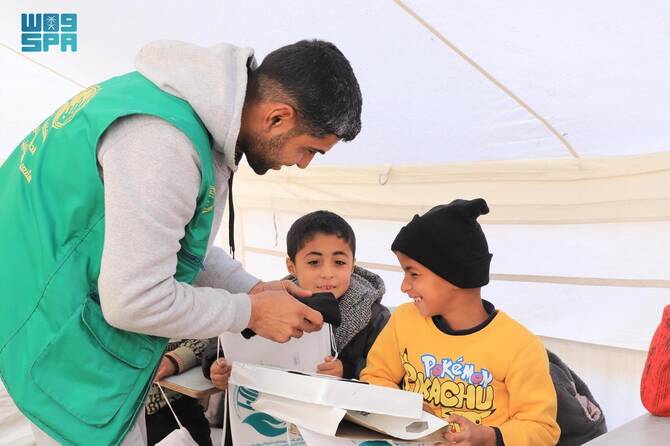
KSrelief distributes winter aid to Gaza students

1 / 6
The initiative addresses the growing needs of students continuing their education under difficult circumstances. (SPA)
2 / 6
The initiative addresses the growing needs of students continuing their education under difficult circumstances. (SPA)
3 / 6
The initiative addresses the growing needs of students continuing their education under difficult circumstances. (SPA)
4 / 6
The initiative addresses the growing needs of students continuing their education under difficult circumstances. (SPA)
5 / 6
The initiative addresses the growing needs of students continuing their education under difficult circumstances. (SPA)
6 / 6
The initiative addresses the growing needs of students continuing their education under difficult circumstances. (SPA)
Short Url
Updated 28 January 2026
Follow

KSrelief distributes winter aid to Gaza students

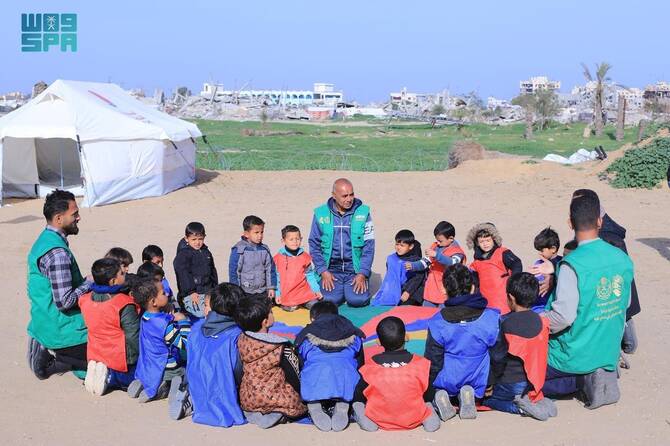
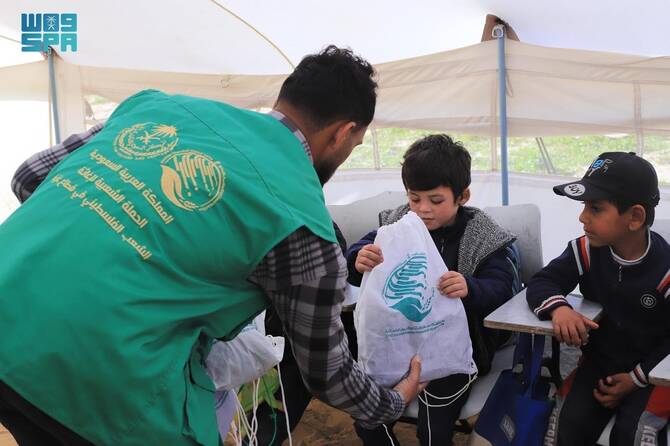
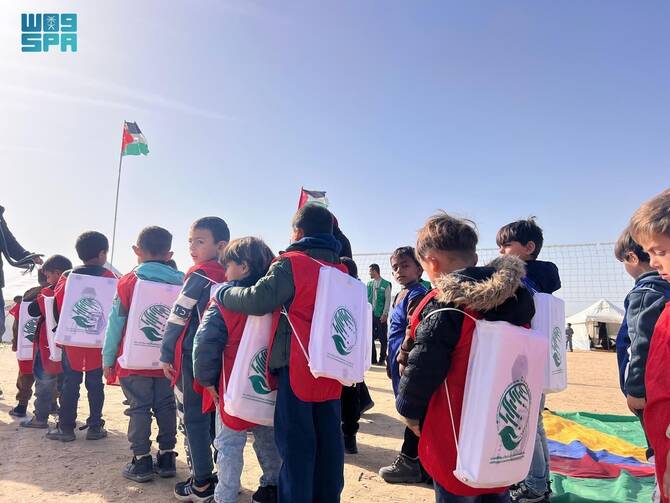
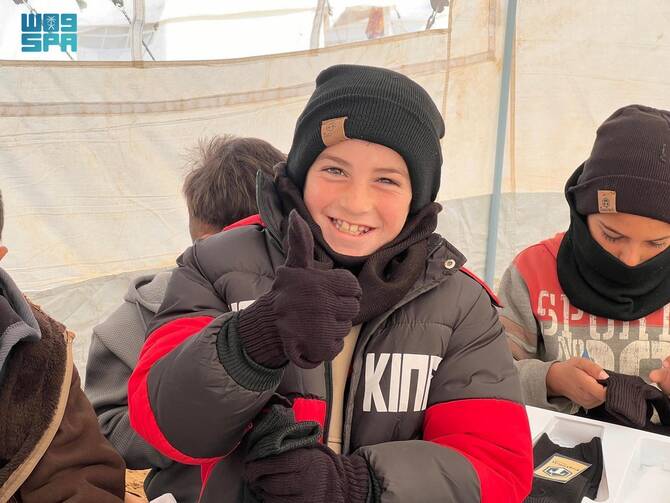
RIYADH: The Saudi aid agency KSrelief recently distributed winter clothing to students at educational sites in Khan Younis in the southern Gaza Strip as part of its campaign to support the Palestinian people.

The initiative addresses the growing needs of students continuing their education under difficult circumstances, with classes held in tents after most schools and educational facilities were destroyed.

Meanwhile, the 80th Saudi relief airplane operated by KSrelief arrived at El Arish International Airport in Egypt, in coordination with the Ministry of Defense and the Saudi Embassy in Cairo.

The airplane is carrying food baskets and shelter kits for distribution to affected Palestinians inside the Gaza Strip. The supplies are part of Saudi support to help alleviate the difficult living conditions in Gaza.

Since its establishment in 2015, KSrelief has implemented 147 projects in Palestine worth about $533 million, covering food security, early recovery, water, sanitation and hygiene, health, camp coordination, education, protection, emergency aid, and nutrition.


Economic growth and resilience at heart of 2nd AlUla Emerging Market Economies Conference

Updated 03 February 2026
Follow

Economic growth and resilience at heart of 2nd AlUla Emerging Market Economies Conference

  • Event on Feb. 8 and 9 will bring together ministers, governors of central banks, policymakers, economic experts and international financial institutions
  • Emerging-market economies a ‘pivotal element’ in global economic system due to effect they have on growth and stability, says Saudi Finance Minister Mohammed Al-Jadaan

RIYADH: The second annual AlUla Conference for Emerging Market Economies, which Saudi Arabia will host next week, offers a platform to exchange views on global developments and discuss policies and reforms that support inclusive growth and strengthen economic resilience, the Kingdom’s finance minister said.

The event on Feb. 8 and 9 will bring together finance ministers, governors of central banks and policymakers, alongside economic experts and representatives of international financial institutions.

Organized by the Saudi Ministry of Finance in partnership with the International Monetary Fund, it takes place as emerging-market economies face mounting challenges amid rapid global economic change.

Finance Minister Mohammed Al-Jadaan said the decision to host the conference reflects Saudi Arabia’s ongoing commitment to efforts that support global financial and economic stability, and highlights the growing influence of emerging economies on worldwide growth.

Emerging-market economies represent a “pivotal element” in the global economic system due to the direct impact they have on economic growth and stability, he added.

“The AlUla Conference for Emerging Market Economies provides a unique platform for exchanging views on global economic developments, and discussing policies and reforms that will support inclusive growth and enhance economic resilience, in light of broader international cooperation that contributes to confronting common challenges,” Al-Jadaan said.

Kristalina Georgieva, managing director of the IMF, said the event would help emerging economies deal with growing uncertainty driven by technological change, demographic shifts and geopolitical tensions.

“The AlUla conference provides a vital platform for emerging economies to discuss how they can navigate the risks and embrace the opportunities ahead,” she said.

“In these times of sweeping transformations in the global economy, policymakers face a more challenging and uncertain environment. Countries should work together to strengthen resilience through sound macroeconomic and financial policies.”