

Universal Music Group buys Chabaka Music to expand presence in MENA

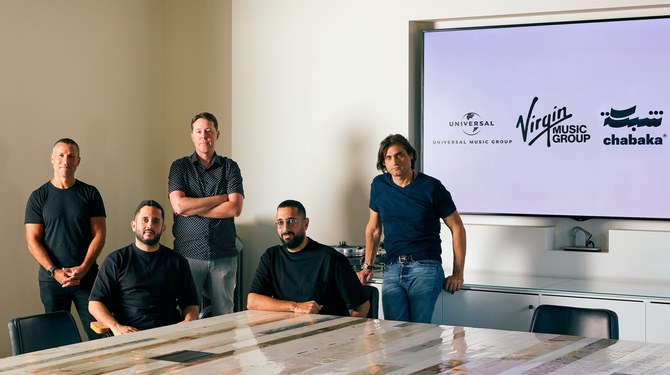
Chabaka represents more than 150 artists and labels, with a strong regional catalog and presence across the Gulf region, Levant, Egypt and North Africa. (UMG/File)
Short Url
Updated 31 August 2023
Follow

Universal Music Group buys Chabaka Music to expand presence in MENA

  • Deal will drive ‘transformation of the regional music industry,’ Chabaka CEO says
  • Company will become part of UMG’s Virgin Music Group

LONDON: Universal Music Group has announced its acquisition of UAE-based Chabaka Music in a move that sees the Dutch-American company expanding its presence in the Middle East and North Africa region.

“The MENA region is one of the fastest growing music markets in the world, representing untapped potential and opportunity,” said Patrick Boulos, UMG’s CEO for the region.

“Chabaka is a unique collection of visionary leaders, artists and labels, and gives us both scale and opportunity, especially when combined with UMG’s world-leading global platform.”

Founded in 2013 by brothers Ala’a and Tarek Makki, Chabaka specializes in digital distribution, marketing, publishing and artist services, with a focus on independent artists and labels.

It is one of four companies in CHBK Group, alongside video distributor Con Cast, creative agency Andco and Boomerang Studios.

The group represents more than 150 artists and labels, with a strong regional catalog and presence across the Gulf region, Levant, Egypt and North Africa.

“This acquisition brings together UMG’s global reach and expertise with Chabaka’s deep local relationships and repertoire,” said Chabaka CEO Ala’a Makki.

“Together, we will drive the transformation of the regional music industry and create new opportunities for local artists.”

Under the deal, Chabaka will become part of UMG’s Virgin Music Group, which includes Virgin Music and distributor Ingrooves.

Makki will stay on as CEO, while his brother will become an adviser to Chabaka and continue to lead the other companies in the CHBK Group.

“As we continue to expand our footprint in emerging territories all over the world, Chabaka represents an important creative hub in one of the world’s most promising music markets,” J.T. Myers, co-CEO of Virgin Music Group, said.

“Ala’a Makki and his team bring a level of expertise and knowledge that will enable them to create opportunities for our artists and labels in the expanding MENA region and in turn we will be able to grow the global audience for Chabaka’s amazing roster of artists and labels.”

The music market in MENA has grown rapidly in recent years. In 2021, it recorded the world’s fastest revenue growth at 34 percent and ranked third in 2022 at 23.8 percent, according to the International Federation of the Phonographic Industry.

That growth has led to a number of acquisitions and strategic investments in the region.

In August, SRMG Ventures announced a $5 million strategic investment in Anghami, the leading music and entertainment streaming platform in the MENA region.

Earlier in the year, Reservoir Media acquired Egyptian content production and distribution company RE Media and formed a joint venture with independent Saudi Arabian hip-hop label Mashrex.


Lebanon’s official media scale back Hezbollah coverage after Cabinet ban

Updated 12 March 2026
Follow

Lebanon’s official media scale back Hezbollah coverage after Cabinet ban

  • Information Minister Paul Morcos instructs outlets to comply with government decision
  • Journalists, social media urged to avoid content that could provoke hate speech, incitement

BEIRUT: Lebanon has begun implementing a Cabinet decision taken earlier this month to ban Hezbollah’s security and military activities by scaling back coverage of the group on official media platforms.

The measure, which was described in political circles as a significant and bold step, came after decades during which news about the party and the speeches of its leaders were published verbatim and broadcast live through official media outlets, like the state-run National News Agency, TV station Tele Liban and Radio Lebanon.

“No one is imposing censorship,” an official source told Arab News.

“Rather, there is a commitment to the decisions of the state. It is no longer possible for a speech that attacks the Lebanese government and the state to be published through its official media outlets.”

Information Minister Paul Morcos issued a circular instructing directors of official media outlets to comply with the government’s decision to ban the broadcast of speeches or statements by Hezbollah Secretary-General Sheikh Naim Qassem and statements issued by the group’s armed wing, particularly when they contain criticism of the state.

Morcos also ordered that Hezbollah statements be handled in the same manner as those issued by other political parties, meaning they should not be published verbatim. He further instructed media outlets to avoid using the term “Islamic resistance,” except when it appears directly within Hezbollah statements.

The first manifestations of the decision were Tele Liban’s abstention from live broadcasting a speech by Qassem and a statement made on Tuesday by lawmaker Mohammed Raad, who heads the Hezbollah parliamentary bloc.

The group’s supporters described the move as an attempt “to restrict the resistance, Hezbollah and its leadership in the official media.”

Some argued on social media that preventing the use of terms like “resistance” or “holy warriors (Mujahedin)” and replacing them with expressions such as “Hezbollah” and “fighters” was “aimed at brainwashing and stripping the party of its resistance identity.”

During a Cabinet session on Thursday, Morcos raised the issue of content circulating on social media that incites murder and sectarian strife. This comes against the backdrop of the war that Hezbollah waged from Lebanon against Israel on March 2, without state approval, which led to a sharp division in Lebanese public opinion.

Morcos, who is also Cabinet spokesperson, said after the session that what was being published “exceeds the bounds of freedom of opinion, the press and expression.”

Prime Minister Nawaf Salam considered it to fall under the penal code, specifically regarding crimes that harm national unity, he said, and that “we are against strife in all its forms.”

Morcos also urged journalists, influencers and social media users to remain aware of the sensitivity of the current situation and to avoid content that could provoke strife, hate speech or incitement.

He acknowledged, however, that, according to a legal study, he has no authority over social media, even on media-related matters.

“The Ministry of Information does not exercise a guardianship role and lacks judicial police powers,” he said.

“These authorities rest with the public prosecution offices, which are overseen by the minister of justice and fall within the domain of criminal law and criminal prosecution.”

The ban was agreed during a Cabinet session on March 2, after Hezbollah launched six rockets from Lebanese territory toward northern Israel, the first such attack since the November 2024 ceasefire, prompting retaliatory strikes.

The Cabinet reaffirmed that “the decision of war and peace rests exclusively with the Lebanese state and its constitutional institutions,” and called on Hezbollah to hand over its weapons to the state while limiting its role to political activity within the legal and constitutional framework.