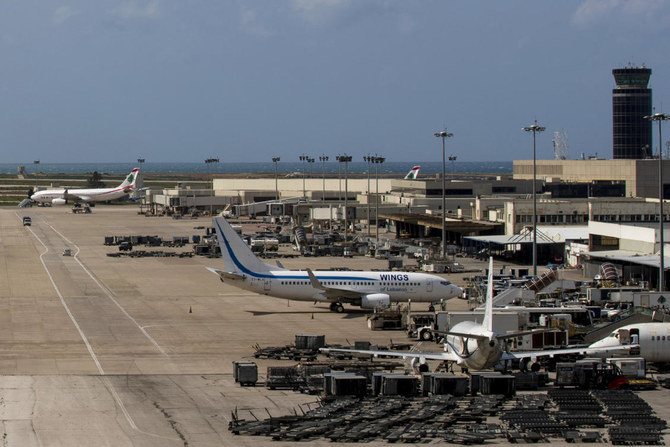
BEIRUT: Air traffic controllers at Lebanon’s only civilian airport announced on Thursday they would go on strike next month over severe staffing shortages, partially closing the Beirut hub.
The announcement by the team of 13 air traffic controllers at Beirut’s Rafik Hariri International Airport follows a report last week by the European Union’s aviation safety watchdog that raised concerns after inspecting the airport, just south of the Lebanese capital.
The airport is supposed to have a staff of 87 air traffic controllers, the controllers said.
Lebanon’s has been in the grip of a devastating economic crisis since late 2019 after decades of corruption and mismanagement. Public sector and state institutions have steadily deteriorated as the cash-strapped government struggles to provide adequate funding.
The Beirut airport has faced power cuts and equipment shortages for months during the busy tourism season. Over 4 million people flew into Lebanon since the beginning of the year.
The strike would begin Sept. 5 and the controllers would not work overnight, between 8 p.m. and 7 a.m.
The European Union Aviation Safety Agency and International Civil Aviation Organization said in a report carried by Lebanese media last week that its inspection of Beirut’s airport earlier this summer detailed multiple safety concerns, including a severe shortage of air traffic controllers.
The controllers said in their statement that the government has ignored their repeated proposals to resolve the issue, including bringing in experts from abroad to help, and dismissed their safety concerns. They said that they work roughly 300 hours a month, and “most of us are above 50 years old.”
Government officials have not responded to the announcement. The country’s General Directorate of Civil Aviation last week said that the airport staff shortage is part of a global issue impacted by the coronavirus pandemic restrictions. It said authorities were training new staff with ICAO’s support.


![]()

Air traffic controllers at Lebanon’s only civilian airport to go on strike over staffing shortages
Short Url
https://arab.news/gq5da
Air traffic controllers at Lebanon’s only civilian airport to go on strike over staffing shortages
- The airport is supposed to have a staff of 87 air traffic controllers
- The Beirut airport has faced power cuts and equipment shortages for months during the busy tourism season


Latest updates


© 2026 SAUDI RESEARCH & PUBLISHING COMPANY, All Rights Reserved And subject to Terms of Use Agreement.