

Saudi Arabia to open bidding for 8 mining complexes  

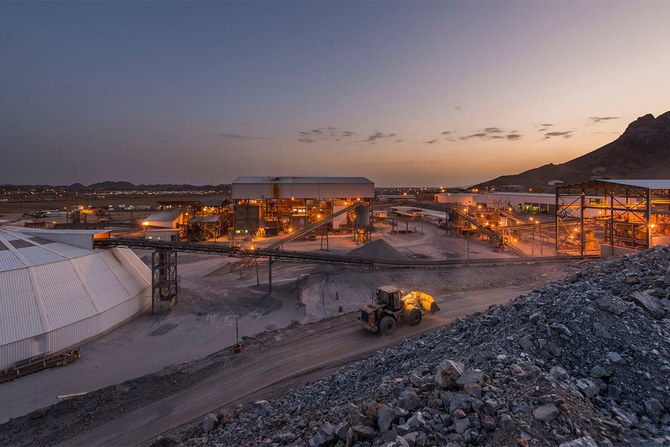
The Ministry of Industry and Mineral Resources launched this initiative as part of its broader strategy to enhance transparency, attract investment, and foster growth in local communities connected to mining projects. File
Short Url
Updated 16 August 2023
Follow

Saudi Arabia to open bidding for 8 mining complexes  

RIYADH: Saudi Arabia has put forward eight mining complexes in the Riyadh region and the Eastern Province for competition, signaling its ongoing commitment to attract investments in the sector.  

The Ministry of Industry and Mineral Resources launched this initiative as part of its broader strategy to enhance transparency, attract investment, and foster growth in local communities connected to mining projects.  

The Eastern Province will host six of these complexes, including Al-Ghunan, Al-Suman, Al-Misnah, Ras Al-Qaryah, and the eastern and western Salwa complexes. The Riyadh region will see the establishment of two more complexes in Al-Armah and Hofayrat Nesaah.  

The move seeks to tap into Saudi Arabia’s abundant mineral resources, driving economic growth.   

The ministry also stated that it aims to further promote investment in the mining sector, attract specialized businesses interested in investing, contribute to boosting economic activity and increasing non-oil revenues in line with the objectives of Vision 2030. 

HIGHLIGHTS

The Eastern Province will host six of these complexes, including Al-Ghunan, Al-Suman, Al-Misnah, Ras Al-Qaryah, and the eastern and western Salwa complexes.

The Riyadh region will see the establishment of two more complexes in Al-Armah and Hofayrat Nesaah.  

Raising the proportion of purchases from local markets in the mining project is also part of the ministry’s goals, as well as developing plans for effective communication in the area surrounding these projects. 

Furthermore, the ministry seeks to preserve the environment, promote occupational health and safety, and encourage local communities to take part in the mining sector’s growth. 

On the sustainability front, it also aims to boost investors’ confidence in it and protect natural resources from unauthorized encroachment. 

The mining sector in Saudi Arabia is witnessing exceptional growth as the government pushes to promote the industry through more investment and improved rules in order to attract more private firms.    

In order to advance the industry, the ministry updated its mining investment law in 2020 and created an integrated long-term mining system that would protect both workers and the environment.   

The government anticipates that these developments will have a positive ripple effect on related industries, creating jobs and increasing domestic expenditure in Saudi Arabia. 

Saudi Arabia is on pace to make mining the third pillar of its economy, and it is working intensively to utilize the estimated 5,300 mineral resource sites worth SR5 trillion ($1.33 trillion).    


Global trade isn’t deglobalizing — it’s reshuffling, Harvard economist says

Updated 16 min 52 sec ago
Follow

Global trade isn’t deglobalizing — it’s reshuffling, Harvard economist says

ALULA: Global trade is not retreating into deglobalization despite geopolitical shocks, but is instead undergoing a structural reshuffling led by US-China tensions, according to Harvard University economist Pol Antras. 

Presenting research at the AlUla Emerging Market Economies Conference, Antras said there is no evidence that countries are systematically turning inward. Instead, trade flows are being redirected across markets, creating winners and losers depending on export structure and exposure to Chinese competition. 

This comes as debate intensifies over whether supply-chain disruptions, industrial policy and rising trade barriers signal the end of globalization after decades of expansion. 

Speaking to Arab News on the sidelines of the event, Antras said: “I think the right way to view it is more a reorganization, where things are moving from some countries to others rather than a general trend where countries are becoming more inward looking, in a sense of producers selling more of their stuff domestically than internationally, or consumers buying more domestic products than foreign products.”  

He said a change of that scale has not yet happened, which is important to recognize when navigating the reshuffling — a shift his research shows is driven by Chinese producers redirecting sales away from the US toward other economies. 

He added that countries are affected differently, but highlighted that the Kingdom’s position is relatively positive, stating: “In the case of Saudi Arabia, for instance, its export structure, what it exports, is very different than what China exports, so in that sense it’s better positioned so suffer less negative consequences of recent events.” 

He went on to say that economies likely to be more negatively impacted than the Kingdom would be those with more producers in sectors exposed to Chinese competition. He added that while many countries may feel inclined to follow the United States’ footsteps by implementing their own tariffs, he would advise against such a move.  

Instead, he pointed to supporting producers facing the shock as a better way to protect and prepare economies, describing it as a key step toward building resilience — a view Professor Antras underscored as fundamental. 

Elaborating on the Kingdom’s position amid rising tensions and structural reorganization, he said Saudi Arabia holds a relative advantage in its economic framework. 

“Saudi Arabia should not be too worried about facing increased competitive pressures in selling its exports to other markets, by its nature. On the other hand, there is a benefit of the current situation, which is when Chinese producers find it hard to sell in US market, they naturally pivot to other markets.” 

He said that pivot could benefit importing economies, including Saudi Arabia, by lowering Chinese export prices. The shift could increase the Kingdom’s import volumes from China while easing cost pressures for domestic producers.