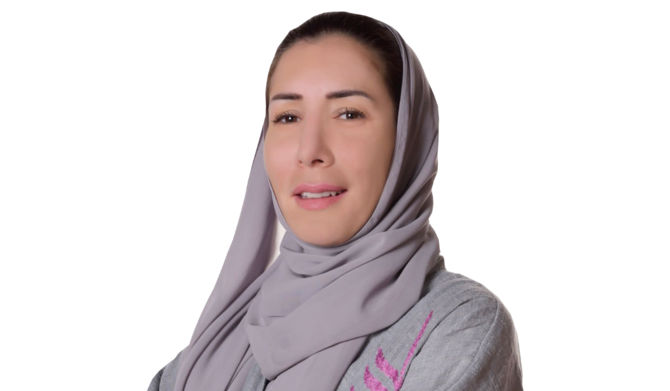
Who’s Who: Yasminah Abbas, head of investors relations at Banque Saudi Fransi
Updated 23 July 2023
Arab News
Yasminah Abbas is a career banker and among the first women to be appointed as head of investors relations in the Saudi banking industry.
She was promoted to this position at the Banque Saudi Fransi earlier this month.
Abbas started her career at Banque Saudi Fransi in 2000 and assumed different roles on the client relationship management side over the course of 13 years.
She joined the management team of the corporate banking group in 2018 as the head of client coverage and segmentation, in which she kicked off strategic initiatives within the group and across the organization as a whole.
Her last role was deputy head of business management for the wholesale banking group, looking over and focusing on business performance and development, in which she was a key figure in expanding the synergies and partnerships within Banque Saudi Fransi.
Abbas holds multiple executive leadership certifications from Wharton Business School, Georgetown University, and the London Business School.
She holds a bachelor’s degree in business administration from the American University of Beirut and is currently enrolled in the CIRO Certification program.
Carved by time: Saudi Arabia’s hidden geotourism gem of Razan
Long before modern engineering, the geology of Razan functioned as effective natural infrastructure, sustaining life in an arid environment
This utility made Razan a strategic landmark, playing a vital role in the ancient Yemeni Hajj Road
Updated 06 February 2026
Arab News
AL-LITH: Sixty kilometers north of Al-Lith governorate in the Kingdom's west, rising above the shifting sands and valleys of the Makkah region, lies a place where the earth itself tells a story. This is Razan, a geological wonder where history is not written in ink, but etched into the stone by the patient hands of wind, water, and time.
Perched atop a high rocky mass and flanked by valleys to the northwest and southeast, Razan stands in natural isolation. This geographic solitude has acted as a guardian, preserving a landscape that feels almost otherworldly — a pristine stage set by nature over millennia.
The place is defined by its striking rock formations: dense clusters of stone, stepped ridges that resemble ancient staircases, and natural ceilings sculpted by the relentless flow of seasonal torrents.
The visual impact is one of dramatic contrast — the heaviness of solid rock balanced against open, airy spaces carved by erosion. Fine channels and intricate flow patterns mark the stone, serving as fossilized evidence of the water that once rushed through these corridors, shaping the land into a rugged work of art.
In the quiet majesty of Razan, the past is preserved. (SPA)
Nature’s infrastructure
But Razan is more than just a scenic marvel; for centuries, it served as a lifeline. The same forces that sculpted the cliffs also hollowed out natural rock basins. These geological depressions acted as seasonal reservoirs, catching rainwater and supplementing nearby wells. Long before modern engineering, the geology of Razan functioned as effective natural infrastructure, sustaining life in an arid environment.
This utility made Razan a strategic landmark, playing a vital role in the ancient Yemeni Hajj Road. The sturdy, elevated terrain provided a natural pathway for pilgrims, offering stability and protection on their spiritual journey toward Makkah.
Today, Razan stands at the intersection of heritage and opportunity. No longer just a passage for pilgrims, it is emerging as a valuable asset for geotourism. Its unique topography offers a visual feast for travelers and a treasure trove for scientists studying geological history.
As Saudi Arabia moves toward the goals of Vision 2030, sites like Razan are finding new purpose. By transforming this geological narrative into a tourism destination, the region aims to preserve its natural heritage while breathing new life into the local economy.