

Female Saudi cyclist pedals her way to glory

1 / 3
Following on the path of the pursuit of one’s own dreams, Yasmine Idriss’s nordic ring road adventure is to inspired others to pursue their personal goals. (Supplied)
2 / 3
Following on the path of the pursuit of one’s own dreams, Yasmine Idriss’s nordic ring road adventure is to inspired others to pursue their personal goals. (Supplied)
3 / 3
Following on the path of the pursuit of one’s own dreams, Yasmine Idriss’s nordic ring road adventure is to inspired others to pursue their personal goals. (Supplied)
Short Url
Updated 08 July 2023
Follow

Female Saudi cyclist pedals her way to glory

  • Yasmine Idriss embarks on a journey to bike 1,400 km around Iceland

RIYADH: Months ago, Yasmine Idriss saw herself in a dream, surrounded by cascading waterfalls, lush greenery, and the high peaks of mountain ranges. Although it was only a vague vision, she knew it was Iceland.

On Tuesday, Idriss began her attempt to cycle around Iceland’s Ring Road or Route 1, a nearly 1,400 km road that goes around the country, a popular route for tourists who want to explore.

It is a journey of a lifetime and should she complete it, she would become the first Arab and Saudi woman to do so.
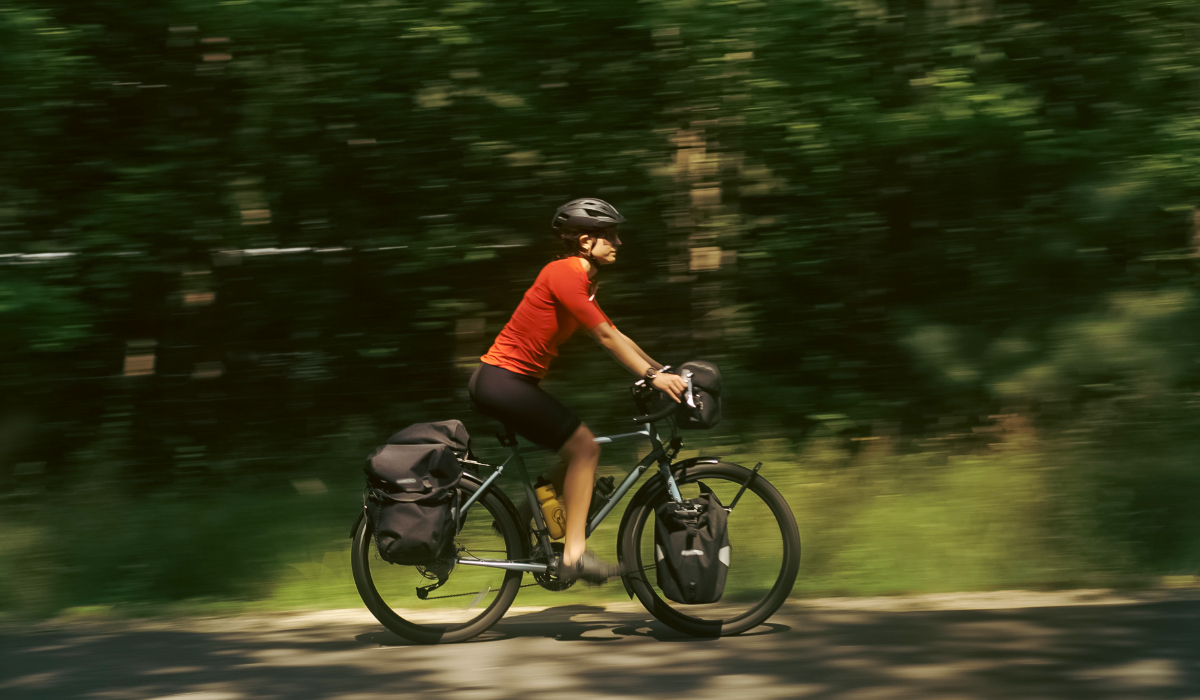


Following on the path of the pursuit of one’s own dreams, Yasmine Idriss’s nordic ring road adventure is to inspired others to pursue their personal goals. (Supplied)

She told Arab News: “If I had no obstacles in my way, what would I do? This is what came up. I wanted to take time to be on a real adventure — a difficult one. One that would push me to my limits and force me to grow.”

As a self-supported explorer, she is cycling with around 32 kg of camping gear and equipment, water, and other essentials for the trip.

Idriss plans on using camp grounds for accommodation and will stop at hotels along the way to freshen up.

SPEEDREAD

• Idriss on Thursday began her attempt to cycle around Iceland’s Ring Road or Route 1, a nearly 1,400 km road that goes around the country, a popular route for tourists who want to explore.

• It is a journey of a lifetime and should she complete it, she would become the first Arab and Saudi woman to do so. As a self-supported explorer, she is cycling with around 32 kg of camping gear and equipment, water, and other essentials for the trip.

For the next three weeks, including four rest days, she will be cycling an average of 80 km daily.

However, plans can easily change when facing the elements: “The thing with Iceland is, it’a open. It’s all (mostly) flat, there are no obstacles and there are no trees — which is why it’s so windy, because there’s nothing to stop the wind.

“What people tell you about these things is that you’re never really ready. You can try to simulate the experience as much as you want. But the real deal is always going to be tougher, and there’s nothing I can do to simulate the wind,” she said.
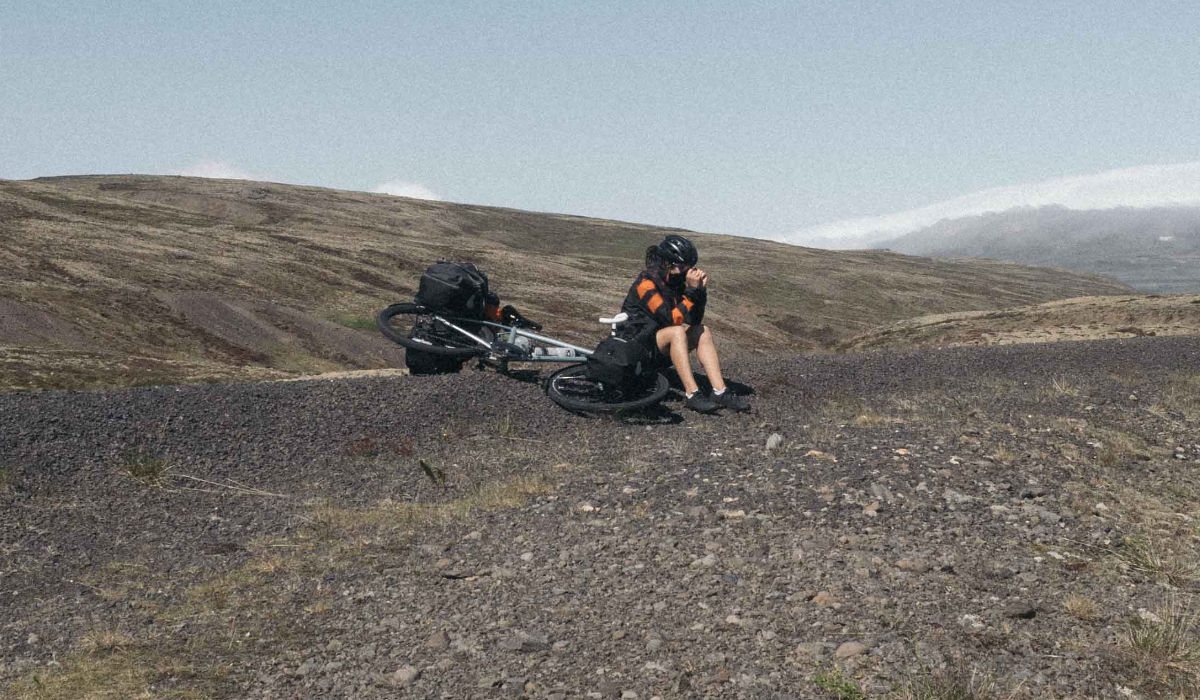


Following on the path of the pursuit of one’s own dreams, Yasmine Idriss’s nordic ring road adventure is to inspired others to pursue their personal goals. (Supplied)

Idriss, who is sharing updates from the journey on her Instagram account @yasidriss, wrote in the first post that she is on the road with peak winds of 24-48 km/h.

As a novice biker, the Nordic landscape serves as the perfect doorway for cross-country exploration. “It’s such a raw country … I’m excited to just be at the mercy of the elements, in a way, as a primitive, primal way of being and exploring a country,” she added.

Idriss dived into the newness of it all with determination. She spent the first half of the year preparing for the adventure with training sessions with a cycling coach four times a week and strength training three times a week.   

The training gave her new biking skills like clipping in, riding one handed, and swiftly mounting on and off.

Idriss noted that these are things that someone who grew up riding bicycles could do in their sleep, but she had to take the time to learn.

While new to the pedals, Idriss has previously trekked across Spain, parts of Europe, and Southeast Asia. She described feeling a sense of euphoria when the fatigue would set in after a long day and she would have no choice but to rest for the night.

Recalling that experience, she said: “That’s when something switches. Whether it’s our survival instinct, or something spiritual … You feel something that I can’t really name that takes over. That’s the prize that you win for putting yourself through this kind of stuff.”

She seems to hold a deep admiration for the opportunities that lie in going on adventures, testing the body’s strength, and being close to nature.

“There is something to gain from discomfort, and it is growth. It’s how we’ve survived for millions of years as human beings. It’s how we grow and expand our hearts and our minds. That’s really what I’m after.”

There have been a number of Saudi women who have taken up challenging endeavors in nature. In 2019, Mona Shahab climbed Mount Everest and used the ascent to raise money for underprivileged children in Egypt. In 2016, Mariam Saleh Binladen crossed the English Channel, as part of a series of ultimate endurance challenges to raise awareness of the plight of Syrian orphan children.

“It feels like a Saudi woman today has no obstacles in front of her. If you think about everything from government and businesses to the service industry, women are at the forefront everywhere and I think there’s never been a better time for the Arab woman to shine,” she noted.

Following on the path of the pursuit of one’s own dreams, Idriss’s Nordic Ring Road adventure is to inspired others to pursue their personal goals. It’s like the self-care airplane analogy states: you must put on your own oxygen mask before you assist others.

“I think I purposely am doing this without a cause to encourage people to do things for themselves … I’m just excited to see what’s waiting for me there. I know I’m supposed to learn something I’m supposed to grow in a certain way that I’ll only find out after the trip.”


Saudi House kicks off Davos with push on Vision 2030, AI platform and ‘humanizing’ tourism

At Saudi House, ministers and executives set out how the Kingdom sees the next phase of its transformation. (Supplied)
Updated 20 January 2026
Follow

Saudi House kicks off Davos with push on Vision 2030, AI platform and ‘humanizing’ tourism

  • Saudi ministers dominate pre-summit spotlight at Saudi pavilion, touting Vision 2030’s next phase and human capital as key to global edge
  • Ministry of Economy and Planning announced the SUSTAIN Platform which aims to accelerate AI-enabled, cross-sector collaboration for sustainable development

DAVOS: For regulars at the World Economic Forum, Monday in Davos is usually a chance to ease into the week, a time to reconnect, plan meetings and prepare for the intense schedule ahead.

This year, Saudi Arabia moved quickly to fill that lull, taking center stage with a packed program of panels ahead of Tuesday’s official opening.

At the Saudi House — the Kingdom’s official pavilion on the Promenade, returning after its debut as a standalone venue at the 2025 WEF Annual Meeting — Saudi ministers and global executives set out how the Kingdom sees the next phase of its transformation.

Monday’s speakers at the Saudi House included Minister of Finance Mohammed Al-Jadaan, Minister of Investment Khalid Al-Falih, Minister of Tourism Ahmed Al-Khateeb, and President and Vice Chairman of Meta Dina Powell McCormick. (Supplied)

Established by the Ministry of Economy and Planning, the venue is pitched as a platform for international thought leaders to tackle the challenges, opportunities and solutions shaping the global economy.

Opening a session on the Kingdom’s role at this year’s Forum and the next phase of Vision 2030 — now in its 10th year and roughly two-thirds complete — Princess Reema bint Bandar, Saudi Arabia’s ambassador to the US, said human capital “is the actual driver if you want a competitive, modern economy.”

She described one of the biggest achievements of the past decade as the emergence of a highly qualified cohort of young Saudis who could work anywhere in the world but “choose to come home, choose to build at home and choose to deliver at home,” calling this “the biggest symbol of the success of Vision 2030.”

Who can give you optimum access to opportunities while addressing risks? I contend that Saudi Arabia has been able to provide that formula.

Khalid Al-Falih, Saudi minister of investment

On the same panel, Minister of Finance Mohammed Aljadaan said this success is rooted in a “behavioral change” that has strengthened the Kingdom’s credibility with both international partners and its own citizens.

“Credibility comes from being very pragmatic, making sure that you maintain your fiscal policy discipline, but at the same time refocus your resources where it matters,” he said, warning that “markets will call your bluff if you’re not serious.”

The Saudi House, a cross-ministerial initiative led by the Ministry of Economy and Planning, is intended to underscore the Kingdom’s “commitment to global cooperation” by offering “a platform where visionary ideas are shared and shaped,” while showcasing opportunities and lessons from its “unprecedented national transformation.”

Lubna Olayan, Chair of the Corporate Board, Olayan Group

Echoing earlier comments to Arab News, Economy and Planning Minister Faisal Alibrahim said the Kingdom’s role as an anchor of stability has helped unlock its potential, stressing that while the objective is to decouple from reliance on a single commodity, “2030 is not the finishing line.”

Khalid Al-Falih, Saudi minister of investment, said Saudi Arabia has been able to enable access to opportunities while addressing major risks, arguing that few countries can match the Kingdom’s overall mix.

“No country has all of those to 100 percent,” he said. “But who can give you the mix that gives you optimum access to opportunities while addressing all of those risks?

Dr. Bedour Alrayes, Deputy CEO, Human Capability Development Program, Saudi Arabia

“I contend that Saudi Arabia has been able to provide that formula and the proof is in the pudding,” noting that local investment has doubled in recent years to reach levels comparable with India and China.

While societal transformation dominated the morning discussions, the afternoon turned to technology, tourism, sport and culture, four strategic sectors expected to spearhead Vision 2030’s next phase.

The Ministry of Economy and Planning used the day to announce the SUSTAIN Platform, due to launch in 2026, which aims to accelerate AI-enabled, cross-sector collaboration for sustainable development.

The ministry said SUSTAIN will translate the Kingdom’s public and private-sector coordination mandate into a practical national tool to help government entities, businesses, investors, academia and civil society identify credible partners, form trusted coalitions and move initiatives “from planning to implementation more efficiently,” addressing a global challenge where fragmented partnerships often slow delivery and blunt impact.

“We are in a moment in time where technology may well impact the face of humanity,” said Dina Powell McCormick, recently appointed president and vice chairman of Meta, welcoming the Kingdom’s “desire” to partner with technology companies and its embrace of innovation.

Minister of Tourism Ahmed Alkhateeb, discussing how technology is being deployed in his sector, underlined that “in travel and tourism, people are very important. We learn about other people’s culture through interacting with people. We digitalize the unnecessary and humanize the necessary.”

He added that while technological transformation is a priority, “we don’t want to replace this big workforce with technology. I think we need to protect them in Saudi Arabia, where we’re being a model. I’m an advocate of keeping the people.”

Throughout the week, Saudi House will host more than 20 sessions, including over 10 accredited by the WEF, across six themes: Bold Vision, Insights for Impact, People and Human Capability, Quality of Life, Investment and Collaboration, and Welcoming the World.

The pavilion will also launch “NextOn,” a new series of influential and educational talks featuring leading global voices.