

UK government plan to deport migrants to Rwanda is unlawful, court rules

Appeal court rules UK govt's Rwanda asylum plan unlawful (Reuters)
Short Url
Updated 29 June 2023
Follow

UK government plan to deport migrants to Rwanda is unlawful, court rules

  • Three senior appeal court judges ruled that Rwanda could not be treated as a safe third country.

LONDON: The Court of Appeal ruled on Thursday that the British government’s plan to deport asylum seekers to Rwanda is unlawful, dealing a setback to Prime Minister Rishi Sunak’s campaign to stop migrants crossing the Channel in small boats.
Three senior appeal judges ruled by a majority that Rwanda could not be treated as a safe third country.
Under a deal struck last year, the government planned to send tens of thousands of asylum seekers who arrive on its shores more than 4,000 miles (6,400 km) to the East African country.
The first planned deportation flight was blocked a year ago in a last-minute ruling by the European Court of Human Rights (ECHR), which imposed an injunction preventing any deportations until the conclusion of legal action in Britain.
In December, the High Court ruled the policy was lawful, but that decision was challenged by asylum seekers from several countries such as Syria, Iraq and Iran, along with human rights organizations.
Announcing the Court of Appeal’s decision, Judge Ian Burnett said: “The deficiencies in the asylum system in Rwanda are such that there are substantial grounds for believing that there is a real risk that persons sent to Rwanda will be returned to their home countries where they face persecution or other inhumane treatment.”
Burnett said he himself disagreed with the other two judges and a government source said it was likely to challenge the ruling at Britain’s Supreme Court. Even if the government was successful there it would mean deportation flights were very unlikely to begin this year.
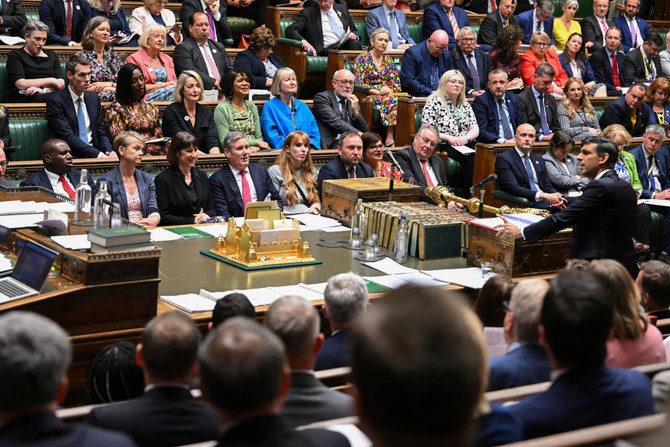
In the meantime, the ruling is a huge blow for Sunak who is dealing with high levels of inflation, declining public support, and is under increasing pressure from his own party and the public to deal with migrant arrivals in small boats.
Sunak has made “stop the boats” one of five priorities, and is hoping a fall in arrivals might help his Conservative Party pull off an unexpected win at the next national election. Home Secretary (interior minister) Suella Braverman is due to make a statement to parliament later on Thursday.

“IMMORAL, INEFFECTIVE“
Political opponents said the government should scrap the policy, with the Liberal Democrats calling it “immoral, ineffective and incredibly costly for taxpayers” and a “vanity project” for Braverman.
Sending each asylum seeker to Rwanda would cost on average 169,000 pounds ($213,450), the government said this week.
Opponents also say the government’s policies were about driving political support and will not solve underlying issues.
They argue there are currently no legal routes for most asylum seekers fleeing war or persecution to apply for refugee status to enter Britain, so many see the dangerous small boat crossings as their only option.
Last year, a record 45,755 people came to Britain in small boats across the Channel, mainly from France. Over 11,000 have arrived so far this year, a similar rate to the first half of 2022.


India accelerates free trade agreements against backdrop of US tariffs

Updated 21 December 2025
Follow

India accelerates free trade agreements against backdrop of US tariffs

  • India signed a CEPA with Oman on Thursday and a CETA with the UK in July 
  • Delhi is also in advanced talks for trade pacts with the EU, New Zealand, Chile 

NEW DELHI: India has accelerated discussions to finalize free trade agreements with several nations, as New Delhi seeks to offset the impact of steep US import tariffs and widen export destinations amid uncertainties in global trade. 

India signed a Comprehensive Economic Partnership Agreement with Oman on Thursday, which allows India to export most of its goods without paying tariffs, covering 98 percent of the total value of India’s exports to the Gulf nation. 

The deal comes less than five months after a multibillion-dollar trade agreement with the UK, which cut tariffs on goods from cars to alcohol, and as Indian trade negotiators are in advanced talks with New Zealand, the EU and Chile for similar partnerships. 

They are part of India’s “ongoing efforts to expand its trade network and liberalize its trade,” said Anupam Manur, professor of economics at the Takshashila Institution. 

“The renewed efforts to sign bilateral FTAs are partly an after-effect of New Delhi realizing the importance of diversifying trade partners, especially after India’s biggest export market, the US, levied tariff rates of up to 50 percent on India.” 

Indian exporters have been hit hard by the hefty tariffs that went into effect in August. 

Months of negotiations with Washington have not clarified when a trade deal to bring down the tariffs would be signed, while the levies have weighed on sectors such as textiles, auto components, metals and labor-intensive manufacturing. 

The FTAs with other nations will “help partially in mitigating the effects of US tariffs,” Manur said. 

In particular, Oman can “act as a gateway to other Gulf countries and even parts of Eastern Europe, Central Asia, and Africa,” and the free trade deal will most likely benefit “labor-intensive sectors in India,” he added. 

The chances of concluding a deal with Washington “will prove to be difficult,” said Arun Kumar, a retired economics professor at the Jawaharlal Nehru University.

“With the US, the chances of coming to (an agreement) are a bit difficult, because they want to get our agriculture market open, which we cannot do. They want us to reduce trade with Russia. That’s also difficult for India to do,” he told Arab News.  

US President Donald Trump has threatened sanctions over India’s historic ties with Moscow and its imports of Russian oil, which Washington says help fund Moscow’s ongoing war with Ukraine.

“President Trump is constantly creating new problems, like with H-1B visa and so on now. So some difficulty or the other is expected. That’s why India is trying to build relationships with other nations,” Kumar said, referring to increased vetting and delays under the Trump administration for foreign workers, who include a large number of Indian nationals. 

“Substituting for the US market is going to be tough. So certainly, I think India should do what it can do in terms of promoting trade with other countries.” 

India has free trade agreements with more than 10 countries, including comprehensive economic partnership agreements with South Korea, Japan, and the UAE.

It is in talks with the EU to conclude an FTA, amid new negotiations launched this year for trade agreements, including with New Zealand and Chile.  

India’s approach to trade partnerships has been “totally transformed,” Commerce and Industry Minister Piyush Goyal said in a press briefing following the signing of the CEPA with Oman, which Indian officials aim to enter into force in three months. 

“Now we don’t do FTAs with other developing nations; our focus is on the developed world, with whom we don’t compete,” he said. “We complement and therefore open up huge opportunities for our industry, for our manufactured goods, for our services.”