



DUBAI: When two extreme athletes decided to take on a grueling challenge to row across the Atlantic Ocean in solidarity with refugees, they did not expect to experience the same terror endured by the millions of displaced people who attempt such perilous crossings every year.
Omar Samra, an Egyptian adventurer and motivational speaker, along with his good friend and professional athlete Omar Nour, tell their story in the award-winning documentary “Beyond the Raging Sea.”
The film follows the duo as they fight for their lives on the high sea, stranded in open water for hours when their boat suddenly capsizes mid-storm during their journey from the Canary Islands to Antigua in 2017.
“I think the main lesson that we learnt through our experience is that while our journey bears some similarities to the plight of refugees, it’s very different, because we embarked on this journey by choice,” Samra told Arab News via a Zoom interview.

Omar Samra, Egyptian adventurer and motivational speaker, along with his good friend and professional athlete Omar Nour, rowing across the Atlantic. (Supplied)
“We had the best training and best equipment … but to think that someone would go through all of this to try and get to the other side to understand that their problems are only starting is something that is very daunting.”
To mark World Refugee Day on June 20, Samra and dozens of public figures and influencers have come forward on multiple online platforms to highlight the rapidly growing global displacement crisis.
In its latest report, “Global Trends: Forced Displacement in 2022,” the UN Refugee Agency, UNHCR, recorded the highest levels of displacement on record, with 108.4 million individuals forcibly displaced worldwide by conflict, violence, persecution, or human rights violations.
This year World Refugee Day is being observed in the shadow of yet another grinding conflict and massive displacement crisis — this time in Sudan.
Since the armed conflict erupted between the Sudanese Armed Forces and the paramilitary Rapid Support Forces in mid-April, hundreds of thousands have been displaced, both within the nation’s borders and into neighboring countries.
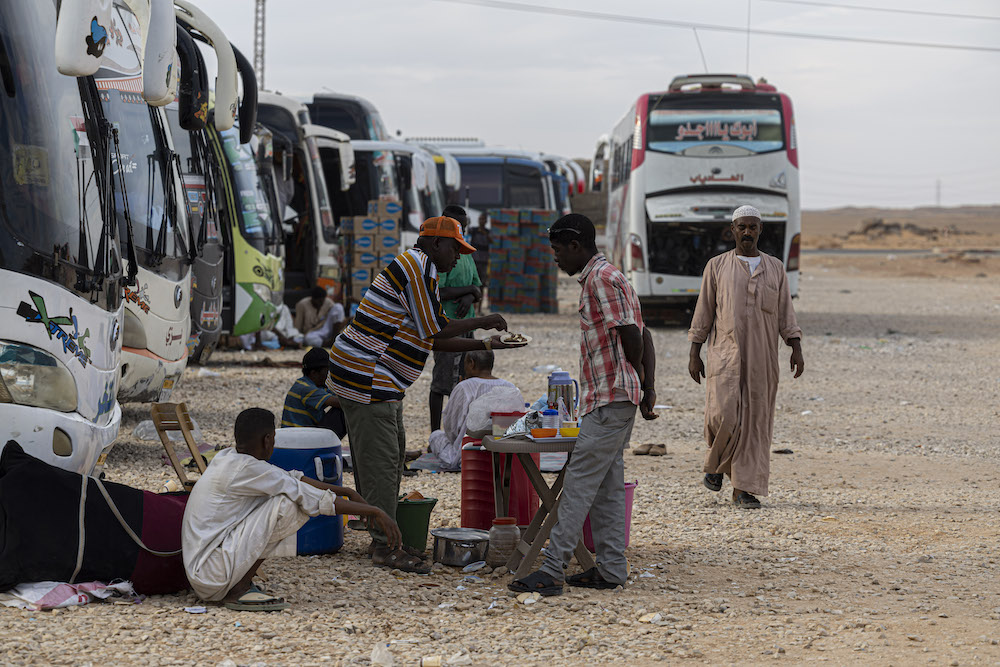
Sudanese drivers wait by their buses upon arrival at the Egyptian village of Wadi Karkar near Aswan on May 14, 2023 after fleeing war-torn Sudan. (AFP)
Rula Amin, spokesperson for the UNHCR’s Middle East and North Africa regional bureau, believes the best and most effective way to stop these numbers increasing is to end the conflict and resolve the dispute through negotiations.
In the meantime, neighboring countries, including Egypt, Libya, Chad, Ethiopia, the Central African Republic and Eritrea, can help the people of Sudan by keeping their borders open to people escaping the conflict, she said.
“People fleeing, seeking protection, should have access to territory regardless of how they arrive,” Amin told Arab News.

“Neighboring countries can help by hosting people crossing the border and ensuring they receive support and access to services.”
However, in order for host countries to shoulder this responsibility successfully, Amin emphasizes the need for the international community to lend support.
While there are several countries around the world that are making changes to accommodate displaced communities, the influx of refugees places significant economic and social strain on host nations, said Dr. Sonia Ben Jaafar, CEO of the Emirates-based Abdulla Al-Ghurair Foundation, which oversees the Abdul Aziz Refugee Education Fund.
Lebanon and Jordan have faced particular challenges in providing basic services, such as housing, healthcare, education and employment opportunities, for both their own populations and vast numbers of predominantly Syrian and Palestinian refugees, she said.
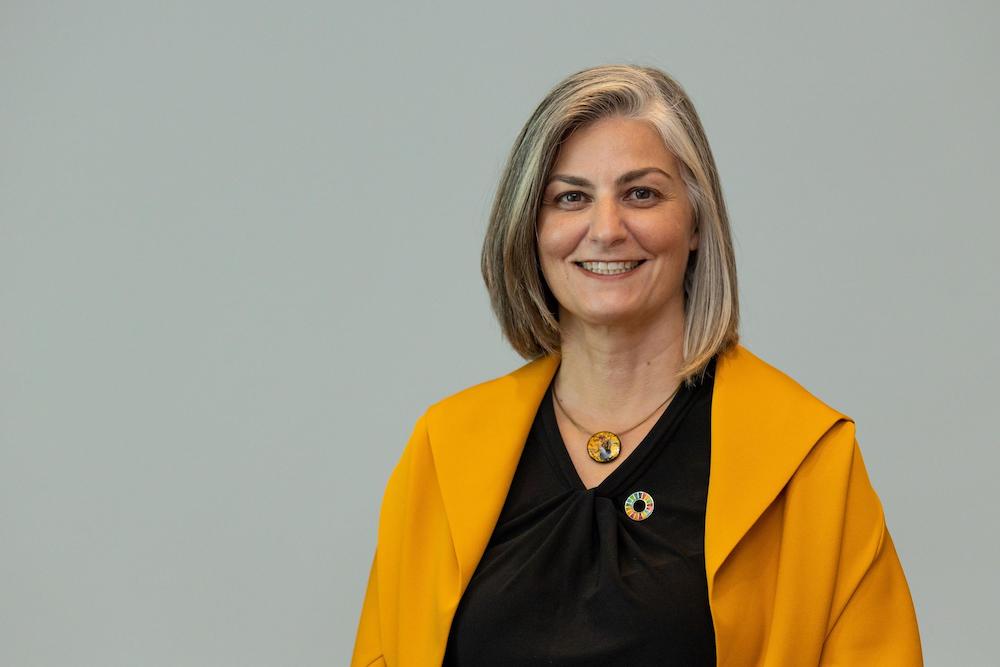
Dr. Sonia Ben Jaafar, CEO of the Emirates-based Abdulla Al-Ghurair Foundation, which oversees the Abdul Aziz Refugee Education Fund. (Supplied)
“Insufficient financial support from the international community can limit the capacity of countries like Lebanon and Jordan, and exacerbate tensions within host communities, leading to further challenges and potential instability,” Ben Jaafar told Arab News.
She emphasized the need for massive, coordinated efforts to strengthen regional and international partnerships that can “facilitate burden-sharing and alignment of humanitarian efforts.”
Without viable and sustainable conflict resolution through diplomatic efforts, which Sudan lacks today, prolonged displacement is inevitable, she added.
Until recently, Sudan was home to the second-largest refugee population in Africa, with more than a million displaced people from South Sudan, Eritrea, Syria, Ethiopia, the Central African Republic, Chad and Yemen.
However, Sudan’s own descent into violence has disrupted whole communities caught in the crossfire, including 3.5 million Sudanese already internally displaced and the 1.1 million refugees who had taken shelter there, according to the UN.
Opinion
This section contains relevant reference points, placed in (Opinion field)
“If fighting continues, the number of people forced to flee their homes looking for safety will increase,” said Amin.
An estimated 1.2 million people were newly displaced within Sudan and a further 378,300 had fled to neighboring countries as of the end of May. The number of food-insecure people in the country, which the UN expects to increase by more than 2 million in the next three to six months, further compounds the humanitarian emergency.
“The parties fighting on the ground must adhere to international principles and avoid targeting civilians and civilian infrastructure,” said Amin, who added that the widely-reported human rights violations in the country “must stop immediately.”
Several other regions of the world are witnessing a massive spike in the number of refugees, including Europe in the wake of Russia’s invasion of Ukraine in early 2022, and parts of Central Asia owing to the Taliban’s return to power in Afghanistan in 2021.

According to the UN report, more than half of all refugees and other people in need of international protection come from just three countries — Syria (6.5 million), Afghanistan (5.7 million), and Ukraine (5.7 million).
“Countries within the Eastern Mediterranean Region, such as Syria, Afghanistan, the Democratic Republic of Congo, Yemen and Sudan, to name a few, are home to about three-quarters of those internally displaced, creating a dire need for expanding access to basic services to migrants to tackle inequalities,” said Ben Jaafar.
And with each passing year of displacement, issues like food and water security, sanitation, healthcare, personal safety, housing and education are becoming worse as host-nation resources become strained, she said.
“Education, in particular, is a critical area that offers significant potential for solutions amidst these challenges as the lack of educational opportunities for displaced children can lead to severe ramifications at personal, national and regional scales,” said Ben Jaafar.
Indeed, early marriage, barriers to mobility, financial constraints and child labor — to name but a few — can all be prevented by providing young refugees with education and training, she said.
However, millions of refugees who are either stateless or of undetermined nationality are unable to access essential services and basic rights, including education, healthcare, formal employment, or even the right to travel.
The UN report shows that an estimated 4.4 million people worldwide were either stateless or of undetermined nationality in 2022 — 90,800 more than at the end of 2021.
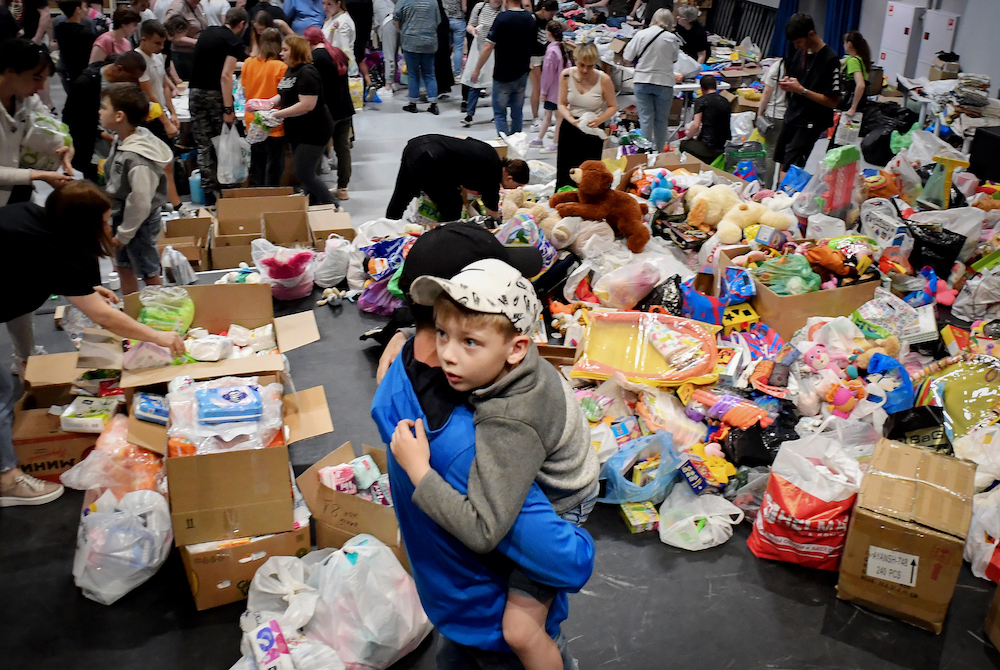
People evacuated from the Belgorod region’s zones bordering Ukraine, including those from the town of Shebekino, receive humanitarian aid in Belgorod on June 3, 2023. (AFP)
The crisis in Ukraine last year contributed significantly to the upward trajectory of the global displacement crisis. In February 2022, Russia’s invasion of Ukraine alone created the largest displacement crisis since the Second World War.
In the early days of the war, more than 200,000 refugees per day were crossing borders in search of sanctuary, initially in countries adjacent to Ukraine. By the end of 2022, 11.6 million Ukrainians had been displaced, including 5.9 million internally displaced persons and 5.7 million who had fled to neighboring countries and beyond.
While millions of Ukrainian refugees received temporary protection, granted by EU member states and other countries, the highest number of new asylum applications ever recorded, at 2.6 million, were registered by more than 140 nationalities in 155 countries during 2022.
A large number of refugees were also reported to have returned to their homes, many due to a lack of alternative options.
UN data shows that both Syria and Afghanistan reported the largest numbers of returnees, with 51,300 Syrians returning to their country in 2022, up by 14,800 on 2021 figures, and some 236,200 returning to Afghanistan — 21 percent of them women and 57 percent children.
There have been some positive developments. The UN report also found that a cessation of fighting in northern Ethiopia, agreed in November 2022, resulted in 1.9 million internally displaced persons returning that year.
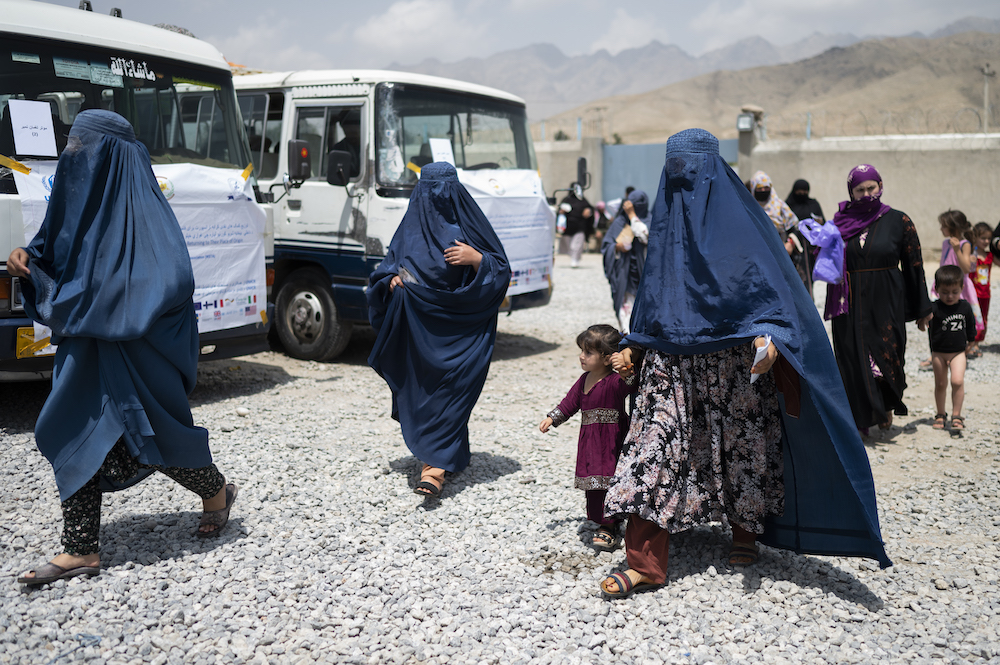
Afghan internally displaced refugee women walk with their children to the bus as they return home to a United Nations High Commissioner for Refugees in the outskirts of Kabul on July 28, 2022. (AFP)
Similarly, in Yemen, a UN-coordinated ceasefire, which expired in October 2022 but continued to be broadly adhered to, brought hope to a country in which half of the population are food insecure.
“The challenge before us, therefore, is to work together towards a world that respects diversity and will empower refugees and facilitate their preparedness for economic participation,” said Ben Jaafar.
Globally, Turkiye, Iran, Colombia, Germany and Pakistan hosted the largest refugee populations at the end of 2022, including people in refugee-like situations and other people in need of international protection.
“There is definitely a challenge here (for host countries), but the conversation should be ‘how do we solve the challenge?’ rather than ‘do we take in people or not?’” said the Egyptian athlete, Samra.
While conflict and violence are some of the main factors behind the refugee crisis, Samra also pointed out that natural disasters and climate change are increasingly contributing to displacement.
“Research has predicted that the highest number of refugees is going to come from climate-change issues in the next decade,” he said.

The latest UN report shows that around 32.6 million new displacements were due to natural disasters, with 21 percent occurring in the least developed countries and small island developing states.
As a result of climate change, these countries have experienced disproportionately high economic losses in relation to the size of their economies.
“This is the very thing that threatens the existence of a country or a region,” said Samra.
Those with a public platform, including athletes, celebrities and public figures, have a responsibility to raise awareness, foster dialogue, and shift public perceptions on refugees, he added.
“I think the refugee crisis, along with the climate crisis, are the biggest issues that the world faces today, and the way we choose to deal with it, whether it’s in a humane way or otherwise, will dictate the face of our planet for years.”


