- Aviation minister says outsourcing is not ‘privatization,’ promises to retain all employees at airports
- Pakistan signs agreement of $220 million to revive the aviation industry’s hotel in the United States
ISLAMABAD: A senior Pakistani minister informed the media on Sunday about the measures taken by the government to strengthen the country’s aviation industry while highlighting its decision to outsource three major airports and sign a contract with the New York administration to operationalize a hotel it owns in the United States.
Pakistan’s aviation industry has faced financial difficulties in recent years due to high operating costs, increasing fuel prices, and mismanagement of funds. The sector has also faced scrutiny over its compliance with international safety standards, leading to temporary bans and restrictions on Pakistani airlines in various countries.
Addressing a news conference in Lahore, the aviation minister, Khawaja Saad Rafique, emphasized the importance of encouraging the private sector to carry out business responsibilities while the government focuses on regulatory responsibilities.
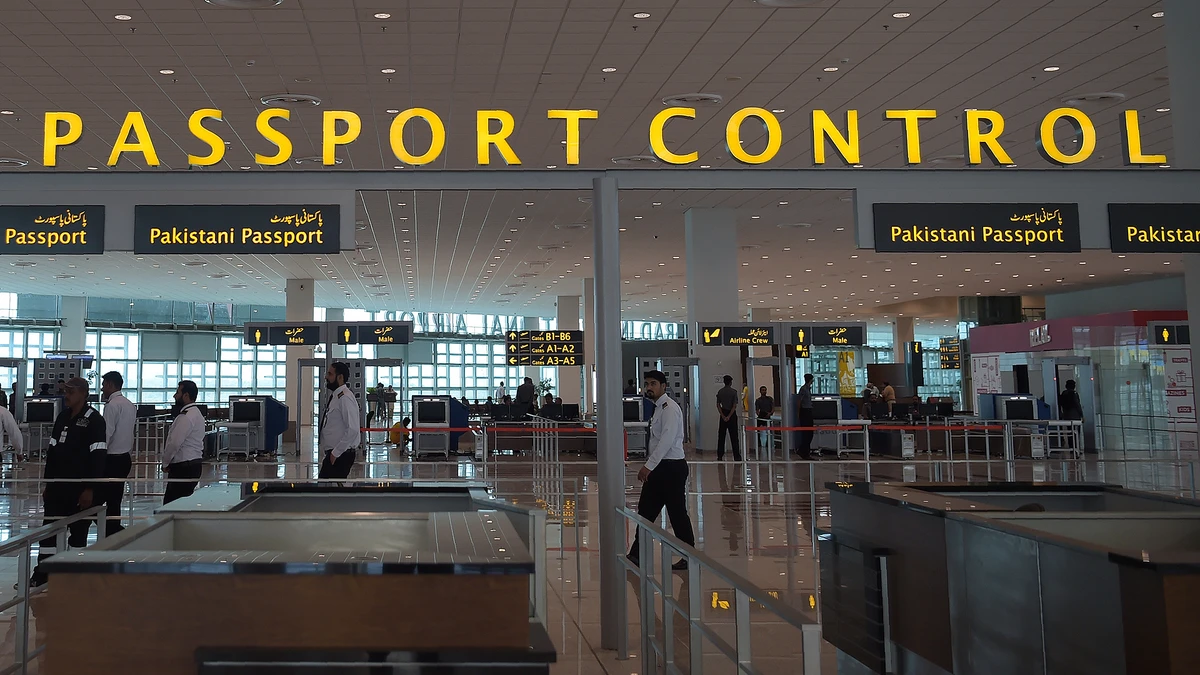
“The federal government has decided to outsource three airports: Lahore, Karachi, and Islamabad,” he said. “Outsourcing does not mean privatization … These airports will be handed over to international operators for a certain period, a practice followed by other countries worldwide. Once that period ends, the airports will be returned to Pakistan with all the value addition done by the companies.”
Rafique assured that no Civil Aviation Authority (CAA) employee would lose their job, but “adjustments” would be made without affecting their salaries or perks.
He said the government engaged the services of the International Finance Corporation (IFC), a World Bank subsidiary, to perform the outsourcing work.
“The modernization of airports and proper utilization of state funds is the right of every Pakistani,” Rafique continued. “We have the airports, but they lack basic facilities.”
The outsourcing process will be conducted through competitive bidding, and the minister mentioned that more than a dozen leading international companies had contacted the IFC to explore the possibility of managing Pakistani airports.
ROOSEVELT HOTEL
The minister disclosed that the government had signed a contract with the New York City administration to resume business activities at the Roosevelt Hotel, which is owned by the aviation industry.
The hotel was closed by Pakistani authorities in October 2020 during the coronavirus pandemic, as the country’s economy weakened and the aviation sector faced significant losses. However, the facility accumulated liabilities of around $25 million in taxes and other overheads.
“We have a three-year contract with one and a half years of guaranteed business, though we believe it will last for three years and bring $220 million to Pakistan,” Rafique said.
He added that the money would be used to clear the liabilities, and the New York City administration would utilize the facility to accommodate immigrants before returning it to the government in the same state.
The minister highlighted that the government had saved a national asset that was no longer operational. He further mentioned that the hotel would once again become a revenue center for the aviation sector, and future governments would have the option to transform it into a high-rise building by establishing a public-private partnership.