

G7 finance chiefs move to diversify supply chains 

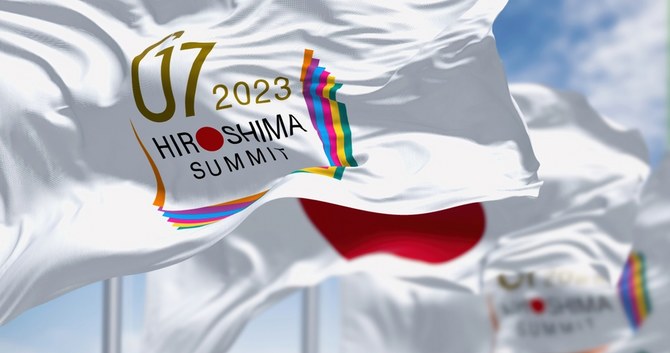
The three-day meeting in the city of Niigata took place just days before the leaders of the group of major developed economies gather in Hiroshima.  (Shutterstock)
Short Url
Updated 14 May 2023
Follow

G7 finance chiefs move to diversify supply chains 

NIIGATA: The G7 plans to launch a partnership scheme to diversify supply chains this year, the group’s finance ministers said Saturday following talks in Japan ahead of a major summit next week. 

The ministers did not directly cite a desire to reduce reliance on trade with China or Russia as motivation for the initiative, which focuses on clean energy technology. 

But the US has led a push for export controls on chip components to China, citing national security concerns, and US Treasury Secretary Janet Yellen pointed to recent shocks to the global economy. 

“Spillovers from Russia’s war against Ukraine and disruptions caused by the pandemic have made clear the importance of diversified and resilient supply chains,” she told reporters. 

Japanese Finance Minister Shunichi Suzuki also said COVID-19 had revealed “the downside of supply chains being too concentrated in one place.” 

In a joint statement, the G7’s finance ministers and central bank chiefs said they hoped to launch the partnership in collaboration with the World Bank “by the end of this year at the latest.” 

The scheme, dubbed RISE — Resilient and Inclusive Supply-chain Enhancement — builds on guidance released in April, and will offer interested developing countries “finance, knowledge and partnerships.” 

How much will be spent on the program has not been disclosed. 

The three-day meeting in the city of Niigata took place just days before the leaders of the group of major developed economies — which also includes France, Germany, Britain, Canada, Italy and the EU — gather in Hiroshima.  

Support for Ukraine and the G7’s relationship with China is expected to be high on the agenda at the May 19-21 summit, along with nuclear disarmament and action on climate change. 

As the finance talks wrapped up Saturday, the ministers reaffirmed their commitment to sanctions on Russia and said they were working together to enforce them, but did not announce any concrete new steps to tackle sanctions evasion. 

“We, together with the international community, have increased our commitment of budget and economic support for Ukraine for 2023 and early 2024 to $44 billion,” their statement said. 

The total amount has risen from a figure given by the G7 in February of $39 billion for 2023. 

They also stressed the need to bolster financial stability following recent banking sector turmoil, saying their governments “stand ready to take appropriate actions.”  

Three regional US banks have collapsed since early March, sparking panic among customers and upheaval for the shares of mid-sized institutions.  

While vowing to “address data, supervisory, and regulatory gaps in the banking system,” the finance chiefs nonetheless asserted that “our financial system is resilient.” 

The heads of the IMF, OECD and World Bank also attended the Niigata talks, along with finance ministers from Brazil, India and Indonesia.  

Discussions were partly overshadowed by the US debt ceiling standoff, as the world's largest economy faces its first-ever default. 

The Congressional Budget Office said Friday the nation could run out of money to pay its financial obligations by June 15 if lawmakers fail to agree on a deal to raise current limits on government spending. 


First EU–Saudi roundtable on critical raw materials reflects shared policy commitment

Updated 16 January 2026
Follow

First EU–Saudi roundtable on critical raw materials reflects shared policy commitment

RIYADH: The EU–Saudi Arabia Business and Investment Dialogue on Advancing Critical Raw Materials Value Chains, held in Riyadh as part of the Future Minerals Forum, brought together senior policymakers, industry leaders, and investors to advance strategic cooperation across critical raw materials value chains.

Organized under a Team Europe approach by the EU–GCC Cooperation on Green Transition Project, in coordination with the EU Delegation to Saudi Arabia, the European Chamber of Commerce in the Kingdom and in close cooperation with FMF, the dialogue provided a high-level platform to explore European actions under the EU Critical Raw Materials Act and ResourceEU alongside the Kingdom’s aspirations for minerals, industrial, and investment priorities.

This is in line with Saudi Vision 2030 and broader regional ambitions across the GCC, MENA, and Africa.

ResourceEU is the EU’s new strategic action plan, launched in late 2025, to secure a reliable supply of critical raw materials like lithium, rare earths, and cobalt, reducing dependency on single suppliers, such as China, by boosting domestic extraction, processing, recycling, stockpiling, and strategic partnerships with resource-rich nations.

The first ever EU–Saudi roundtable on critical raw materials was opened by the bloc’s Ambassador to the Kingdom, Christophe Farnaud, together with Saudi Deputy Minister for Mining Development Turki Al-Babtain, turning policy alignment into concrete cooperation.

Farnaud underlined the central role of international cooperation in the implementation of the EU’s critical raw materials policy framework.

“As the European Union advances the implementation of its Critical Raw Materials policy, international cooperation is indispensable to building secure, diversified, and sustainable value chains. Saudi Arabia is a key partner in this effort. This dialogue reflects our shared commitment to translate policy alignment into concrete business and investment cooperation that supports the green and digital transitions,” said the ambassador.

Discussions focused on strengthening resilient, diversified, and responsible CRM supply chains that are essential to the green and digital transitions.

Participants explored concrete opportunities for EU–Saudi cooperation across the full value chain, including exploration, mining, and processing and refining, as well as recycling, downstream manufacturing, and the mobilization of private investment and sustainable finance, underpinned by high environmental, social, and governance standards.

From the Saudi side, the dialogue was framed as a key contribution to the Kingdom’s industrial transformation and long-term economic diversification agenda under Vision 2030, with a strong focus on responsible resource development and global market integration.

“Developing globally competitive mineral hubs and sustainable value chains is a central pillar of Saudi Vision 2030 and the Kingdom’s industrial transformation. Our engagement with the European Union through this dialogue to strengthen upstream and downstream integration, attract high-quality investment, and advance responsible mining and processing. Enhanced cooperation with the EU, capitalizing on the demand dynamics of the EU Critical Raw Materials Act, will be key to delivering long-term value for both sides,” said Al-Babtain.

Valere Moutarlier, deputy director-general for European industry decarbonization, and directorate-general for the internal market, industry, entrepreneurship and SMEs at European Commission, said the EU Critical Raw Materials Act and ResourceEU provided a clear framework to strengthen Europe’s resilience while deepening its cooperation with international partners.

“Cooperation with Saudi Arabia is essential to advancing secure, sustainable, and diversified critical raw materials value chains. Dialogues such as this play a key role in translating policy ambitions into concrete industrial and investment cooperation,” she added.