

Boris Johnson, King Charles reportedly clashed over Rwanda deportation policy

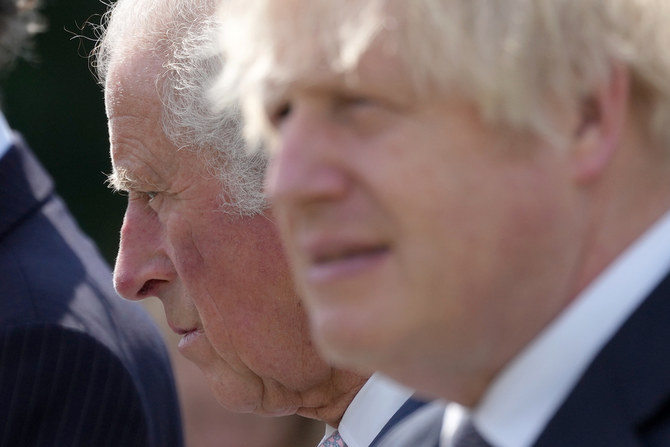
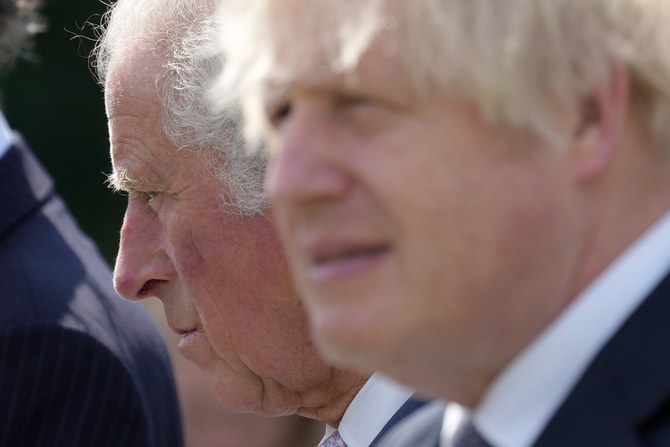
The clash between UK Prime Minister Boris Johnson and Prince Charles reportedly took place in Rwanda in June last year amid a summit of the Commonwealth countries. (AFP)
Short Url
Updated 09 May 2023
Follow

Boris Johnson, King Charles reportedly clashed over Rwanda deportation policy

  • Future king was ‘appalled’ at scheme to deport migrants to African country

LONDON: Former UK Prime Minister Boris Johnson reportedly clashed with Prince Charles last year over the government’s Rwanda deportation policy, MailOnline reported.

Charles, who was crowned king last week, was said to have been “appalled” at the scheme, which involves the removal of migrants who cross the English Channel in small vessels to the African country.

The 15-minute clash reportedly took place in Rwanda in June amid a summit of the Commonwealth countries.

Johnson is said to have warned Charles to avoid interfering in national politics as well as to cancel a plan to deliver a speech on slavery over fears that it could catalyze demands for reparations.

However, the government denied the reports of a row at the time, while associates of Johnson described them as “inaccurate.”

But Guto Harri, former director of communications for Downing Street, claimed on the “Unprecedented” podcast that the former PM “went in quite hard” on Charles over the Rwanda matter.

Harri also wrote in the Mail: “Boris briefed that the two had ‘a good old chinwag’ and had ‘covered a lot of ground.’

“What actually happened was less amicable. ‘I went in quite hard,’ he told me at the time, essentially squaring up to the prince and confronting him about what he — as unelected royalty — had said about the actions of a democratically elected government.

“Prince Charles was busted. He had obviously expressed some criticism, and though he tried to play it down, Boris pointed out the obvious, (saying): “If you didn’t say it, we both know your people could ring the newspapers and kill the story. The fact they haven’t done that says it all’.”

The former communications director added that Johnson’s relationship with the prince had been strained for years as a result of the former London mayor showing up late for a meeting.

But the Rwanda argument proved to be the final straw, Harri said, adding: “Relations never fully recovered and Charles will be relieved that Boris had left No. 10 before he ascended to the throne.”

Charles had long faced controversy over accusations that he was actively interfering in government affairs.

His comments on the Rwanda policy reportedly left government ministers “infuriated,” the Mail reported.

Sources close to Johnson also told the newspaper that Harri’s account of the conversation with Charles was inaccurate: “This account is simply inaccurate and does not reflect the conversation that took place.

“Boris Johnson has had nothing to do with this podcast, had no knowledge of it and deplores any attempt to report such conversations in public.”


Mali plans fuel rationing

People queue with their motorcycles at a gas station amid a fuel shortage in Bamako, Mali, Tuesday, Oct 7, 2025 (AP)
Updated 9 sec ago
Follow

Mali plans fuel rationing

  • Officials say the rationing system will ensure a more equitable distribution of fuel among consumers
  • Mali’s fuel importers’ union said that over 2,000 tanker trucks have entered the country since the start of the year — significantly fewer than the up to 6,000 per month that arrived prior to the attacks

LAGOS: Mali’s government has moved to impose fuel rationing to counter widespread shortages caused by Al-Qaeda-linked groups operating in the border regions that have, in recent months, cut off fuel supplies to the landlocked African country.
In announcing the rationing, officials did not say when it would start. 
The measure was cast as an effort to reduce long lines at gas stations, especially with the Muslim holy month of Ramadan only a few weeks away.
Since September, Al-Qaeda-linked militants and other extremists in Mali have increasingly attacked fuel trucks — more than a hundred trucks have been burned in the violence, which has crippled fuel imports and distribution.
Mali’s fuel importers’ union said that over 2,000 tanker trucks have entered the country since the start of the year — significantly fewer than the up to 6,000 per month that arrived prior to the attacks.
Officials say the rationing system will ensure a more equitable distribution of fuel among consumers. 
The new measures will include registering vehicle plates and wait periods for cars and vehicles to refuel. 
Cars will be allowed to tank up every 72 hours and motorcycles every 48 hours.
Moussa Alassane Diallo, Mali’s trade and industry minister, told a union of petroleum product importers that the rationing will “give us complete control” over gas stations, and allow authorities to “monitor the quantities of fuel sold.”
“We are committed to ending the fuel crisis as long as the military continues to escort our tanker trucks”, said Ibrahim Toure, head of the petroleum importers union.
But many residents — especially taxi drivers — expressed concerns that the fuel limits would impact their daily lives.
“These measures may work for private cars, but for us taxi drivers, it’s going to be difficult because we don’t earn enough money to fill up our taxis every time we go,” said Oumar Coulibaly, a taxi driver in the capital, Bamako.
“We do a lot of trips, and we need fuel,” he said.
Experts say the junta’s move was likely spurred by concerns about popular discontent over the prolonged fuel shortage.
Beverly Ochieng, a senior analyst with the consultancy Control Risks’ Global Risk Analysis team, said the “insecurity on supply routes due to militant presence and activity will remain a challenge to the transportation of fuel in the coming weeks, and the stability of supplies will vary.”