SAO PAULO, BRAZIL: In recent years, a new generation of researchers has been examining the ancient Islamic roots of Latin American societies.
In the age of social media, such content is being disseminated among larger audiences, and many people in Latin America seem to be avidly interested.
“I began to read about the Moors when I was studying Arabic in Egypt,” said Mansour Peixoto, a Muslim convert from the Brazilian city of Recife who in 2014 founded the website Historia Islamica (Islamic History).
“I’d already learnt at that time about the Islamic influence on Portugal, but then I became interested in its direct and indirect impacts on Brazilian culture,” he told Arab News.
Between 711 and 1492, Arab-Berber rulers dominated parts of present-day Portugal, Spain and France, naming the region Al-Andalus.
An almost-800-year presence in the Iberian Peninsula left many influences that were brought to colonial Latin America.
After the Christian re-conquest, Islam was forbidden in Spain and Portugal. From then on, especially at the beginning of the 17th century, many Muslims — including people of European ancestry — were forced to move to North Africa, but many accepted to convert to Catholicism, some of whom remained secretly Muslim.
“Those people, especially the poor, were numerous among the Portuguese who came to colonize Brazil since the 16th century,” said Peixoto.
FASTFACTS
- Between 711-1492, Arab-Berber rulers dominated parts of Portugal, Spain and France, naming the region Al-Andalus.
- After the Christian re-conquest of Al-Andalus, Islam was forbidden in Spain and Portugal.
- Some researchers believe that 700-1,000 Portuguese words come from Arabic.
Although his website deals with several Islamic themes, the history of Muslim Portuguese settlers — known as Mouriscos, or Moors — and their influence on Brazil is a frequent topic. “Many people don’t realize that we have customs in Brazil that come from the Islamic world,” said Peixoto.
Historia Islamica’s publications about the influence of Arabic on the Portuguese language are among the most shared by the website’s followers.
Some researchers believe that 700-1,000 Portuguese words come from Arabic, but recent studies suggest that the number of Arabisms could be much higher.
Several everyday words in Brazil have Arabic origins, such as alface (lettuce), almofada (cushion), acougue (butcher shop) and garrafa (bottle).
“Not to mention architectural terms that we still use today, like alicerce (foundation) and andaime (scaffolding),” said Peixoto.
“Iberian building methods were mostly Arab in the 16th century, and they were brought to the Americas.”
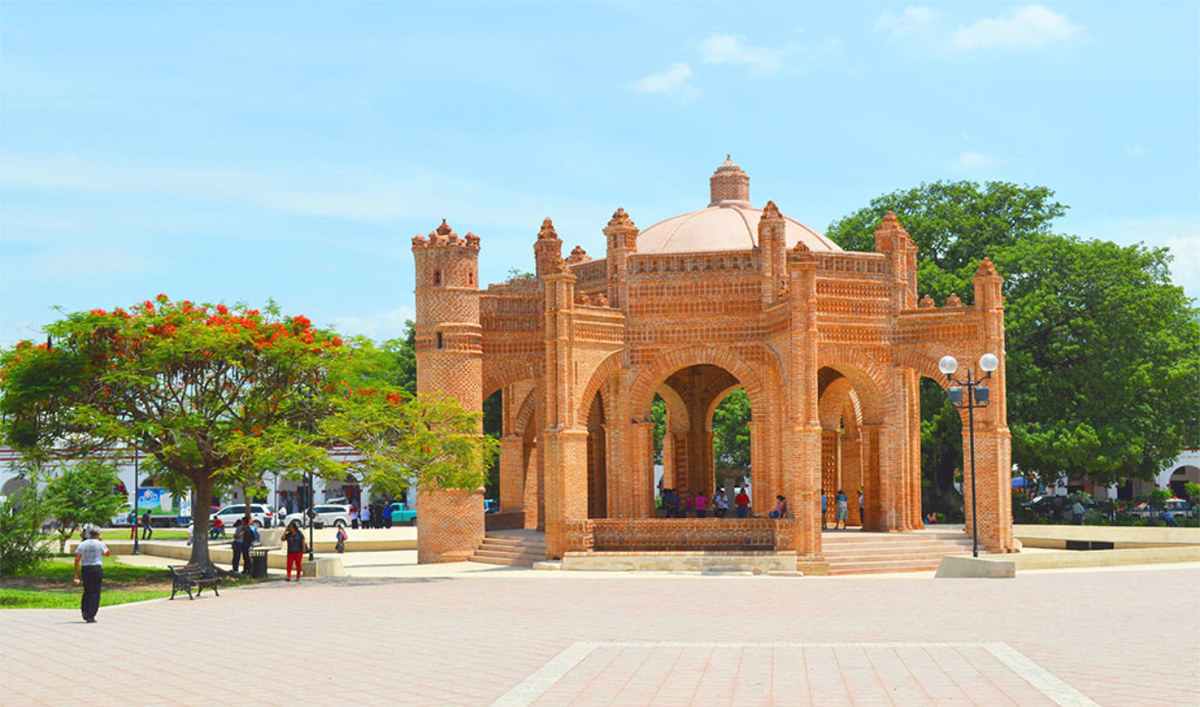
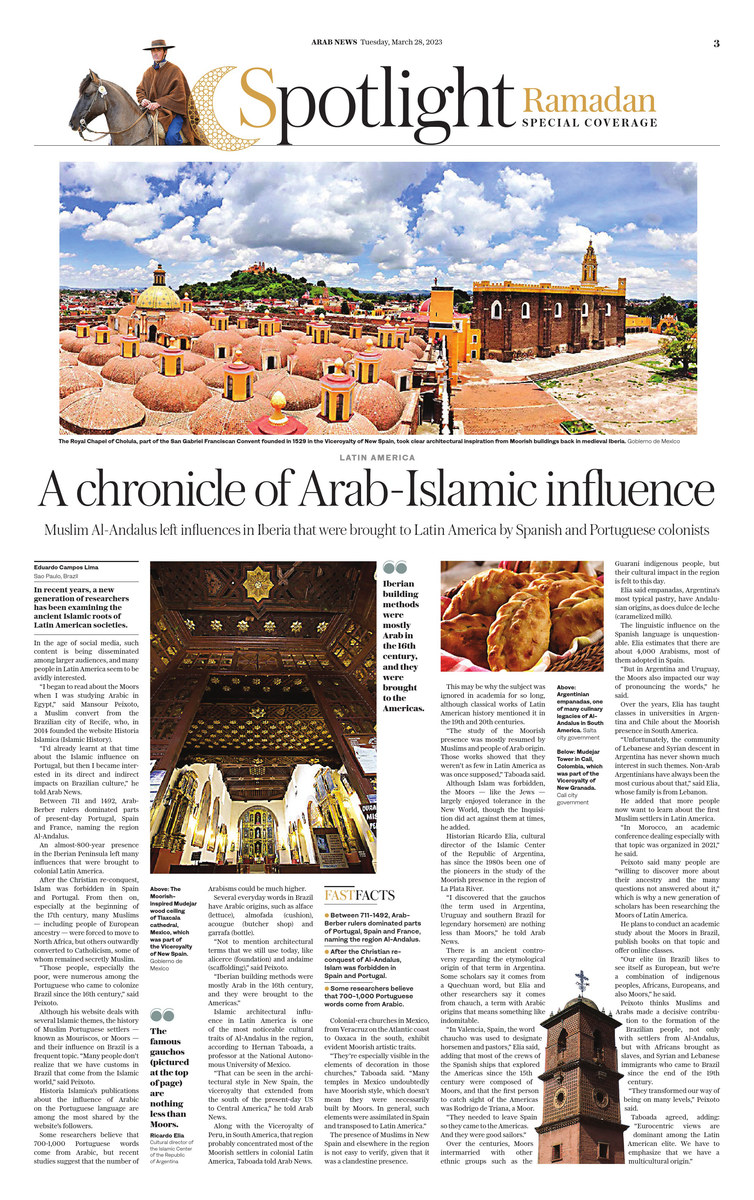
La Pila fountain in Chiapa del Corzo. (Government of Mexico)
Islamic architectural influence in Latin America is one of the most noticeable cultural traits of Al-Andalus in the region, according to Hernan Taboada, an expert on the subject and a professor at the National Autonomous University of Mexico.
“That can be seen in the architectural style in New Spain, the viceroyalty that extended from the south of the present-day US to Central America,” he told Arab News.
Along with the Viceroyalty of Peru, in South America, that region probably concentrated most of the Moorish settlers in colonial Latin America, Taboada said.
Colonial-era churches in Mexico, from Veracruz on the Atlantic coast to Oaxaca in the south, exhibit evident Moorish artistic traits.
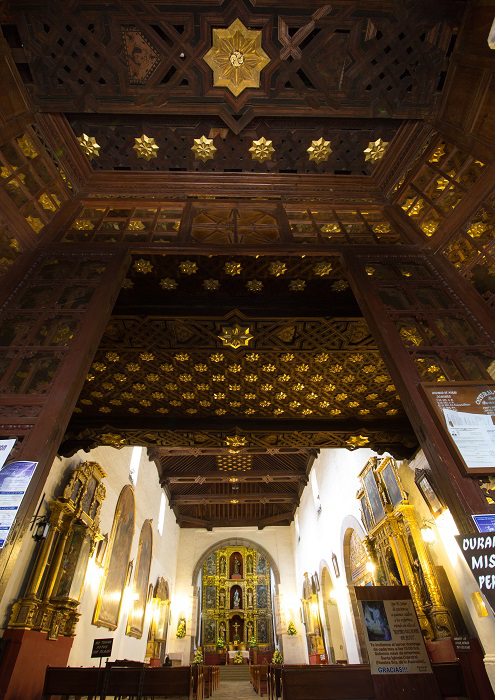
Tlaxcala's cathedral Mudejar wood ceiling. (Gobierno de Mexico)
“They’re especially visible in the elements of decoration in those churches,” Taboada said. “Many temples in Mexico undoubtedly have Moorish style, which doesn’t mean they were necessarily built by Moors. In general, such elements were assimilated in Spain and transposed to Latin America.”
The presence of Muslims in New Spain and elsewhere in the region is not easy to verify, given that it was a clandestine presence.
This may be why the subject was ignored in academia for so long, although classical works of Latin American history mentioned it in the 19th and 20th centuries.
“The study of the Moorish presence was mostly resumed by Muslims and people of Arab origin. Those works showed that they weren’t as few in Latin America as was once supposed,” Taboada said.
Although Islam was forbidden, the Moors — like the Jews — largely enjoyed tolerance in the New World, though the Inquisition did act against them at times, he added.
Historian Ricardo Elia, cultural director of the Islamic Center of the Republic of Argentina, has since the 1980s been one of the pioneers in the study of the Moorish presence in the region of La Plata River.
“I discovered that the gauchos (the term used in Argentina, Uruguay and southern Brazil for legendary horsemen) are nothing less than Moors,” he told Arab News.
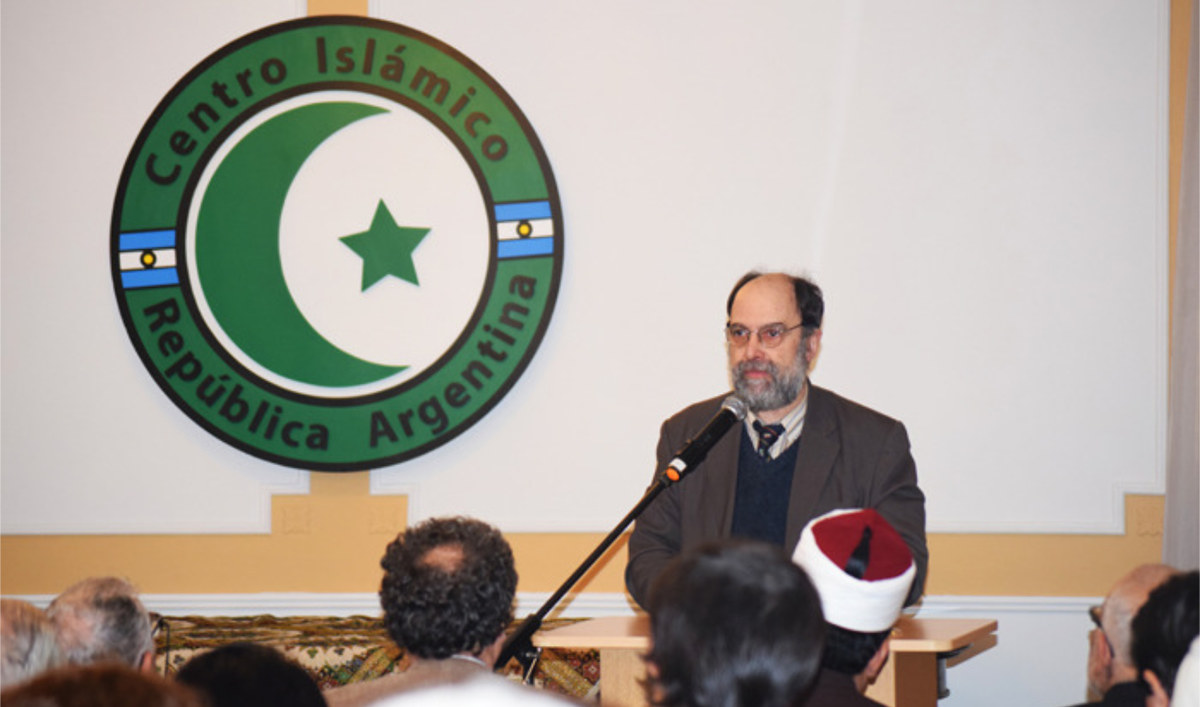
Ricardo Elia at the Islamic Center. (Supplied)
There is an ancient controversy regarding the etymological origin of that term in Argentina. Some scholars say it comes from a Quechuan word, but Elia and other researchers say it comes from chauch, a term with Arabic origins that means something like indomitable.
“In Valencia, Spain, the word chaucho was used to designate horsemen and pastors,” Elia said, adding that most of the crews of the Spanish ships that explored the Americas since the 15th century were composed of Moors, and that the first person to catch sight of the Americas was Rodrigo de Triana, a Moor.
“They needed to leave Spain so they came to the Americas. And they were good sailors.”
Over the centuries, Moors intermarried with other ethnic groups such as the Guarani indigenous people, but their cultural impact in the region is felt to this day.
Elia said empanadas, Argentina’s most typical pastry, have Andalusian origins, as does dulce de leche (caramelized milk).
The linguistic influence on the Spanish language is unquestionable. Elia estimates that there are about 4,000 Arabisms, most of them adopted in Spain.

Argentinian empanadas. (Salta city government)
“But in Argentina and Uruguay, the Moors also impacted our way of pronouncing the words,” he said.
Over the years, Elia has taught classes in universities in Argentina and Chile about the Moorish presence in South America.
“Unfortunately, the community of Lebanese and Syrian descent in Argentina has never shown much interest in such themes. Non-Arab Argentinians have always been the most curious about that,” said Elia, who comes from a Lebanese family.
He added that more and more people now want to learn about the first Muslim settlers in Latin America.
“In Morocco, an academic conference dealing especially with that topic was organized in 2021,” he said.
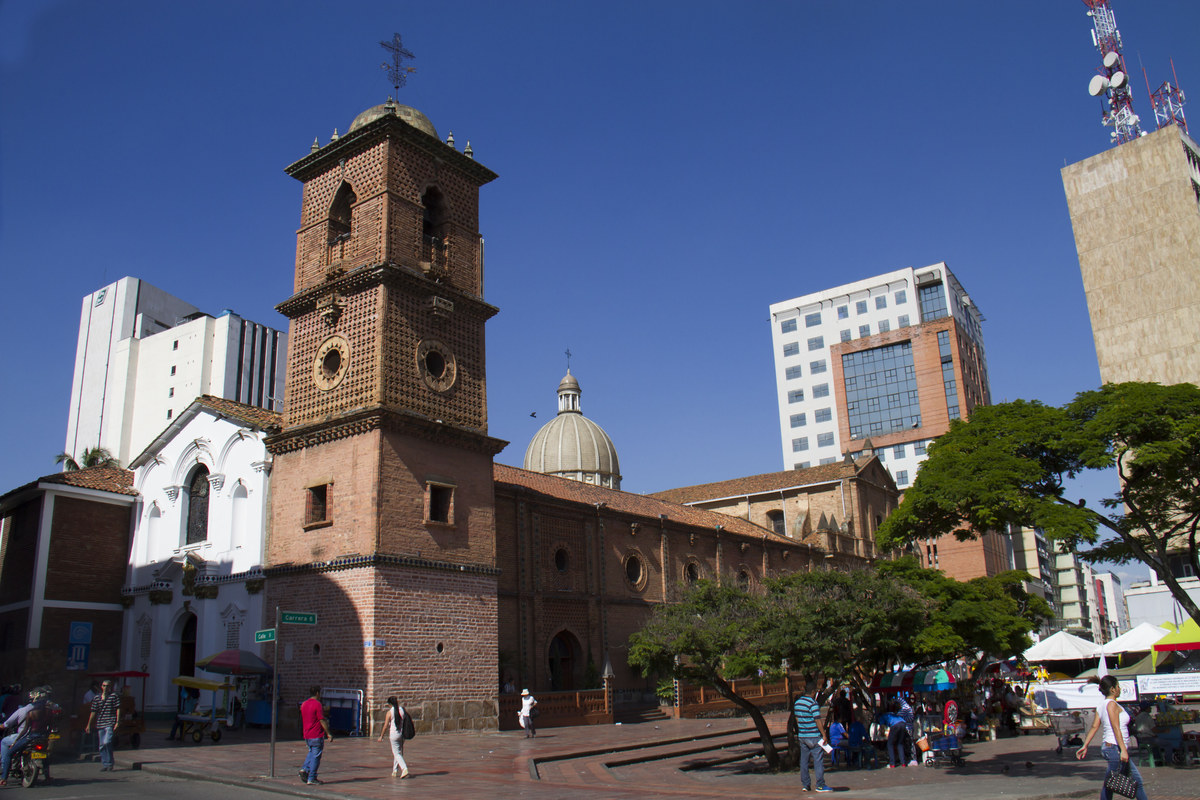
Mudejar Tower in Cali. (Cali city government)
Peixoto said many people are “willing to discover more about their ancestry and the many questions not answered about it,” which is why a new generation of scholars has been researching the Moors of Latin America.
He plans to conduct an academic study about the Moors in Brazil, publish books on that topic and offer online classes.
“Our elite (in Brazil) likes to see itself as European, but we’re a combination of indigenous peoples, Africans, Europeans, and also Moors,” he said.
Peixoto thinks Muslims and Arabs made a decisive contribution to the formation of the Brazilian people, not only with the settlers from Al-Andalus, but also with the Africans brought as slaves, and the huge wave of Syrian and Lebanese immigrants who came to Brazil since the end of the 19th century.
“They transformed our way of being on many levels,” he said.
Taboada agreed, saying: “Eurocentric views are dominant among the Latin American elite. We have to emphasize that we have a multicultural origin.”