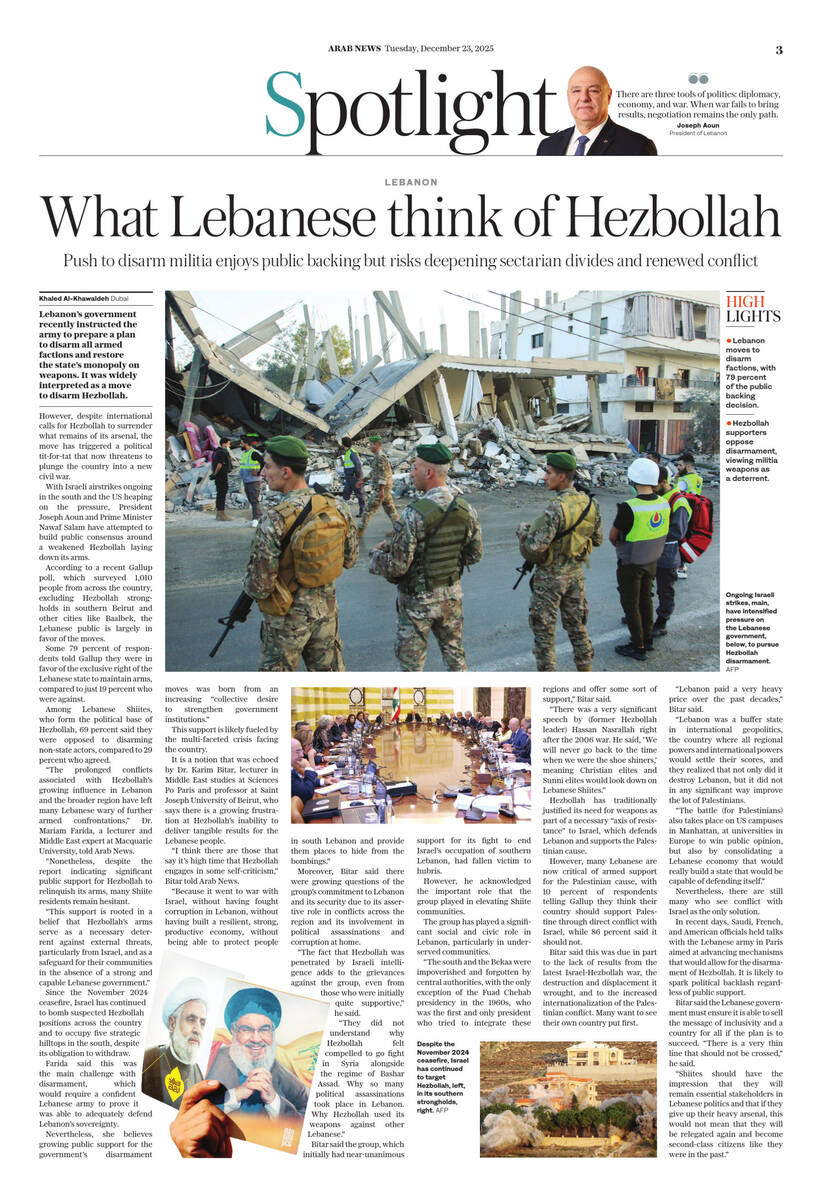

DUBAI: Lebanon’s government recently instructed the army to prepare a plan to disarm all armed factions and restore the state’s monopoly on weapons. It was widely interpreted as a move to disarm Hezbollah.
However, despite international calls for Hezbollah to surrender what remains of its heavy arsenal, the move has triggered a political tit-for-tat that now threatens to plunge the country into a new civil war.
With Israeli airstrikes ongoing in the south and the US heaping on the pressure, President Joseph Aoun and Prime Minister Nawaf Salam have attempted to build public consensus around a weakened Hezbollah laying down its arms.
According to a recent Gallup poll, which surveyed a random sample of 1,010 people from across the country, excluding Hezbollah strongholds in southern Beirut and other cities like Baalbek, the Lebanese public is largely in favor of the moves.
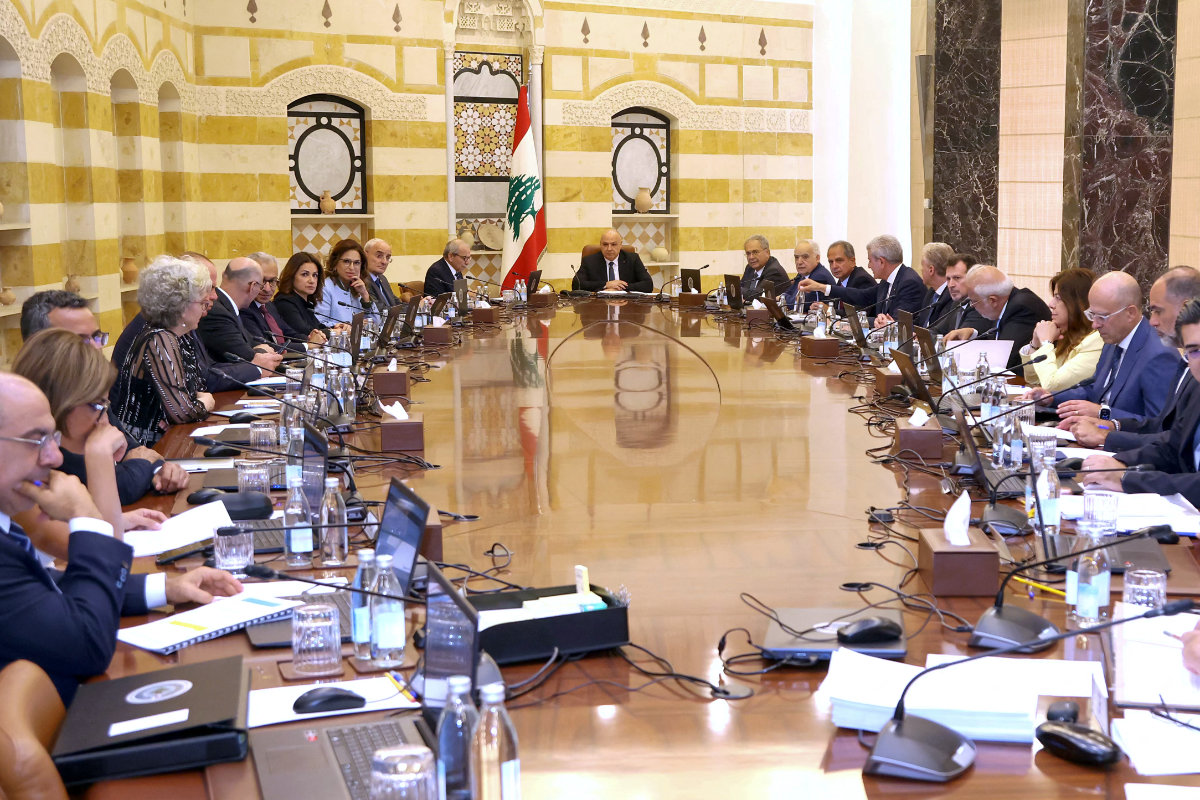
This handout photo released by the Lebanese Presidency press office on August 5, 2025, shows Lebanon's President Joseph Aoun (C) chairing a cabinet session to discuss the issue of disarming Hezbollah at the presidential palace of Baabda east of Beirut. (AFP)
Some 79 percent of respondents told Gallup they were in favor of the exclusive right of the Lebanese state to maintain arms, compared to just 19 percent who were against.
Among Lebanese Shiites, who form the political base of Hezbollah, 69 percent said they were opposed to disarming non-state actors, compared to 29 percent who agreed — underlining the fragmented nature of Lebanese society and politics.
“The prolonged conflicts associated with Hezbollah’s growing influence in Lebanon and the broader region have left many Lebanese wary of further armed confrontations,” Dr. Mariam Farida, a lecturer and Middle East expert at Macquarie University, told Arab News.
“Nonetheless, despite the report indicating significant public support for Hezbollah to relinquish its arms, many Shiite residents remain hesitant.

Smoke rises from the site of a series of Israeli airstrikes that targeted the outskirts of the southern Lebanese village of Al-Katrani on December 18, 2025. (AFP)
“This support is rooted in a belief that Hezbollah’s arms serve as a necessary deterrent against external threats, particularly from Israel, and as a safeguard for their communities in the absence of a strong and capable Lebanese government.”
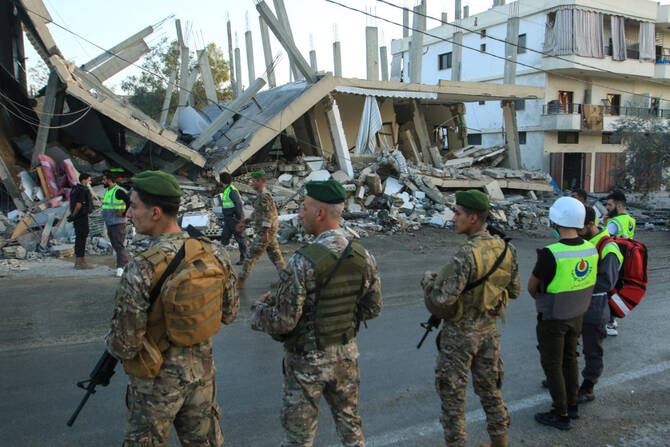
Since the November 2024 ceasefire, Israel has continued to bomb suspected Hezbollah positions across the country and to occupy five strategic hilltops in the south, despite its obligation to withdraw.
Farida said this was the main challenge with disarmament, which would require a confident Lebanese army to prove it was able to adequately defend Lebanon’s sovereignty.
Nevertheless, she believes growing public support for the government’s disarmament moves was born from an increasing “collective desire to strengthen government institutions.”

A supporter of the Lebanese Shiite movement Hezbollah holds pictures of their slain longtime leader Hassan Nasrallah (R) and current leader Naim Qassem (L) during a ceremony marking the first anniversary of Israel's assassination of Nasrallah, in Beirut's southern suburbs on September 27, 2025. (AFP)
This support is likely fueled by the multi-faceted crisis facing the country, which the International Monetary Fund characterizes as a severe, “man‑made” depression caused by years of mismanagement, corruption, weak governance, and an unsustainable economic model.
It is a notion that was echoed by Dr. Karim Bitar, lecturer in Middle East studies at Sciences Po Paris and professor at Saint Joseph University of Beirut, who says there is a growing frustration at Hezbollah’s inability to deliver tangible results for the Lebanese people.
“I think there are those that say it’s high time that Hezbollah engages in some self-criticism,” Bitar told Arab news.
“Because it went to war with Israel, without having fought corruption in Lebanon, without having built a resilient, strong, productive economy, without being able to protect people in south Lebanon and provide them places to hide from the bombings.”

Employees serve customers at a money transfer office in Lebanon's capital Beirut, on July 27, 2022. (AFP)
Moreover, Bitar said there were growing questions of the group’s commitment to Lebanon and its security due to its assertive role in conflicts across the region and its involvement in political assassinations and corruption at home.
“The fact that Hezbollah was penetrated by Israeli intelligence adds to the grievances against the group, even from those who were initially quite supportive,” he said.
“They did not understand why Hezbollah felt compelled to go fight in Syria alongside the regime of Bashar Assad. Why so many political assassinations took place in Lebanon. Why Hezbollah used its weapons against other Lebanese.”
Bitar said the group, which initially had near-unanimous support for its fight to end Israel’s occupation of southern Lebanon, had over the years fallen victim to hubris, which had led to its downfall.

Volunteers portion meals, to be distributed to displaced families, in the eastern Lebanese city of Baalbeck on October 20, 2024, amid the ongoing war between Hezbollah and Israel. (AFP)
However, he acknowledged the important role that the group played in elevating Shiite communities, which had historically been disenfranchised.
Over the years, the group has played a significant social and civic role in Lebanon, particularly in underserved communities where state services are weak or absent.
Through its network of charities and social institutions, it runs hospitals, clinics, schools, and food assistance programs that provide healthcare, education, and basic support to thousands of families.
“The south and the Bekaa were impoverished and forgotten by central authorities, with the only exception of the Fuad Chehab presidency in the 1960s, who was the first and only president who tried to integrate these regions and offer some sort of support,” Bitar said.
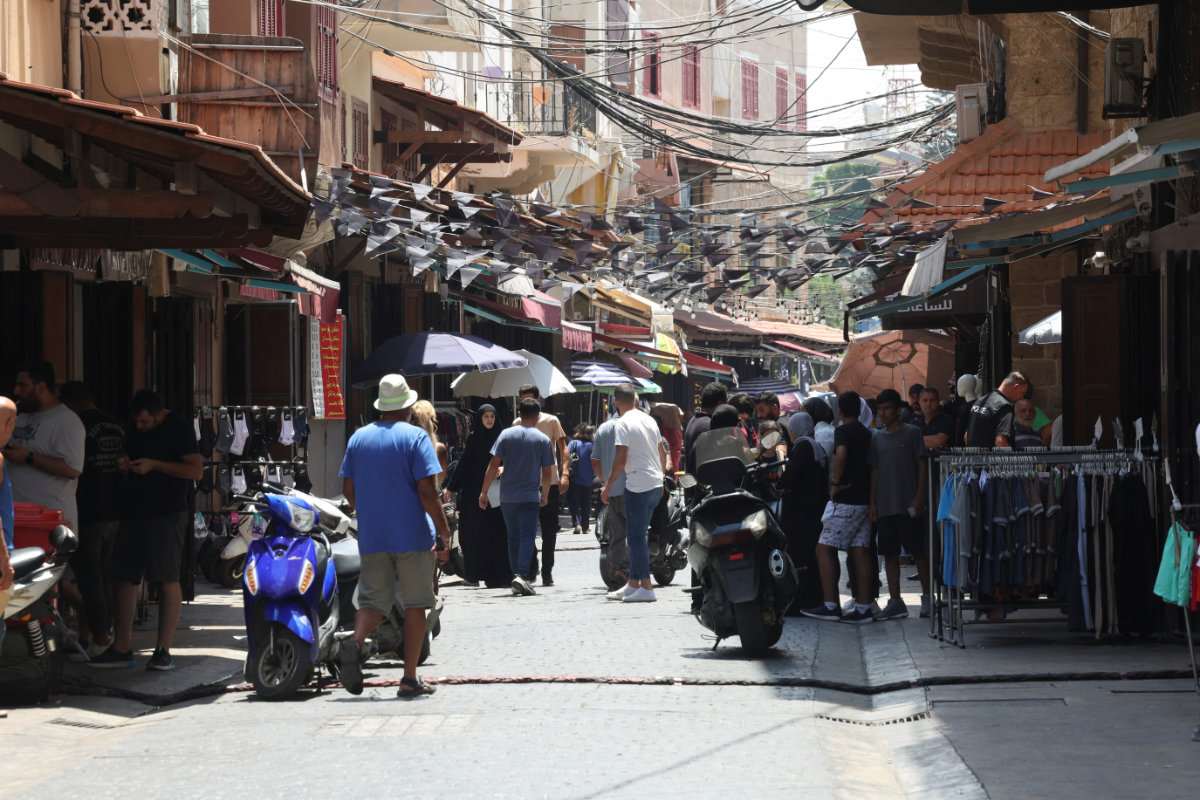
People shop at a souk in the southern city of Tyre, Lebanon July 3, 2025. (Reuters)
“There was a very significant speech by (former Hezbollah leader) Hassan Nasrallah right after the 2006 war. He said, ‘We will never go back to the time when we were the shoe shiners,’ meaning Christian elites and Sunni elites would look down on Lebanese Shiites.”
Hezbollah has traditionally justified its need for weapons as part of a necessary “axis of resistance” to Israel, which defends Lebanon and supports the Palestinian cause.
However, many Lebanese are now critical of armed support for the Palestinian cause, with 10 percent of respondents telling Gallup they think their country should support Palestine through direct conflict with Israel, while 86 percent said it should not.
Bitar said this was due in part to the lack of results from the latest Israel-Hezbollah war, the destruction and displacement it wrought upon Lebanon, and to the increased internationalization of the Palestinian conflict. Many want to see their own country put first.

Smoke billows from the site of an Israeli airstrike that targeted the southern Lebanese village of Al-Mjadel on December 4, 2025. (AFP)
“Lebanon paid a very heavy price over the past decades,” Bitar said.
“Lebanon was a buffer state in international geopolitics, the country where all regional powers and international powers would settle their scores, and they realized that not only did it destroy Lebanon, but it did not in any significant way improve the lot of Palestinians.
“The battle (for Palestinians) also takes place on US campuses in Manhattan, at universities in Europe to win public opinion, but also by consolidating a Lebanese economy that would really build a state that would be capable of defending itself.”
Nevertheless, there are still many who see armed conflict with Israel as the only solution.

People sit outside a cafe along Beirut's Hamra street on June 20, 2024. (AFP)
In recent days, Saudi, French, and American officials held talks with the Lebanese army in Paris aimed at advancing mechanisms that would allow for the disarmament of Hezbollah. It is a controversial move that is likely to spark political backlash regardless of public support.
Bitar said the Lebanese government must ensure it is able to sell the message of inclusivity and a country for all if the plan is to succeed. “There is a very thin line that should not be crossed,” he said.
“Shiites should have the impression that they will remain essential stakeholders in Lebanese politics and that if they give up their heavy arsenal, this would not mean that they will be relegated again and become second-class citizens like they were in the past.”