



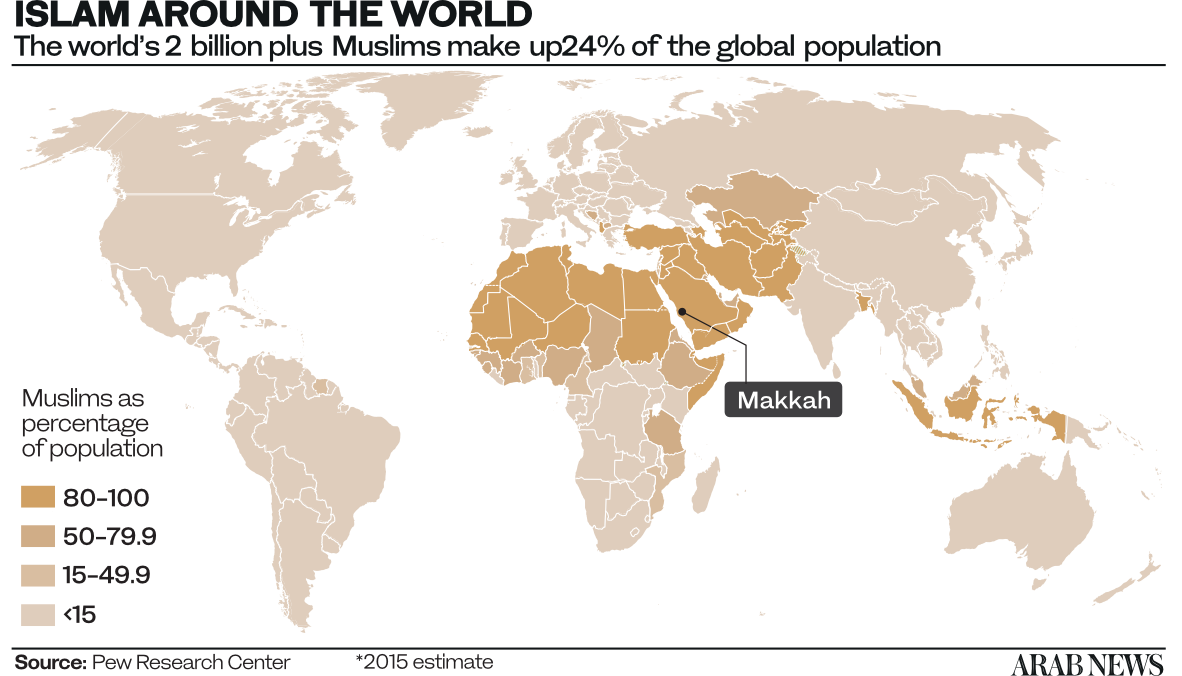
JEDDAH: Every year ahead of the ninth month of the Islamic calendar, 2 billion plus Muslims around the world prepare to welcome the holy month of Ramadan. While Ramadan is commonly known for its fast, for Muslims it is more than just a month of fasting; it symbolizes reward, reflection, devotion, generosity and sacrifice.
Daytime fasting and nighttime prayers spiritually energize the faithful to lead a new life, benefiting the whole of humanity and opening a new chapter of peace and progress.
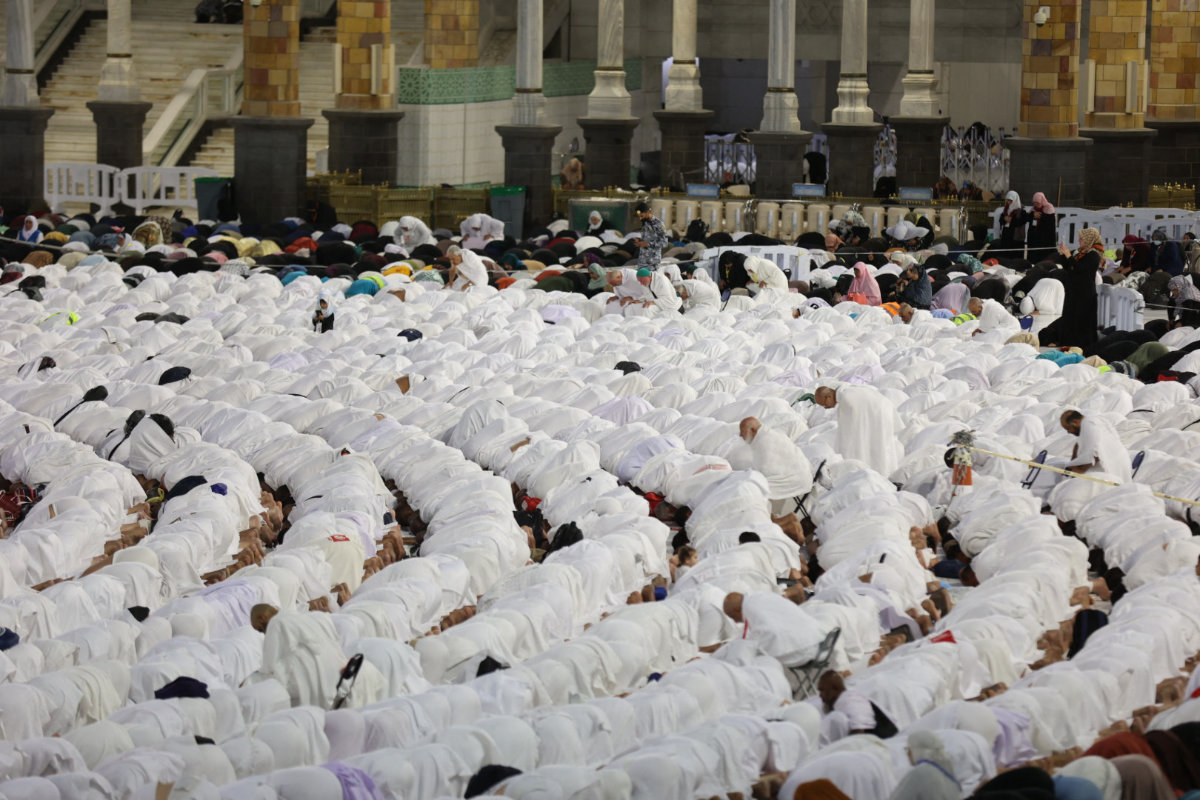
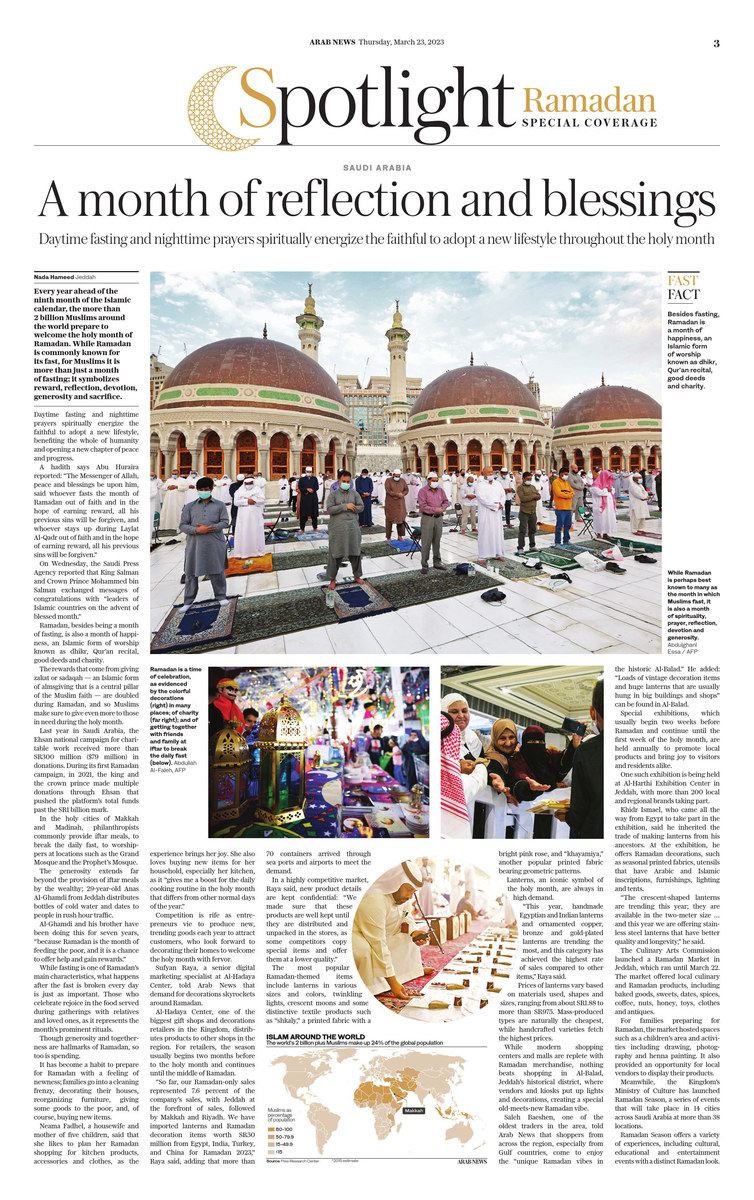
Worshippers pray at the Grand Mosque in Makkah on March 21, 2023, as Saudi Arabia announced that the fasting month of Ramadan will start on March 23. (AFP)
A hadith says Abu Huraira reported: “The Messenger of Allah, peace and blessings be upon him, said whoever fasts the month of Ramadan out of faith and in the hope of earning reward, all his previous sins will be forgiven, and whoever stays up during Laylat Al-Qadr out of faith and in the hope of earning reward, all his previous sins will be forgiven.”
On Wednesday, the Saudi Press Agency reported that King Salman and Crown Prince Mohammed bin Salman exchanged messages of congratulations with “leaders of Islamic countries on the advent of blessed month.”
Ramadan, besides being a month of fasting, is also a month of happiness, an Islamic form of worship known as dhikr, Qur’an recital, good deeds and charity.
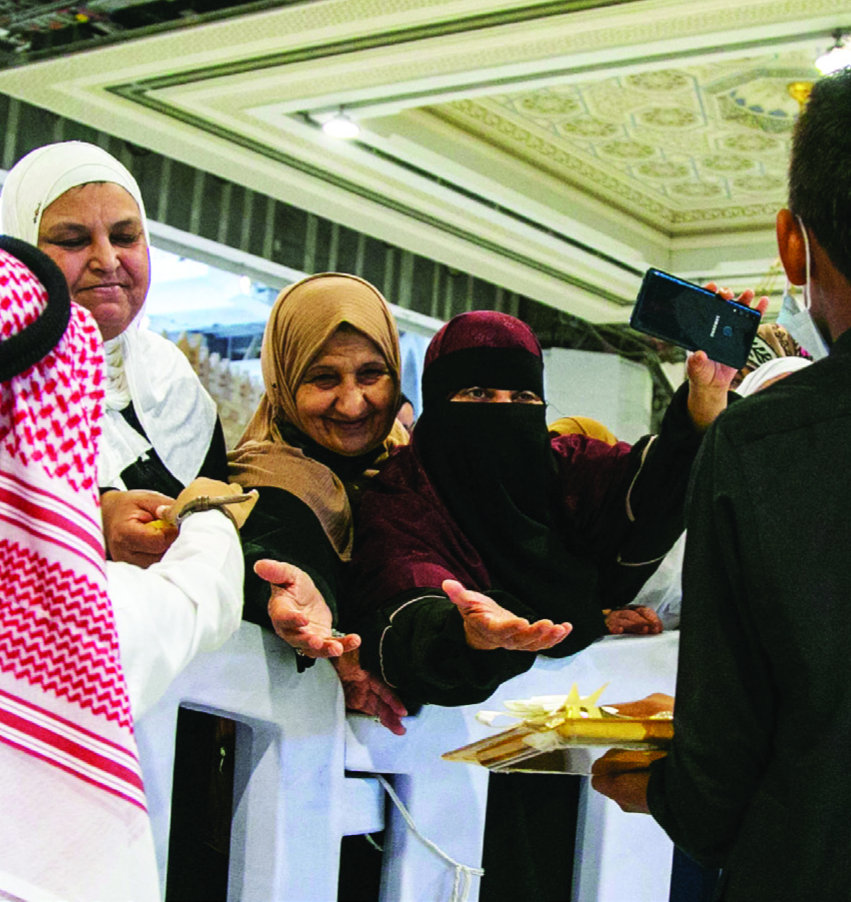
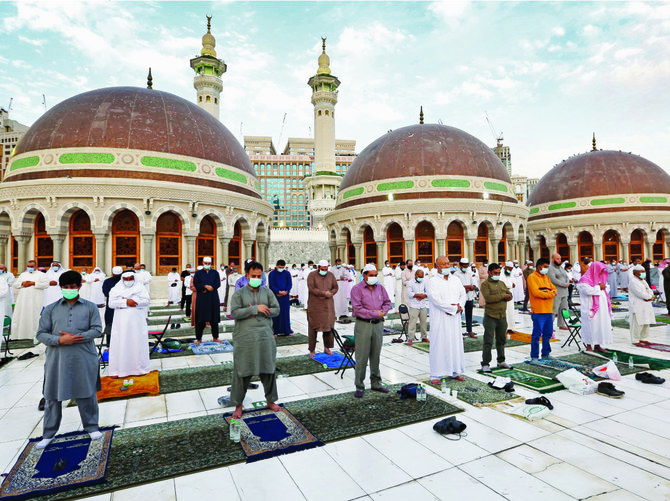
Aside from being a time of celebration, the month of Ramadan is a time of charity. (Abdullah Al-Faleh, AFP)
The rewards of giving zakat or sadaqah — an Islamic form of almsgiving that is a central pillar of the Muslim faith — during Ramadan are doubled, and thus Muslims make sure give even more to those in need during the holy month.
Last year in Saudi Arabia, the Ehsan national campaign for charitable work received more than SR300 million ($79 million) in donations. During the first Ramadan campaign in 2021, the king and the crown prince made multiple donations through Ehsan that pushed the platform’s total funds past the SR1 billion mark.
In the holy cities of Makkah and Madinah, philanthropists commonly provide iftar (breakfast) meals to worshippers at specific locations in the Grand Mosque and the Prophet’s Mosque.
Generosity extends far beyond the provision of iftar meals by the wealthy; 29-year-old Anas Al-Ghamdi from Jeddah distributes cold bottles of water and dates to people in rush hour traffic.
Al-Ghamdi and his brother have been doing this for seven years, “because Ramadan is the month of feeding the poor, and it is a chance to offer help and gain rewards.”
While fasting is one of Ramadan’s main characteristics, what happens after the fast is broken every day is just as important. Those who celebrate rejoice in the food served during gatherings with relatives and loved ones, as it represents the month’s prominent rituals.
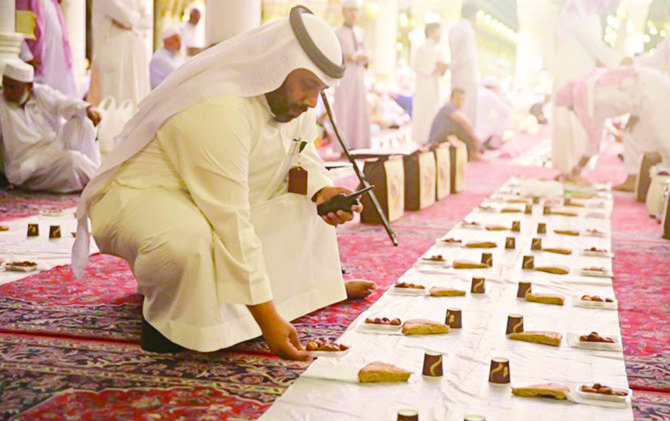
Iftar meals are offered daily in mosques throughout the Kingdom during Ramadan. (AFP file)
Though generosity and togetherness are hallmarks of Ramadan, so too is spending.
It has become a habit to prepare for Ramadan with a feeling of newness; families go into a cleaning frenzy, decorating their houses, reorganizing furniture, giving some goods to the poor, and, of course, buying new items.
Neama Fadhel, a housewife and mother of five children, said that she likes to plan her Ramadan shopping for kitchen products, accessories and clothes, as the experience brings her joy.
Fadhel also loves buying new items for her household, especially her kitchen, as it “gives me a boost for the daily cooking routine in the holy month that differs from other normal days of the year.”
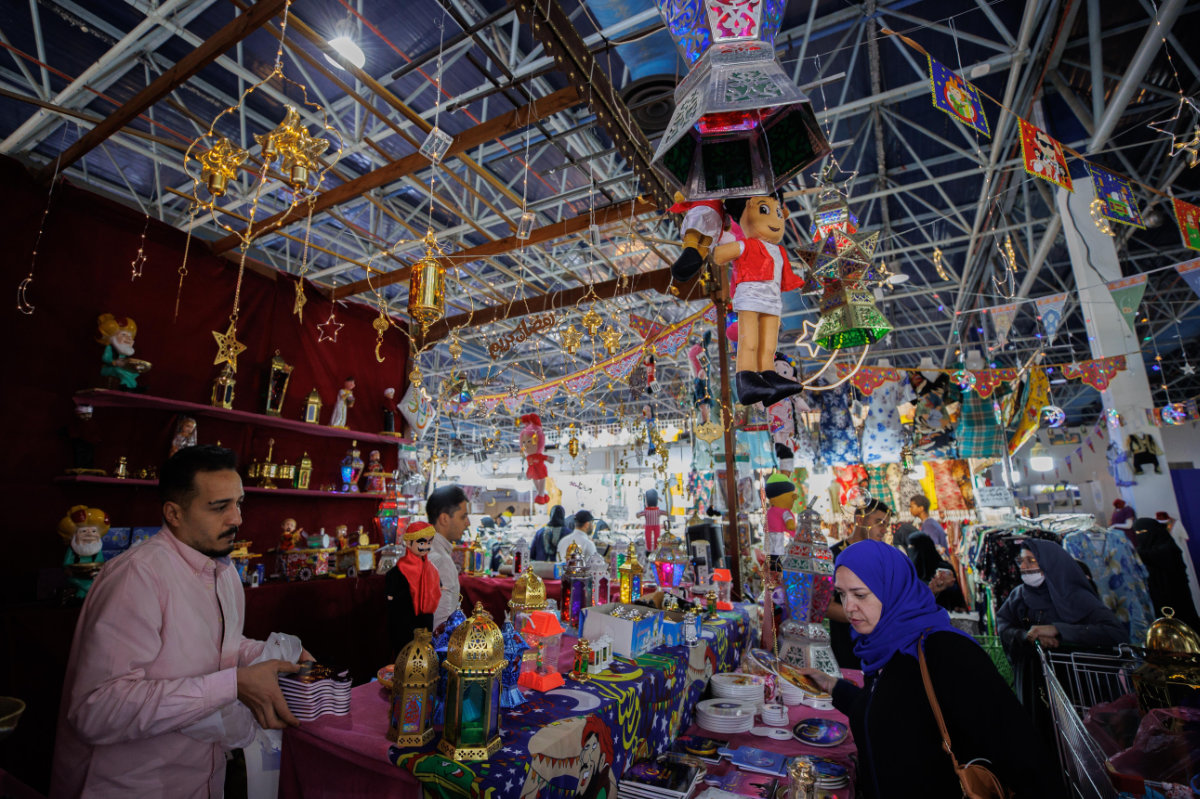
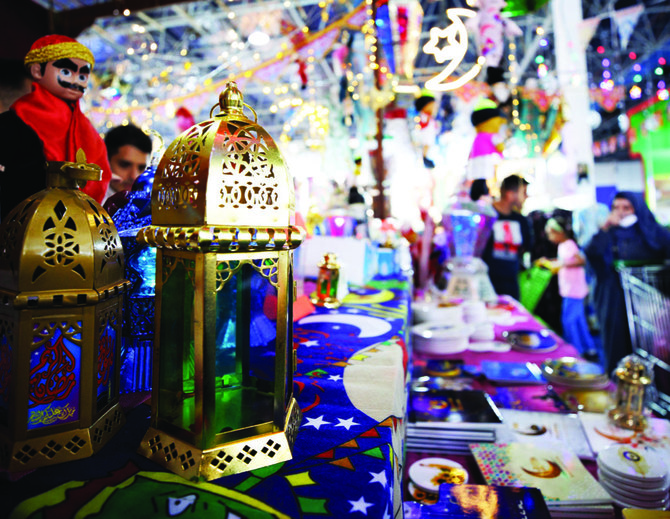
Shoppers in Jeddah enjoy purchasing Ramadan decorations and items from the annual exhibit at Jeddah International Exhibition and Convention Center. (AN Photo by Abdullah Alfaleh)
Competition is rife as entrepreneurs vie to produce new, trending goods each year to attract customers, who look forward to decorating their homes to welcome the holy month with fervor.
Sufyan Raya, senior digital marketing specialist at Al-Hadaya Center, told Arab News how demand for decorations skyrockets around Ramadan.
Al-Hadaya Center, one of the biggest gift shops and decoration retailers in the Kingdom, distributes products to other shops in the region. For retailers, the season usually begins two months before to the holy month and continues until the middle of Ramadan.
“So far, our Ramadan-only sales represented 7.6 percent of the company’s sales, with Jeddah at the forefront of sales, followed by Makkah and Riyadh. We have imported lanterns and Ramadan decoration items worth SR30 million from Egypt, India, Turkey, and China for Ramadan 2023,” Raya said, adding that more than 70 containers arrived through sea ports and airports to meet the demand.
FASTFACT
Besides fasting, Ramadan is a month of happiness, an Islamic form of worship known as dhikr, Qur’an recital, good deeds and charity.
In a highly competitive market, Raya said, products are kept highly confidential. “We made sure that these products are well kept until they are distributed and unpacked in the stores, as some competitors copy special items and offer them at a lower quality.”
The most popular Ramadan-themed items are lanterns in various sizes and colors, twinkling lights, crescent moons and some distinctive textile-made products like “shkaly,” a printed fabric with a bright pink rose, and “khayamiya,” another popular printed fabric bearing geometric patterns.
Lanterns, an iconic symbol of the holy month, are always in high demand.
“This year, handmade Egyptian and Indian lanterns and ornamented copper, bronze and gold-plated lanterns are trending the most, and this category has achieved the highest rate of sales compared to other items,” Raya added.
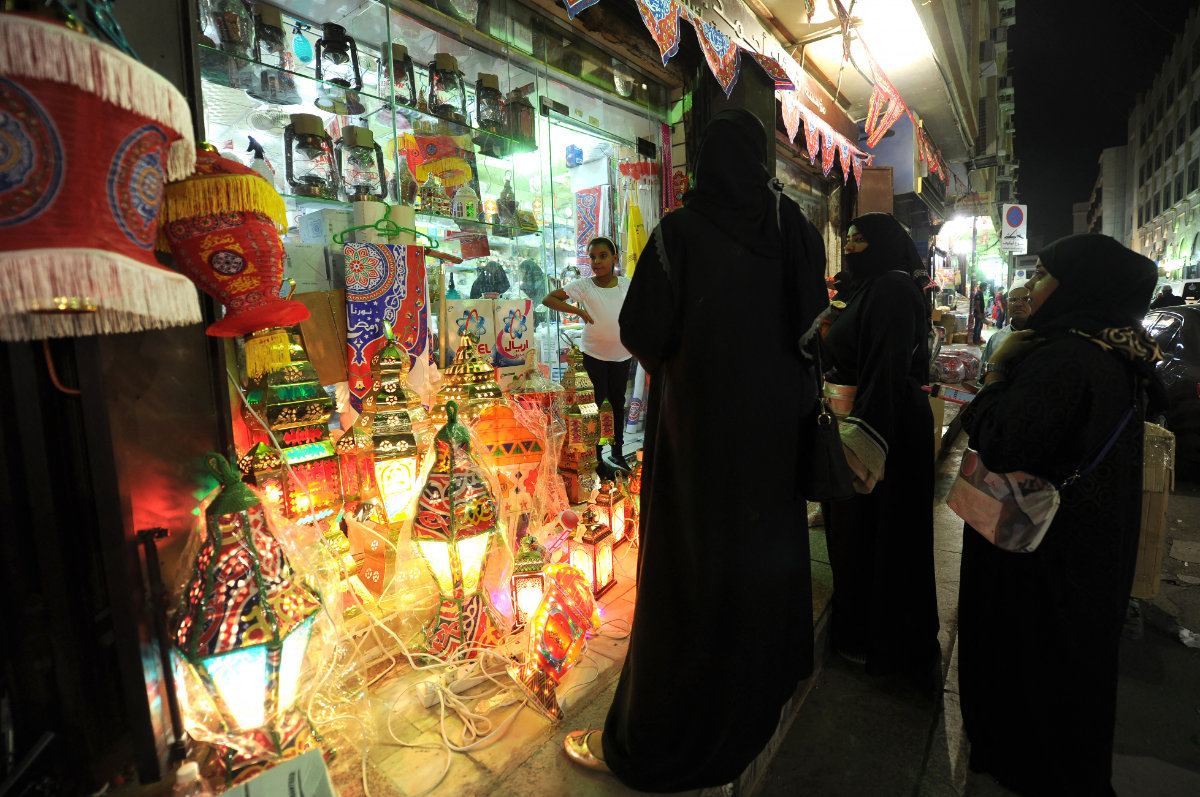
Saudi women shop for traditional lanterns known in Arabic as "Fanous", sold during the Muslim holy month of Ramadan, at a market in the city of Jeddah. (AFP file)
Prices of lanterns vary in terms of material, shape and size, ranging from about SR1.88 to more than SR975. Mass-produced types are the cheapest, while handcrafted varieties fetch the highest prices.
While modern shopping centers and malls are replete with Ramadan merchandise, nothing beats shopping in Al-Balad, Jeddah’s historical district, where vendors and kiosks put up lights and decorations, creating a special old-meets-new Ramadan vibe.
Saleh Baeshen, one of the oldest traders in the area, told Arab News that shoppers from across the region, especially from Gulf countries, come to enjoy the “unique Ramadan vibes in the historic Al-Balad.”
Baeshen said: “Loads of vintage decoration items and huge lanterns that are usually hung in big buildings and shops” can be found in Al-Balad. Special exhibitions, which usually begin two weeks before Ramadan and continue until the first week of the holy month, are held annually to promote local products and bring joy to visitors and residents alike.
One such exhibition is being held at Al-Harthi Exhibition Center in Jeddah, with more than 200 local and regional brands taking part.
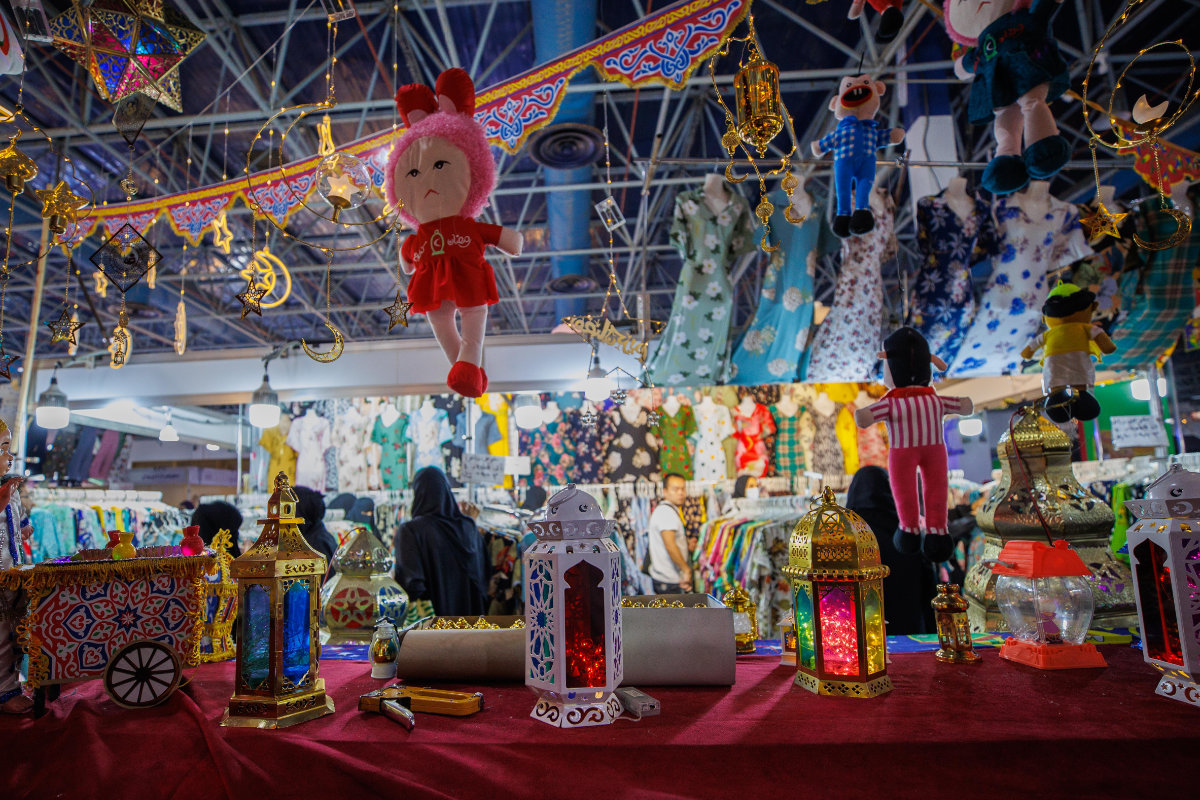
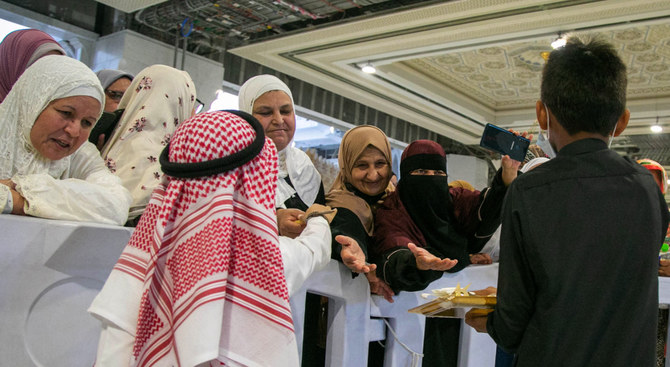
The exhibition is held annually two weeks prior to the holy month with over 200 participating brands. (AN Photo by Abdullah Alfaleh)
Khidr Ismael, who came all the way from Egypt to take part in the exhibition, said that he inherited the trade of making lanterns from his ancestors. At the exhibition, he offers Ramadan decorations, such as Ramadan-themed printed fabrics, utensils with Arabic and Islamic inscriptions, furnishings, lighting and tents.
“The crescent-shaped lanterns are trending this year; it is available in the two-meter size … and this year we are offering stainless steel lanterns that have better quality and longevity,” he said.
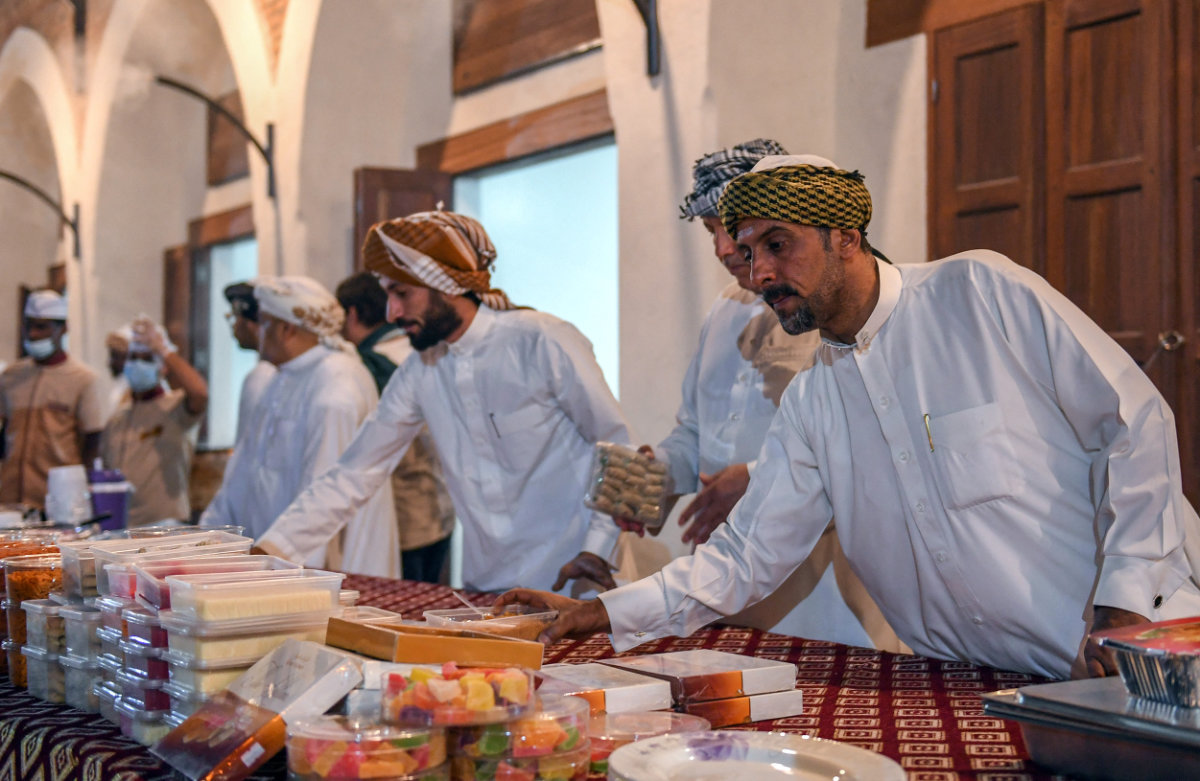
Vendors are all set for the influx of Muslims from all over the world at a market in the western Saudi city of MadinaH. (AFP)
The Culinary Arts Commission has also launched the Ramadan Market in Jeddah, which will run until March 22. The market displays local culinary and Ramadan products, including baked goods, sweets, dates, spices, coffee, nuts, honey, toys, clothes and antiques.
For families coming to enjoy the holiday, the market hosts spaces such as a children’s area and activities including drawing, photography and henna. It will also serve as an opportunity for local vendors to display their products.
The Kingdom’s Ministry of Culture has launched Ramadan Season, a series of events that will take place in 14 cities across Saudi Arabia and will be held in more than 38 locations. Ramadan Season offers a variety of experiences, including cultural, educational and entertainment events with a distinct Ramadan look.