

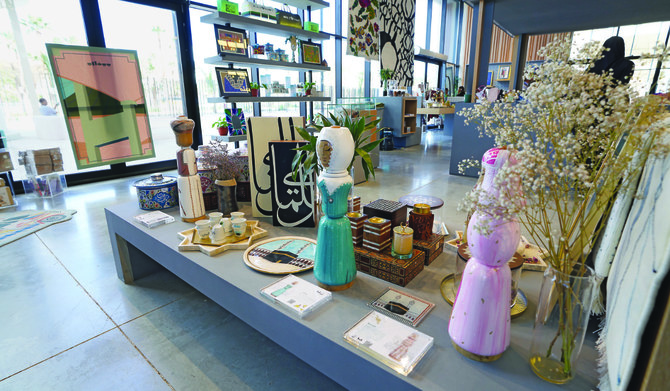

JEDDAH: Visitors to the inaugural Islamic Arts Biennale in Jeddah can pick up Ramadan-themed items and intricate works of art at the on-site Al-Matjar concept store, a retail space developed by the Diriyah Biennale Foundation.
“The biennale store is never, ever the same. We change it every week. The only constant is that you’ll see is the Diriyah Foundation merchandise,” Dalia Al Akki, the store representative, told Arab News.
According to Al Akki, the DBF hopes the shop can become one of Jeddah’s new cultural destinations. It aims to have something for everyone — and allow them to take a bit of the Biennale’s “Awwal Bait” (First House) theme back home with them.
“The idea of this collaboration is that the Diriyah Foundation wants to open a platform to support digital artists. It’s like a marketing tool for us to use their illustrations and create merch with them, or stationery, or puzzles,” she said. “We didn’t want to just do merchandise this year; we wanted to really enhance this idea of collaboration.”
Since the biennale is a temporary exhibition, the idea was to create tangible items that people can take back home with them.
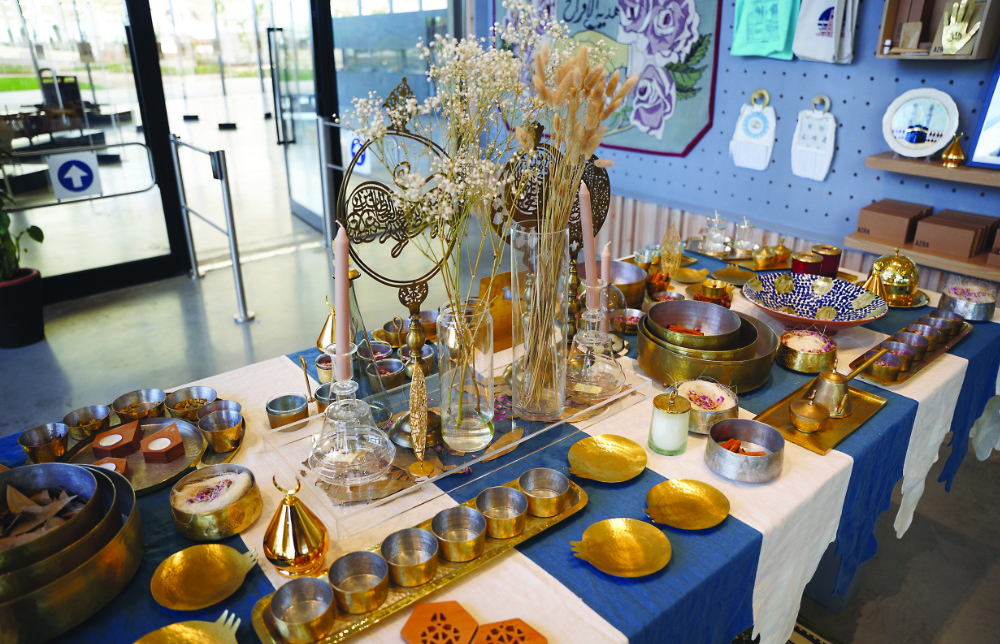
The Islamic Arts Biennale store in Jeddah features a wide range of themed and customized products that visitors can buy as mementos. (Photos by Diriyah Biennale Foundation)
After thorough research, they reached out to around 180 brands, of which 95 made it to the shelves. Since the DBF is a non-profit organization, it was obligated to use the space as a launching pad for brands and to cultivate creativity.
“Some of these items are very rare and very beautiful, and soon they’ll be collectible,” Al Akki said proudly.
HIGHLIGHT
The store prioritizes collaborating with brands that focus on sustainability, and many of the over 620 items are rare and custom-made. According to Dalia Al Akki, every item in the store will be reused, including the wayfinding flags that will be repurposed into tote bags later.
It was always meant to be a pop-up shop, which is perhaps part of the allure. If you like something, pick it up and buy it instantly or it might be gone. Maybe forever. Many items were custom-made for the shop and won’t ever be sold anywhere else.
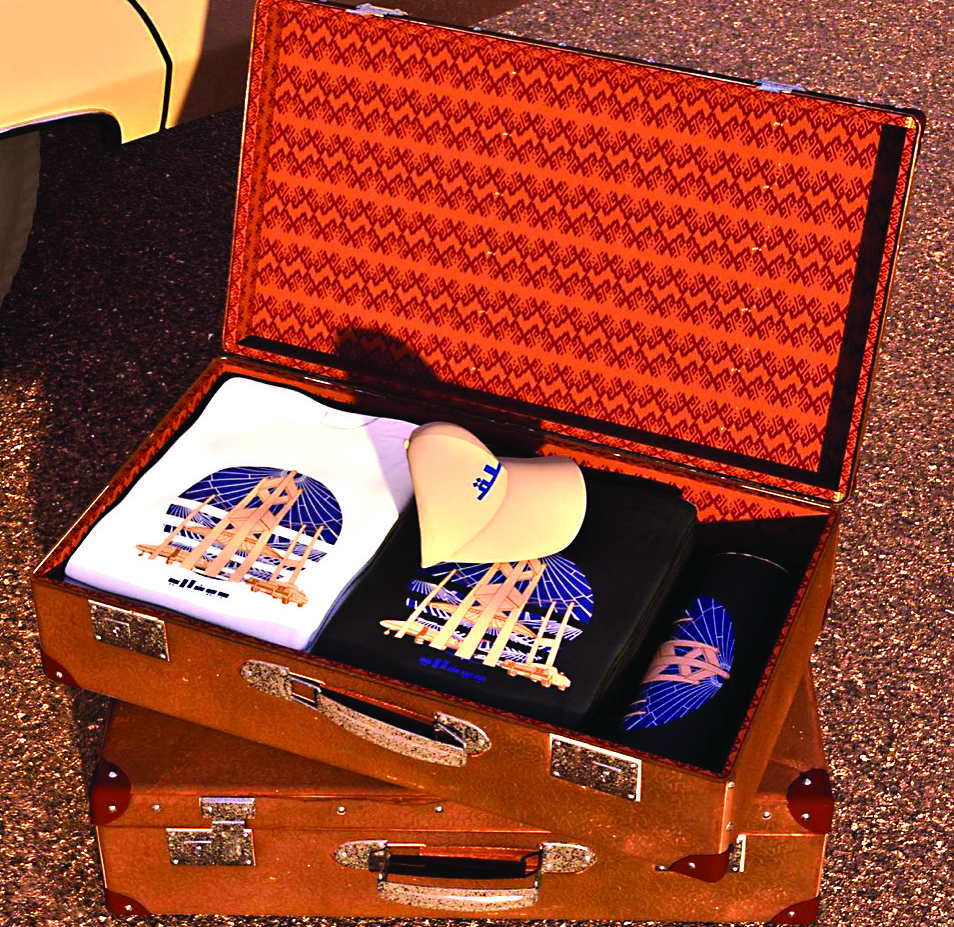
The galag garage exclusive capsule collection created in collaboration with the Diriyah Biennale Foundation. (Photo/Instagram/ @galag.co)
There’s one section that is distinctly pre-owned. It is dedicated to selling secondhand books and Al Akki hopes this will help shift people’s perception of pre-owned and think of it as ‘pre-loved.’
“We know a guy that collects books from all over the region, so we really wanted to add that in,” she explained. “A lot of artists actually just buy books and end up throwing them. A lot of people in the Kingdom don’t know the value of these books. But for us, secondhand books are still valuable. We even have vintage magazines.”
She said that she has been surprised by the popularity of the secondhand books and have had to replenish their stocks.
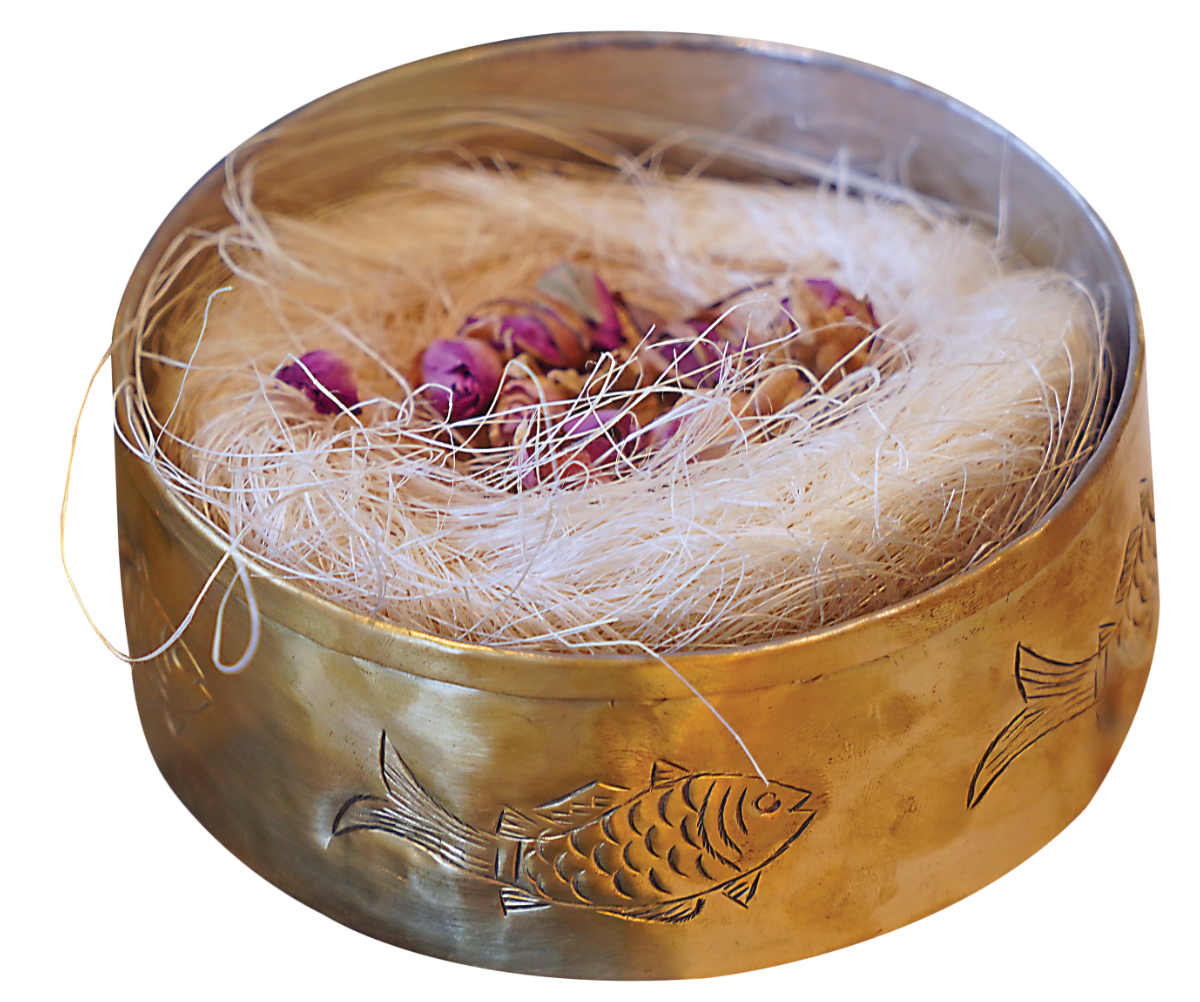
The Islamic Arts Biennale store in Jeddah features a wide range of themed and customized products that visitors can buy as mementos. (Photos by Diriyah Biennale Foundation)
“We also work with a lot of product makers (who focus on) sustainability. Nothing in the store is going to be thrown away; everything is going to be reused — even the wayfinding flags; we are actually taking them and making tote bags out of them for next year,” she said. “We are supporting local and international artists and sustainability is a main goal.”
It was crucial for the curation of the products to be inclusive of different countries and styles, as well as price ranges, and to provide something that non-Muslims could buy too.
“What’s amazing about the whole idea of this pop-up store is that we really get to know the community — beyond the Kingdom. We can’t wait for the (next Biennale cycle) because there’s so many places you could go. I mean, this was limited, challenging, but definitely worth it,” Al Akki said. “We’ve learned, we’ve grown, we’ve met many beautiful people along the way.”
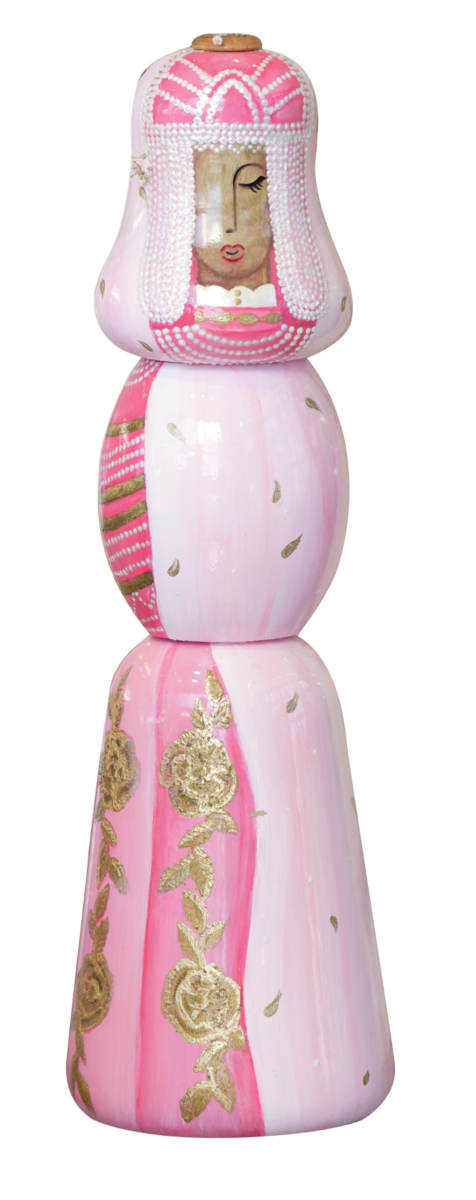
The Islamic Arts Biennale store in Jeddah features a wide range of themed and customized products that visitors can buy as mementos. (Photos by Diriyah Biennale Foundation)
One of those people is Sultan bin Mohammed, the shy-but-charming millennial leader of the Galag Garage clothing brand (Galag translates to “nuisance”).
He was proud to take part in this pop-up store in his hometown of Jeddah and is shaking up the shop — one stitch at a time.
The filmmaker and entrepreneur showed Arab News his exclusive capsule Galag collection, created in collaboration with the Diriyah Biennale Foundation store. Rows of durable-but-soft hoodies, t-shirts, tote bags and caps with the word “Galag” written in Arabic using the custom biennale font and typography.
“They (Diriyah Biennale Foundation) wanted really to represent the structures in the Hajj terminal. So I wanted to recreate that, but give a bit of a retro-wave design,” he told Arab News.
He also added elements that are distinctly ‘Galag,’ such as images of vintage cars.
“We wanted something that’s wearable, has a bit of style, has a bit of weight to it — something that people would be happy and comfortable with. We decided to do very simple but high-quality material with interesting colors,” bin Mohammed told Arab News.
Most of those color inspirations were derived from local nature. The sandy hoodie has a bit of saturated blue that pops — meant to represent the sky. The white hoodie, in contrast, was meant to be muted.
“Every color choice here is meant to look better with age; so the longer we wear it, the better it looks — that was the concept,” he said.
Like Al Akki, bin Mohammed was adamant that he wanted to produce something that would last.
“Sustainability is a huge thing. We really wanted to use something that lasts — something that you can wear for years, maybe put in your closet then bring it out and it still keeps its shape; it keeps the quality and it doesn’t disintegrate,” bin Mohammed said.
He was also keen to have the date incorporated into the t-shirts. “It’s the first Islamic Arts Biennale and to have the date on it to commemorate it was really important. I think it’s really cool to have a piece of history. It’s great that we’re a small part of that,” said bin Mohammed.


