The United States should try to prove it was not behind the destruction of the Nord Stream gas pipelines that connected Russia to Western Europe, the Russian embassy to the United States said on Thursday.
Moscow considers the destruction of Nord Stream 1 and Nord Stream 2 pipelines last September “an act of international terrorism” and will not allow it to be swept under the rug, the embassy said in a statement.
The embassy referred to a blog post by journalist Seymour Hersh citing an unidentified source as saying that US Navy divers had destroyed the pipelines with explosives on the orders of President Joe Biden.
The White House has dismissed the allegations as “utterly false and complete fiction.”
US Department of State spokesman Ned Price said on Wednesday “it is pure disinformation that the United States was behind what transpired” with Nord Stream, provoking the fresh Russian comment.
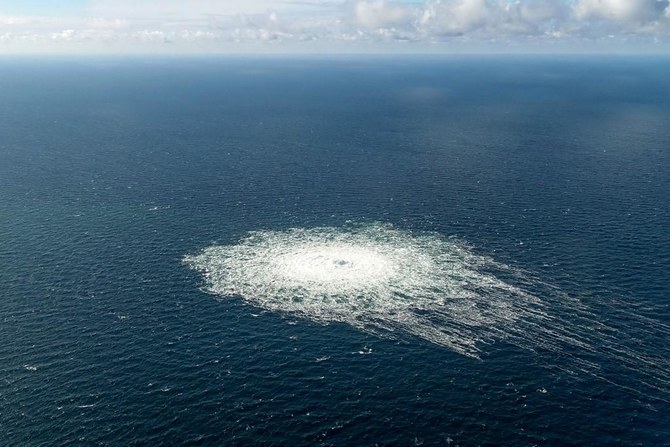
Four large gas leaks were discovered on Nord Stream’s two pipelines off the Danish island of Bornholm at the end of September, with seismic institutes recording two underwater explosions just prior.
Investigators had already said that preliminary inspections had reinforced suspicions of sabotage.
While the leaks were in international waters, two of them were in the Danish exclusive economic zone and two of them in Sweden’s.
At the end of October, Nord Stream sent a Russian-flagged civilian vessel to inspect the damage in the Swedish zone.
The pipelines, which connect Russia to Germany, have been at the center of geopolitical tensions as Russia cut gas supplies to Europe in suspected retaliation to Western sanctions over Moscow’s invasion of Ukraine.
Although the pipelines were not in operation when the leaks occurred, they both still contained gas which spewed up through the water and into the atmosphere.
Washington and Moscow have both denied any involvement and each has pointed the finger at the other.


![]()

Russia says US should prove it did not destroy Nord Stream, after reports
Short Url
https://arab.news/w2bf8
Russia says US should prove it did not destroy Nord Stream, after reports


Latest updates


© 2026 SAUDI RESEARCH & PUBLISHING COMPANY, All Rights Reserved And subject to Terms of Use Agreement.