

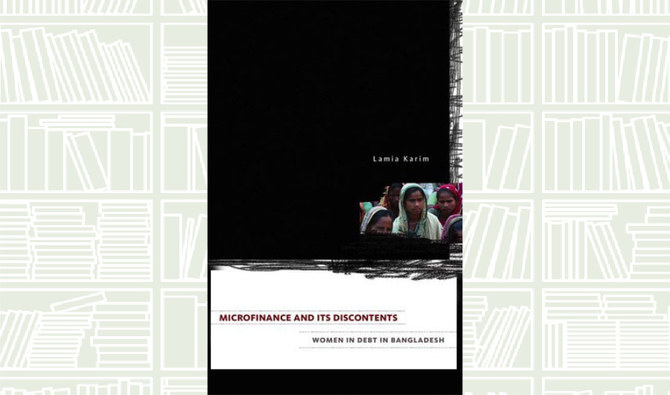
What We Are Reading Today: Microfinance and Its Discontents by Lamia Karim

Short Url
Updated 26 November 2022
Follow

What We Are Reading Today: Microfinance and Its Discontents by Lamia Karim

In 2006, the Grameen Bank of Bangladesh won the Nobel Peace Prize for its innovative microfinancing operations.

This path-breaking study of gender, grassroots globalization, and neoliberalism in Bangladesh look critically at the Grameen Bank and three of the leading NGOs in the country.

Amid euphoria over the benefits of microfinance, Lamia Karim offers a timely and sobering perspective on the practical, and possibly detrimental, realities for poor women inducted into microfinance operations.

In a series of ethnographic cases, Karim shows how NGOs use social codes of honor and shame to shape the conduct of women and to further an agenda of capitalist expansion, according to a review on goodreads.com

These unwritten policies subordinate poor women to multiple levels of debt that often lead to increased violence at the household and community levels, thereby weakening women’s ability to resist the onslaught of market forces.


What We Are Reading Today: Writing Timbuktu

Photo/Supplied
Updated 25 January 2026
Follow

What We Are Reading Today: Writing Timbuktu

  • In “Writing Timbuktu,” Shamil Jeppie offers a history of the book as a handwritten, handmade object in West Africa

Author: Shamil Jeppie

Printed books did not reach West Africa until the early 20th century. And yet, between the 15th and 20th centuries, literate and curious readers throughout the region found books to read — books that were written and copied by hand.

In “Writing Timbuktu,” Shamil Jeppie offers a history of the book as a handwritten, handmade object in West Africa.

Centering his account in the historic city of Timbuktu, Jeppie explores the culture of the “manuscript-book” — unbound pages, often held together by carefully crafted leather covers.