


RIYADH: Saudi cultural backgrounds are the primary advantages the Kingdom can rely on to become a global tourism hub, according to Amira El-Adawi, founder and managing partner of Amira & Co., a London-based boutique management consulting firm.
“The advantage can be sustained indefinitely, and the Kingdom already has a captive market for this,” she told Arab News.
“However, this has to be done right. It must be authentic and cater to tourists who value authentic heritage and history,” El-Adawi added.
Since 2008, Saudi Arabia has had no fewer than six significant “outstanding universal value” sites inscribed on UNESCO’s World Heritage list.
Each of the six world heritage sites plays a crucial role in opening up the Kingdom as a destination for cultural tourists worldwide.
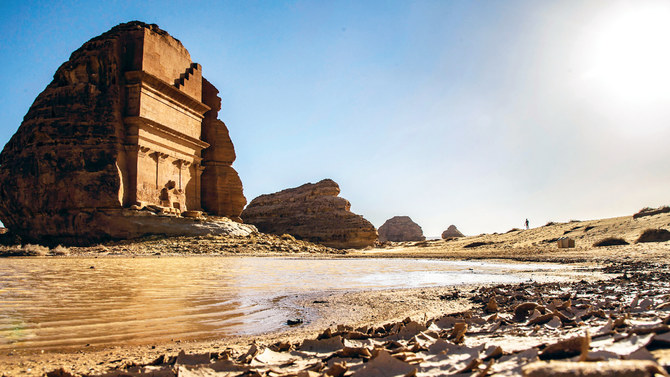
One of the UNESCO properties is the ancient city of Hegra, the southern capital of the Nabataeans, who also built Petra in modern-day Jordan.
Hegra archaeological site is a significant destination of more than 22,000 sq. km of AlUla region, with its lush oasis valley and towering mountains.
Dawn of a civilization
Saudi Arabia’s other UNESCO sites include the historic Jeddah, inscribed by the UN agency in 2014, which was established in the seventh century as the major port on the Red Sea and grew rapidly as the gateway for pilgrims to Makkah who arrived by sea.
Jeddah, which developed into a thriving multicultural center, was characterized by a distinctive architectural tradition, including tower houses built in the late 19th century by the city’s mercantile elites, many of which can still be seen today.
Among other heritage sites is Al-Ahsa, listed by UNESCO in 2018.
Al-Ahsa is home to the world’s largest and oldest oasis, a sprawling collection of 2.5 million palm trees scattered over 85 sq. km.
It preserves material traces representative of all the stages of the oasis’s history, from its origins in the Neolithic to the present.
Finally, the Turaif district of Diriyah, considered the birthplace of the Kingdom, was listed by UNESCO in 2010.
Diriyah is now the center of one of Saudi Arabia’s largest giga-projects developed by the Diriyah Gate Development Authority.
The $50 billion plan to transform Diriyah into a global historical, cultural and lifestyle destination will create 55,000 job opportunities and attract 27 million visitors annually.
Staying ahead of the game
Another area where the Kingdom could compete would be hosting sports events.
Recent reports showed that the Kingdom is talking with sports chiefs in Egypt and Greece over an audacious joint bid to host the 2030 football World Cup finals.
In addition, the country was chosen on Oct. 4 to host the 2029 Asian Winter Games at Trojena, a year-round winter sports complex built in the northwest of the Kingdom as part of the futuristic NEOM megacity.
Trojena, due to be completed in 2026, is in an area of NEOM where winter temperatures drop below zero and year-round temperatures are generally 10 degrees cooler than the rest of the region.
“Secondary advantages can be created around desert activities —the West has built entire industries and cities around snow and skiing. No one has yet created enough traction around sand sports and desert activities,” El-Adawi said.
The complex will have year-round skiing, chalets, mansions, ultra-luxury hotels and a five-meter-deep artificial lake filled with desalinated seawater.
“This needs innovation and ingenuity to be created from scratch, but KSA has the geography and the funding to do it,” El-Adawi added.
Saudi Arabia has also been hosting the Formula 1 Grand Prix in Jeddah.
The race was held in the Kingdom as part of a 15-year partnership between the Saudi Automobile and Motorcycle Federation and Formula One.
Regaling tourists with culture
El-Adawi believes that entertainment can be a secondary attraction. If people discover the Kingdom’s history, they can also be drawn to explore the variety of Saudi culture, arts and crafts across the Kingdom.
“Once some anchor products are created to draw tourists in, you can have a lot of secondary attractions and adventures that help diversify the visit experience,” she said.
According to El-Adawi, the key to sustainable tourism is to find differentiating elements rather than try and compete with existing offerings from other countries that have been at it longer.
“Saudi Arabia, today, is a market that was never available before. It has an unknown or mysterious factor about it, and a ‘peek behind the curtain’ can be used effectively in marketing to foreigners who have never considered visiting the Kingdom before,” she said.
Therefore, the Kingdom is showcasing its heritage and culture in many aspects, revolving around its esteemed giga-projects accordingly.
Saudi Arabia sees tourism contribute $1.86 trillion, up to 15 percent of the gross domestic product by 2030.
The world’s largest oil exporter aims to attract 100 million visitors annually by 2030 as it plans to move away from oil.


