Arab UK business summit to explore avenues to build strong trade ties

The UK traded £13.6bn worth of goods and services with the UAE in the year leading up to the first quarter of 2022, accounting for 1% of the UK’s total trade. (AFP)
Short Url
Updated 01 November 2022
Follow

Arab UK business summit to explore avenues to build strong trade ties

  • UAE and Saudi Arabia are the leading Arab countries in UK trade

RIYADH: British and Arab companies and investors will be shoring up regional synergies and business collaborations to tide through the geopolitical scenarios and inflationary climate plaguing the global economy.

As part of the Arab-British Economic Summit in London on Nov. 2, the Asia British Chamber of Commerce, a Saudi-British joint council, will host its second meet in the city, with prominent leaders collaborating, discussing and examining vital matters to develop economic relations between the UK and the 22 nations of the Arab world.

Themed “Shaping a Shared Vision,” the event will receive business owners and investors from the UK and the Arab world, coming together in hopes of building a prosperous future.

It will commence with welcoming remarks from Elizabeth Symons, the chair of the Arab-British Chamber of Commerce, followed by a speech from the secretary-general and CEO of ABCC, Dr. Bandar Reda.

“The tremendous response to the summit would add impetus to building stronger UK-Arab relations,” said Symons.

The gathering will discuss topics ranging from climate change issues and health matters to innovative education and the fintech revolution.

This year, the meeting will explore the power of technology and how it can transform financial services and the banking sector.

Bouncing back

The move assumes significance considering the political and trade imbalances that have swept several economies off their feet. According to the Office for National Statistics, the UK trade deficit widened to £7.1 billion ($8.1 billion) in August from a downwardly revised £5.4 billion in the previous month.

In August, UK imports, excluding precious metals, rose by £3.1 billion or 5.7 percent, driven by a £3.5 billion increase in higher non-EU imports of fuel, machinery and transport equipment. 
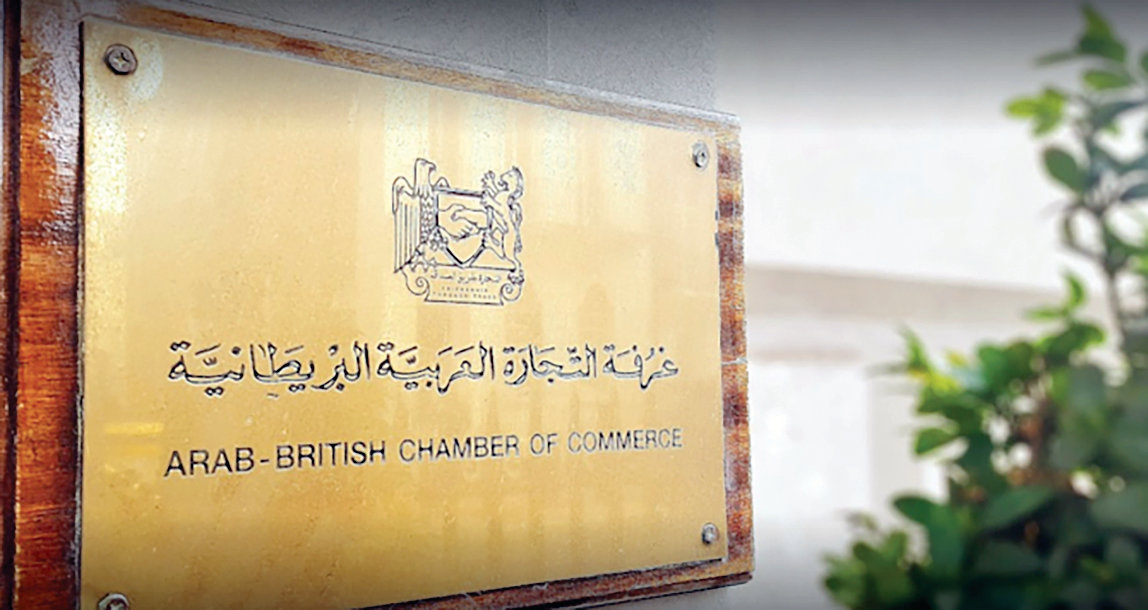


The Arab-British Economic Summit aims to tackle the new obstacles that have risen in a post-pandemic and post-Brexit world. (Supplied)

Total exports, excluding precious metals, rose by £400 million or 1.2 percent in the same month, led by a £700 million rise in non-EU exports, whereas exports to the EU dropped by £300 million or 1.5 percent.

According to the UN Comtrade database on international trade, merchandise exports from Western Asia and Northern Africa to the UK rose 47.8 percent to reach $1.595 trillion in 2021.

The region’s imports rose by 22.1 percent to reach $1,291.9 billion that year.

The trade balance documented a surplus of $293.8 billion in 2021 compared to a surplus of $14.8 billion the year before.

According to data from the department of international trade, the UAE and Saudi Arabia are the leading Arab countries in UK trade.

The UK traded £13.6 billion worth of goods and services with the UAE in the year leading up to the first quarter of 2022, accounting for 1 percent of the UK’s total trade, standing as its 24th largest trading partner.

HIGHLIGHTS

• The UK launched a free trade agreement in Riyadh with the Gulf Cooperation Council countries in June of this year, opening investment and job opportunities and increasing the flow of goods and services.

• The UK traded £13.6 billion worth of goods and services with the UAE in the year leading up to the first quarter of 2022, accounting for 1 percent of the UK’s total trade, standing as its 24th largest trading partner.

Saudi Arabia, the 27th largest trading partner with 0.8 percent of total UK trade, reported the data. Its total trade amounted to £11.3 billion in the year ending in the first quarter of 2022.

The total trade of Qatar and Kuwait with the UK during the same period amounted to £6.2 billion and £2.4 billion, respectively. Likewise, the total trade of Oman and Bahrain with the UK was £1.1 billion and £889 million, respectively.

Free trade opportunity

The UK also launched a free trade agreement in Riyadh with the Gulf Cooperation Council countries in June of this year, opening investment and job opportunities and increasing the flow of goods and services.

As the UK’s seventh largest export market, the Gulf’s demand for international goods and services is expected to surge 35 percent by 2035 to reach £800 billion.

“Today marks the next significant milestone in our five-star year of trade as we step up the UK’s close relationship with the Gulf,” said UK Trade Secretary Anne-Marie Trevelyan on the day of the agreement.

Stephen Phipson, CEO of Make UK, the manufacturers’ organization, said: “We welcome the launch of free trade negotiations with the Gulf Cooperation Council, which will ensure that British manufacturing benefits from future positive flows of goods and services into the Gulf region.”

Besides the trade, the economic summit will also analyze the consequences of global warming and the steps that must be taken against it.

This summit aims to tackle the new obstacles that have risen in a post-pandemic and post-Brexit world. It will achieve so by reinforcing trade ties and promoting bilateral investment flows.

More importantly, it will address the importance of accomplishing this through sustainable and environmentally friendly ways.

The Arab-British Economic Summit in 2019 was an incredible success, as it worked as a catalyst between interested investors and entrepreneurs.

Additionally, the speakers addressed pre-existing challenges such as youth unemployment, water scarcity, and other economic barriers that prevailed in the Middle Eastern and Arab regions. They also proposed solutions on how UK-Arab cooperation could reduce them.

Also, it put forth the potential of achieving significant projects in the region through collaboration between the UK and the Arab nations.


How AI and financial literacy are redefining the Saudi workforce

Updated 26 December 2025
Follow

How AI and financial literacy are redefining the Saudi workforce

  • Preparing people capable of navigating money and machines with confidence

ALKHOBAR: Saudi Arabia’s workforce is entering a transformative phase where digital fluency meets financial empowerment. 

As Vision 2030 drives economic diversification, experts emphasize that the Kingdom’s most valuable asset is not just technology—but people capable of navigating both money and machines with confidence.

For Shereen Tawfiq, co-founder and CEO of Balinca, financial literacy is far from a soft skill. It is a cornerstone of national growth. Her company trains individuals and organizations through gamified simulations that teach financial logic, risk assessment, and strategic decision-making—skills she calls “the true language of empowerment.”

An AI-driven interface showing advanced data insights, highlighting the increasing demand for leaders who can navigate both technology and strategy. (creativecommons.org)

“Our projection builds on the untapped potential of Saudi women as entrepreneurs and investors,” she said. “If even 10–15 percent of women-led SMEs evolve into growth ventures over the next five years, this could inject $50–$70 billion into GDP through new job creation, capital flows, and innovation.”

Tawfiq, one of the first Saudi women to work in banking and later an adviser to the Ministry of Economy and Planning on private sector development, helped design early frameworks for the Kingdom’s venture-capital ecosystem—a transformation she describes as “a national case study in ambition.”

“Back in 2015, I proposed a 15-year roadmap to build the PE and VC market,” she recalled. “The minister told me, ‘you’re not ambitious enough, make it happen in five.’” Within years, Saudi Arabia had a thriving investment ecosystem supporting startups and non-oil growth.

Opinion

This section contains relevant reference points, placed in (Opinion field)

At Balinca, Tawfiq replaces theory with immersion. Participants make business decisions in interactive simulations and immediately see their financial impact.

“Balinca teaches finance by hacking the brain, not just feeding information,” she said. “Our simulations create what we call a ‘business gut feeling’—an intuitive grasp of finance that traditional training or even AI platforms can’t replicate.”

While AI can personalize lessons, she believes behavioral learning still requires human experience.

Saudi women take part in a financial skills workshop, reflecting the growing role of financial literacy in shaping the Kingdom’s emerging leadership landscape. (AN File)

“AI can democratize access,” she said, “but judgment, ethics, and financial reasoning still depend on people. We train learners to use AI as a co-pilot, not a crutch.”

Her work aligns with a broader national agenda. The Financial Sector Development Program and Al Tamayyuz Academy are part of Vision 2030’s effort to elevate financial acumen across industries. “In Saudi Arabia, financial literacy is a national project,” she said. “When every sector thinks like a business, the nation gains stability.”

Jonathan Holmes, managing director for Korn Ferry Middle East, sees Saudi Arabia’s digital transformation producing a new generation of leaders—agile, data-literate, and unafraid of disruption.

“What we’re seeing in the Saudi market is that AI is tied directly to the nation’s economic growth story,” Holmes told Arab News. “Unlike in many Western markets where AI is viewed as a threat, here it’s seen as a catalyst for progress.”

Saudi Arabia's Vision 2030 and the national AI strategy are producing “younger, more dynamic, and more tech-fluent” executives who lead with speed and adaptability. (SPA photo)

Holmes noted that Vision 2030 and the national AI strategy are producing “younger, more dynamic, and more tech-fluent” executives who lead with speed and adaptability. Korn Ferry’s CEO Tracker Report highlighted a notable rise in first-time CEO appointments in Saudi Arabia’s listed firms, signaling deliberate generational renewal.

Korn Ferry research identifies six traits for AI-ready leadership: sustaining vision, decisive action, scaling for impact, continuous learning, addressing fear, and pushing beyond early success.

“Leading in an AI-driven world is ultimately about leading people,” Holmes said. “The most effective leaders create clarity amid ambiguity and show that AI’s true power lies in partnership, not replacement.”

He believes Saudi Arabia’s young workforce is uniquely positioned to model that balance. “The organizations that succeed are those that anchor AI initiatives to business outcomes, invest in upskiling, and move quickly from pilots to enterprise-wide adoption,” he added.

DID YOU KNOW?

• Saudi women-led SMEs could add $50–$70 billion to GDP over five years if 10–15% evolve into growth ventures.

• AI in Saudi Arabia is seen as a catalyst for progress, unlike in many Western markets where it is often viewed as a threat.

• Saudi Arabia is adopting skills-based models, matching employees to projects rather than fixed roles, making flexibility the new currency of success.

The convergence of Tawfiq’s financial empowerment approach and Holmes’s AI leadership vision points to one central truth: the Kingdom’s greatest strategic advantage lies in human capital that can think analytically and act ethically.

“Financial literacy builds confidence and credibility,” Tawfiq said. “It transforms participants from operators into leaders.” Holmes echoes this sentiment: “Technical skills matter, but the ability to learn, unlearn, and scale impact is what defines true readiness.”

Saudi women in the transportation sector represent the expanding presence of female talent across high-impact industries under Vision 2030. (AN File)

As organizations adopt skills-based models that match employees to projects rather than fixed job titles, flexibility is becoming the new currency of success. Saudi Arabia’s workforce revolution is as much cultural as it is technological, proving that progress moves fastest when inclusion and innovation advance together.

Holmes sees this as the Kingdom’s defining opportunity. “Saudi Arabia can lead global workforce transformation by showing how technology and people thrive together,” he said.

Tawfiq applies the same principle to finance. “Financial confidence grows from dialogue,” she said. “The more women talk about money, valuations, and investment, the more they’ll see themselves as decision-makers shaping the economy.”

Together, their visions outline a future where leaders are inclusive, data-literate, and AI-confident—a model that may soon define the global standard for workforce transformation under Vision 2030.