


More than 50 Pakistani companies participating in major technology show in Dubai

Pakistan’s minister for information technology Syed Amin Ul Haque (2nd from L) attends the Pakistan pavilion at GITEX Global event in Dubai on October 11, 2022. (WAM)
Short Url
Updated 11 October 2022
Follow

More than 50 Pakistani companies participating in major technology show in Dubai

  • Pakistan’s minister for information technology inaugurated his country’s pavilion at GITEX Global
  • He said the technology show was an ideal platform for Pakistani exhibitors to network with key players

ISLAMABAD: Over 50 Pakistani companies are participating in a major technology show currently taking place in Dubai, said WAM, the official news agency of the United Arab Emirates, on Tuesday.
GITEX Global, one of the largest technology shows, unifies the world’s most influential ecosystems of advancing business, economy, society and culture through the sheer power of innovation.
GITEX features major technology players and trends while covering different sectors which include smart cities, cybersecurity, data economy, mobility, health care and telecoms.
“This year 53 Pakistani companies are participating in GITEX Global, the world’s largest tech show that is being held from 10th to 14th October, at the Dubai World Trade Center,” said the WAM news agency.
These companies are working in the fields of artificial intelligence, blockchain, metaverse, agri-tech and ed-tech etc.
Pakistan’s minister for information technology Syed Amin Ul Haque inaugurated his country’s pavilion as the show began on Monday.

Addressing an audience, Haque said Pakistan’s information and communications technology (ICT) exports had doubled in the last three years.
“Pakistan’s ICT export remittances, including telecommunication, computer and information services, recorded a growth of 47.6 percent in FY 2020-21 in comparison with FY 2019-20. In 2021, Pakistani startups raised a record investment which was 450 percent higher than investment raised in 2020,” WAM quoted the minister as saying.
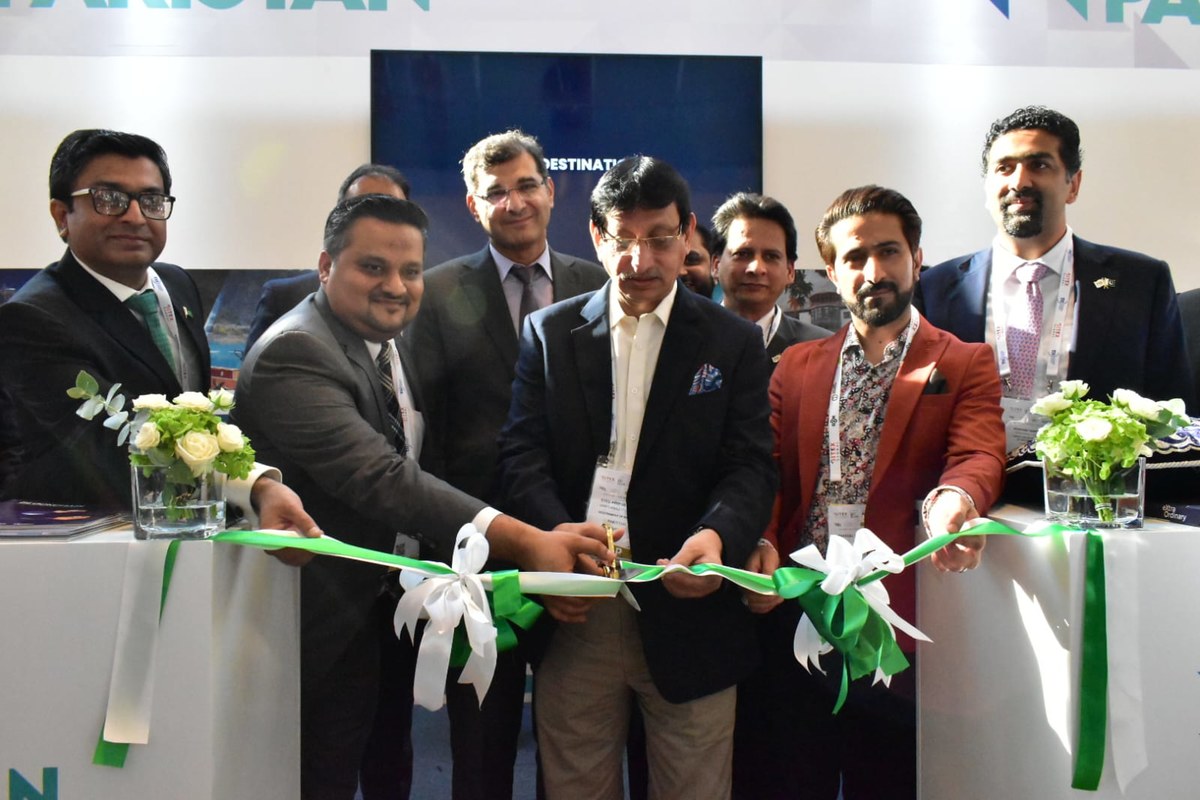


Pakistan’s minister for information technology Syed Amin Ul Haque (C) inaugurates the Pakistan pavilion at GITEX Global event in Dubai on October 11, 2022. (WAM)

According to the news report, Haque said GITEX provided an ideal platform to Pakistani exhibitors to interact and network with key industry players, explore business opportunities and learn important developments taking place around the world.
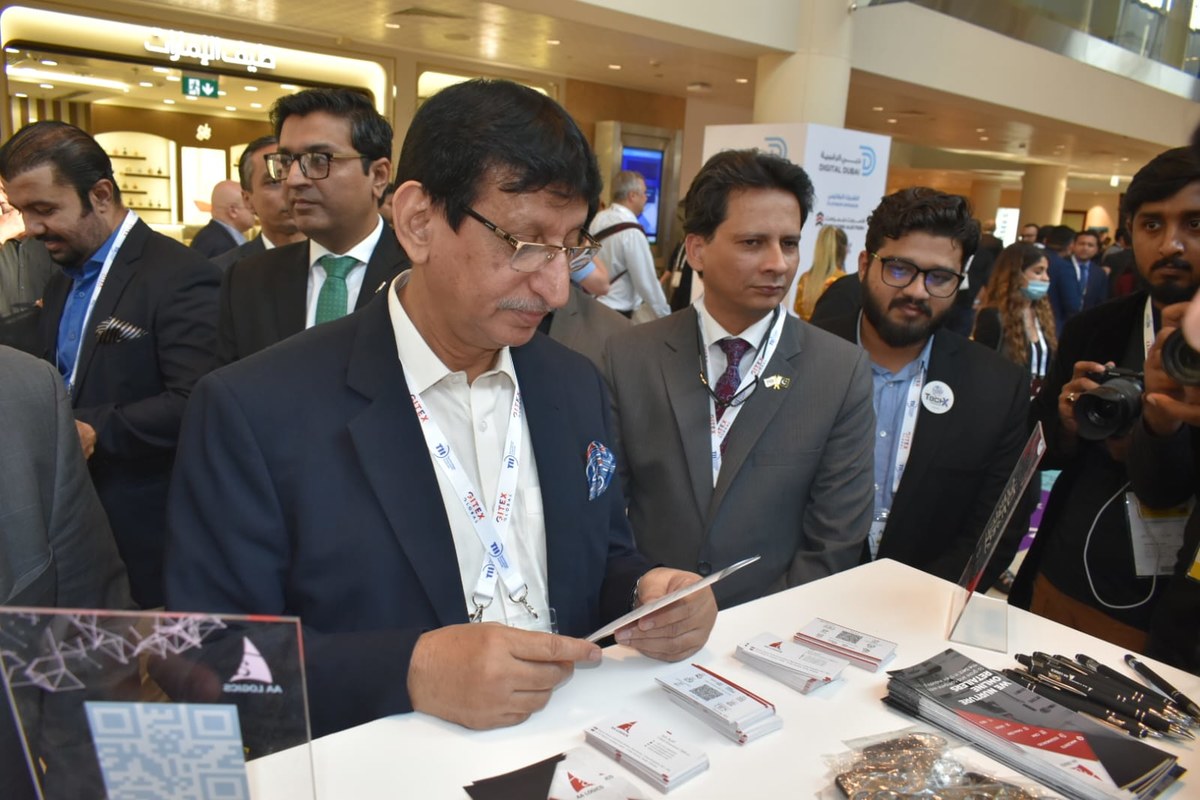


Pakistan’s minister for information technology Syed Amin Ul Haque pictured at the Pakistan pavilion at GITEX Global event in Dubai on October 11, 2022. (WAM)


Pakistan finance minister highlights economic stability, improving debt outlook at AlUla Conference

Updated 6 sec ago
Follow

Pakistan finance minister highlights economic stability, improving debt outlook at AlUla Conference

  • Global public debt remains at historic highs, exerting pressure on emerging countries, says Pakistani finance minister
  • Muhammad Aurangzeb says Pakistan’s debt-to-GDP ratio has declined to 70 percent from 74 percent over three years

ISLAMABAD: Pakistan’s Finance Minister Muhammad Aurangzeb highlighted the country’s improving debt outlook and efforts to restore economic stability at the AlUla Conference for Emerging Market Economies on Monday, calling for enhanced global coordination to address sovereign debt vulnerabilities. 

The second edition of the annual AlUla conference was launched by the Saudi Arabia’s Ministry of Finance and the International Monetary Fund (IMF) on Sunday. The conference brings together economic decision-makers, finance ministers, central bank governors, leaders of international financial institutions and a select group of experts and specialists from around the world.

This year’s conference highlights the rapid transformations in the global economy and challenges and the opportunities they present for emerging market economies, particularly in international trade, monetary and financial systems. 

Speaking at a roundtable titled: ‘Addressing Sovereign Debt Vulnerabilities,’ Aurangzeb noted that global public debt remains at historic highs, exerting pressure on emerging and developing economies through higher debt servicing costs, tighter financing conditions and constrained fiscal space, the Finance Division said. 

“The finance minister highlighted that Pakistan has made initial but meaningful progress in restoring stability through disciplined macroeconomic policies, institutional reforms, and proactive debt management, while acknowledging that the reform journey remains ongoing,” the Finance Division said. 

The minister said Pakistan remains on track to contain and better manage public debt, extending maturities, reducing costs and undertaking early debt repayments. Aurangzeb noted that these efforts have contributed to a decline in the debt-to-GDP ratio to around 70 percent from about 74 percent over the past three years.

Aurnagzeb also spoke about Pakistan’s progress in domestic resource mobilization, noting that Islamabad has raised its tax-to-GDP ratio, adding that it is now moving to the figure of 12 percent from single-digit levels in earlier years. The minister cited by tax reforms, digitization and base-broadening measures as reasons for the improvement.

“Concluding his remarks, the finance minister stressed that addressing sovereign debt vulnerabilities requires early action, strong institutions, transparency, and credible policy frameworks, supported by enhanced global coordination,” the statement said. 

“Strengthening creditor cooperation, expanding the effective use of liability management operations, and integrating climate resilience into debt frameworks, he noted, will be essential to help emerging economies manage debt sustainably while preserving growth and development priorities.”

Pakistan has recently undertaken reforms mandated by the IMF under its $7 billion loan program to strengthen its fragile economy. While the IMF has acknowledged progress on Islamabad’s part, it has also cautioned that the country’s recovery remains fragile and warned that high public debt, fiscal pressures and exposure to external shocks continue to pose risks to long-term stability.

Pakistan faced a prolonged economic crisis in recent years, marked by fiscal pressure, high debt levels and balance-of-payments difficulties, and subsequently entered an IMF-supported program to stabilize the economy.

Pakistani officials say decreasing levels of inflation and higher foreign exchange reserves reflect the government’s prudent fiscal policies and debt management.