Fashion Commission opens applications for second edition of Saudi 100 Brands program

1 / 4
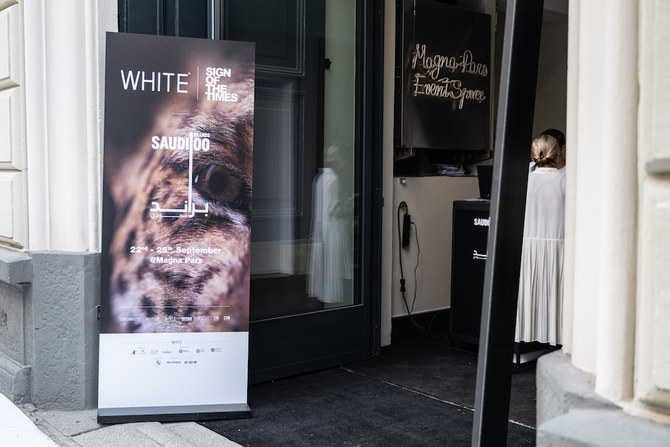
Designers in the Kingdom have been invited by the Fashion Commission to apply for the Saudi 100 Brands professional development program by the closing date of Oct. 16. (Supplied)
2 / 4
Designers in the Kingdom have been invited by the Fashion Commission to apply for the Saudi 100 Brands professional development program by the closing date of Oct. 16. (Supplied)
3 / 4
Designers in the Kingdom have been invited by the Fashion Commission to apply for the Saudi 100 Brands professional development program by the closing date of Oct. 16. (Supplied)
4 / 4
Designers in the Kingdom have been invited by the Fashion Commission to apply for the Saudi 100 Brands professional development program by the closing date of Oct. 16. (Supplied)
Short Url
Updated 07 October 2022
Follow

Fashion Commission opens applications for second edition of Saudi 100 Brands program

  • The first edition last year delivered more than 5,000 hours of specialized training
  • Graduates displayed their talent at fashion week exhibitions in New York and Milan

RIYADH: Designers in the Kingdom have been invited by the Fashion Commission to apply for the Saudi 100 Brands professional development program by the closing date of Oct. 16.

The program includes masterclasses, workshops, one-on-one mentorship sessions, and training from industry leaders and experts.

The first edition last year delivered more than 5,000 hours of specialized training, and saw graduates displaying their talent at fashion week exhibitions in New York and Milan.

The 10 program categories are: ready-to-wear, modest, concept, premium, demi-couture, bridal, handbags, jewelery and — new for this edition — fragrances and footwear.

Designers are chosen from a diverse group, with ages ranging from 20 to 70 and 85 percent female participation, as well as self-trained and graduates of international design schools. Those selected can choose a year-long international program for established brands or a six-month program for smaller brands.

Speaking to Arab News recently about the success of the first edition of Saudi 100 Brands, Fashion Commission CEO Burak Cakmak said the response in fashion capitals such as New York was “amazing.”

He added: “I was so excited to be able to take over the billboard in Times Square with ‘Saudi 100 brands’ logo, but also we had over 2,500 visitors in two weeks to our space, showing hundreds of unique pieces that came from a hundred Saudi designers.

“Everybody was positively impressed; they loved every piece they saw and started asking questions about who the designers were, and wanted to follow them and learn more about them.”


Mini op-ed: We need a ‘potluck’ culture of reading

Updated 10 March 2026
Follow

Mini op-ed: We need a ‘potluck’ culture of reading

DUBAI: The number of times we hear, “My kids don’t read,” “I don’t have the time,” or “Do people even read anymore?” is alarming.

With newspapers declared dead and YouTube summaries or ChatGPT reviews becoming the main course of words, I often wonder: have those asking these questions considered the role they play?

Each of us — school representatives, librarians, parents, educators, children, and even occasional readers — must ask whether we are helping create a culture where reaching for a book feels as natural as reaching for a smartphone.

Even the smallest effort counts. I think of a reading culture as a potluck where everyone brings something small, and together it becomes a wholesome meal. If you do not know where to begin, look around.

Purva Grover is an author, poet, playwright, stage director, TEDx speaker, and creative entrepreneur. (Supplied)

The UAE is rich in public libraries including in Sharjah and Dubai, such as the Mohammed Bin Rashid Library, which is proof that access is not the issue. 

Meanwhile, Saudi Arabia is embedding reading into its national identity under Vision 2030 through digital libraries, major book fairs, and daily school reading.

Not a reader? Events such as the Emirates Airline Festival of Literature or the Sharjah International Book Fair offer easy entry points for conversation, community and curiosity.

They are built on cultural blocks that subtly encourage even non-readers into reading spaces. You could even start a reading club. I run one in Dubai called The Reading Village and have seen its quiet magic.

Culture is built by saying yes. And no to pirated PDFs on WhatsApp, as well as unchecked screen habits.

Tiny habits can help build an environment where reading becomes as much a part of our lives as scrolling on Netflix to decide what to binge-watch next.

Purva Grover is an author, poet, playwright, stage director, TEDx speaker, and creative entrepreneur. She is the founder of The Reading Village, a Dubai-based community.