

Afghanistan sets out to ban TikTok, PUBG this year

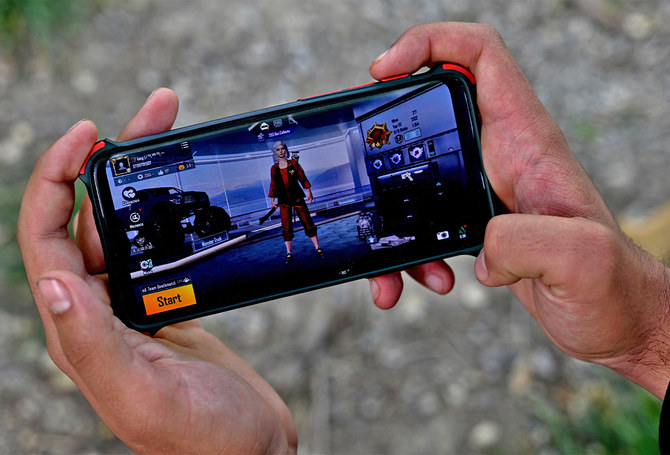
An Afghan youth plays PUBG game on his mobile phone at a park in Kabul, Afghanistan, on April 21, 2022. (AFP)
Short Url
Updated 20 September 2022
Follow

Afghanistan sets out to ban TikTok, PUBG this year

  • Afghanistan has around 9 million internet users
  • Taliban spokesperson says ban would prevent youth ‘from being misled’

KABUL: The Afghan government is set to ban video-sharing platform TikTok and online multi-player game PUBG within the next 3 months, an official confirmed on Tuesday, following a string of bans on content deemed immoral since the Taliban takeover of Afghanistan last year.

The Taliban announced a ban on both popular apps earlier this year, with the group’s spokesman Inamullah Samangani saying in April that the move was necessary to “prevent the younger generation from being misled.”

Internet access in Afghanistan, along with its youth population, has grown rapidly in recent years, with 10 million users, according to data from the Ministry of Communications and Information Technology. While more than 63 percent of the country’s population of 40 million are under 25 years old.  

Afghan officials agreed on a timeline for the ban over the weekend after a discussion with telecommunication companies and internet service providers in the country, communications and IT ministry spokesperson Anayatullah Alokozai told Arab News.

“After a series of meetings that we had with telecommunications companies, the companies promised in the latest meeting on Saturday that they will close TikTok in one month and PUBG game in three months,” Alokozai said on Tuesday.

The upcoming ban on TikTok is likely the Taliban’s attempt to curtail dissent, Afghan journalist Abdulhaq Omeri told Arab News.

“TikTok users have recently increased in Afghanistan. People criticize the actions of the Taliban's government in live videos and short clips. Through banning TikTok, the Taliban want to stop them,” he said.

In South Asia, TikTok and PUBG are currently banned in India. The former was also briefly banned in Pakistan last year when Islamabad called on the platform to control content deemed immoral and indecent.

Omeri said “it is impossible for the Taliban to succeed in banning TikTok and PUBG,” as similar moves in other countries were not effective with people circumventing the ban with the help of VPNs.

But some Afghans say the ban could be a good thing for the younger generation.

“PUBG and TikTok are a threat to the youth’s future as most of them are having difficulties in their studies and are facing mental health issues,” Omeri said.

Manizha Khan, an education specialist from Kabul, pointed to how some users had spent too much time on the game and “become very loud and rude.”

“I would be very happy if PUBG is banned because it is extremely addictive and promotes violence and abuse among the youth,” Khan told Arab News.

She lamented the TikTok ban, however, as she has been using the app to lift up her spirits, through listening to interpretation of the Holy Quran and watching cooking videos.

“I personally use TikTok for daily motivation away from social life, which I currently don't have much of,” Khan said.  “The ban will take this opportunity from me.”


Britain, Japan agree to deepen defense and security cooperation

Updated 7 sec ago
Follow

Britain, Japan agree to deepen defense and security cooperation

  • “We set out a clear priority to build an even deeper partnership in the years to come,” Starmer said
  • Takaichi said they agreed to hold a meeting of British and Japanese foreign and defense ministers this year

TOKYO: Britain and Japan agreed to strengthen defense and economic ties, visiting Prime Minister Keir Starmer said on Saturday, after his bid to forge closer links with China drew warnings from US President Donald Trump.
Starmer noted that Japan and Britain were the leading economies in a trans-Pacific that includes fellow G7 member Canada, as well as other international trade and defense pacts.
“We set out a clear priority to build an even deeper partnership in the years to come,” Starmer said as he stood beside Japan’s Prime Minister Sanae Takaichi after a bilateral meeting in Tokyo.
“That includes working together to strengthen our collective security, across the Euro-Atlantic and in the Indo-Pacific.”
Takaichi said they agreed to hold a meeting of British and Japanese foreign and defense ministers this year.
She said she also wanted to discuss “cooperation toward realizing a free and open Indo-Pacific, the Middle East situation and Ukraine situation” at a dinner with Starmer later on Saturday.
Starmer arrived on a one-day Tokyo stop after a four-day visit in China, where he followed in the footsteps of other Western leaders looking to counter an increasingly volatile United States.
Leaders from France, Canada and Finland have all traveled to Beijing in recent weeks, recoiling from Trump’s bid to seize Greenland and tariff threats against NATO allies.
Trump warned on Thursday it was “very dangerous” for its close ally Britain to be dealing with China, although Starmer brushed off those comments.
Tokyo’s ties with Beijing have deteriorated since Takaichi suggested in November that Japan could intervene militarily during a potential attack on Taiwan.
China regards the self-ruled democratic island as its territory.
Starmer met Chinese President Xi Jinping and Premier Li Qiang on Thursday, with both sides highlighting the need for closer ties.
He also signed a series of agreements there, with Downing Street announcing Beijing had agreed to visa-free travel for British citizens visiting China for under 30 days.
No start date for that arrangement has been given yet.
Takaich said the two leaders agreed during discussions on economic security that a strengthening of supply chains “including important minerals is urgently needed.”
There is concern that Beijing could choke off exports of the rare earths crucial for making everything from electric cars to missiles.
China, the world’s leading producer of such minerals, announced new export controls in October on rare earths and associated technologies.
They have also been a major sticking point in trade negotiations between China and the United States.
Britain, Japan and Italy are also developing a new fighter jet after Tokyo relied for decades on the United States for military hardware.