
LONDON: In November, the Prince of Wales and his wife, the Duchess of Cornwall, embarked on the first overseas tour by any member of the British royal family since the start of the coronavirus pandemic, which had brought a temporary halt to such trips two years earlier.
To those familiar with the interests closest to the prince’s heart, the choice of the Middle East as the destination came as no surprise.
Visiting Jordan and Egypt, the prince was honoring his lifelong commitment to the building of bridges between different faiths and cultures, and exercising his fascination with, and love of, a region with which he has always been deeply engaged.
On his visit to Jordan, the prince was keen to express his admiration for the work being done in the country on behalf of refugees, many of whom had been displaced by the war in Syria.
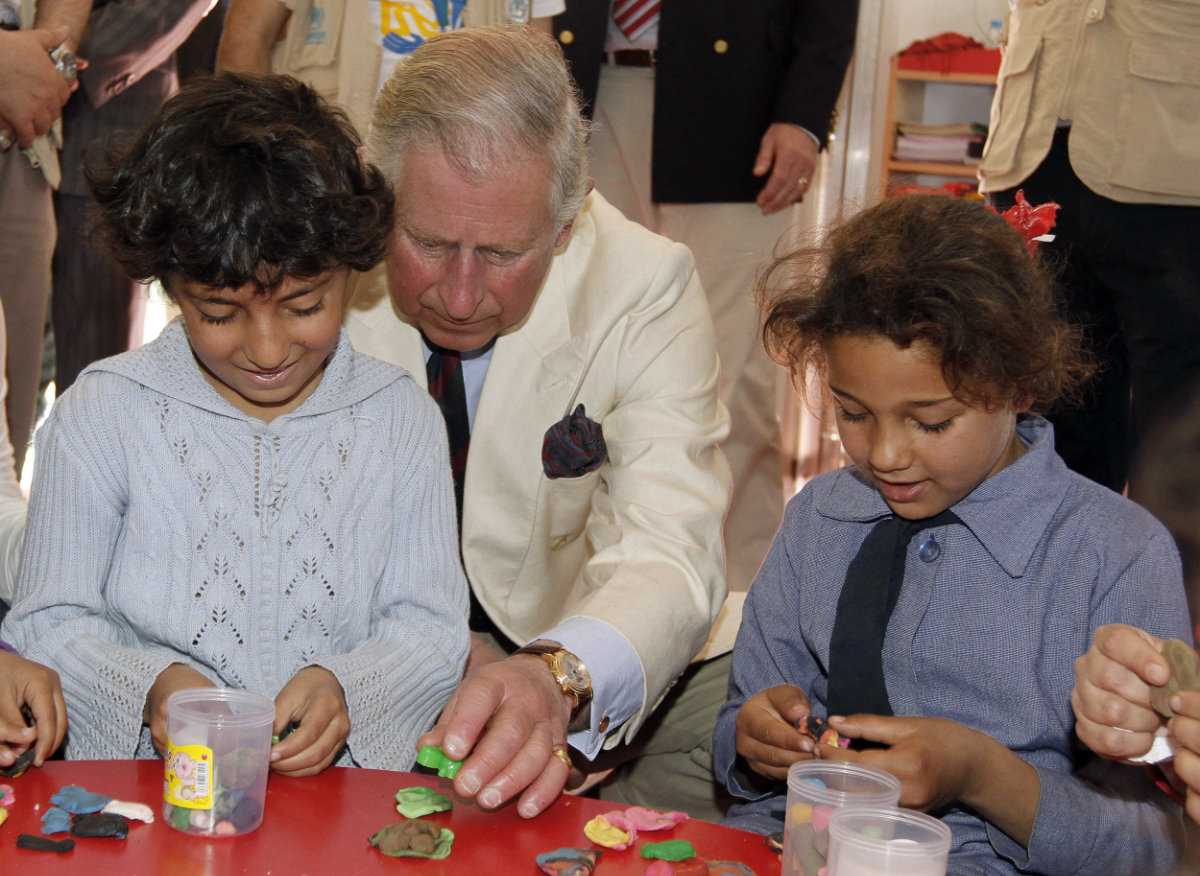
Prince Charles plays with children during his visit to the King Abdullah Park for Syrian Refugees at Ramtha city, north of Amman, on March 13, 2013. (AFP)
He has been particularly concerned with the plight of refugees throughout the region. In January 2020 he was announced as the first UK patron of the International Rescue Committee, the organization working in 40 countries “to help people to survive, recover, and gain control of their futures.”
In Jordan, he met and spoke to some of the 750,000 people being hosted by the country, many of whom rely on support from donor countries, including the UK and Saudi Arabia.
The prince’s sense of the history of the region, which in many cases is linked inextricably with that of his own country, is keen. While in Jordan, he planted a tree to symbolize the UK-Jordanian partnership, and to mark the centenary of the Hashemite Kingdom of Jordan — a product of the allied defeat of the Ottoman Empire in World War I, and which was finally granted independence from the British mandate in 1946.
In Cairo, the prince and the duchess were welcomed by President Abdel Fattah El-Sisi. It was the prince’s second trip to Egypt. He had visited previously in 2006, as part of a tour that also included Saudi Arabia and which had been carried out to promote better understanding and tolerance between religions, and in support of environmental initiatives and the promotion of sustainable job opportunities and training for young people.
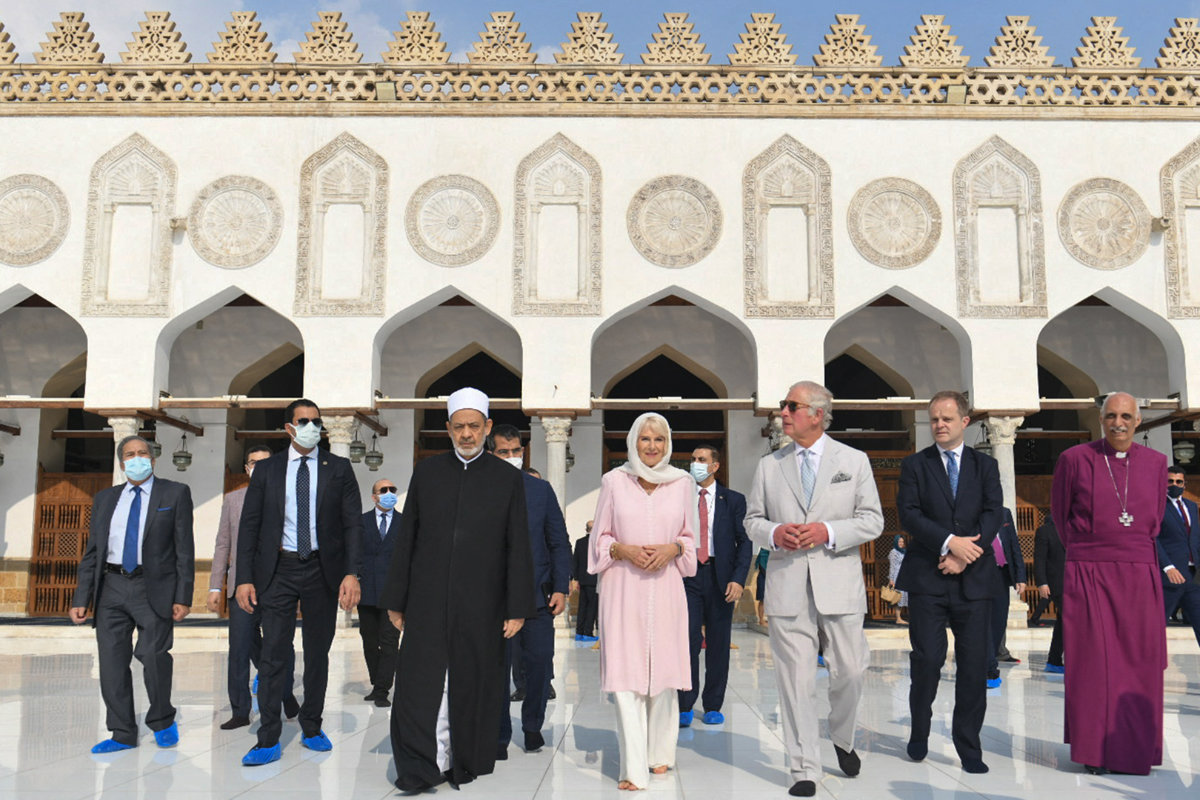
Sheikh Ahmed Al-Tayeb (C-L), Grand Imam of al-Azhar, receives Prince Charles and his wife Camilla upon their arrival at the mosque in Cairo on Nov.18, 2021. (AFP)
After visiting Cairo’s Al-Azhar mosque, the prince underlined his commitment to interfaith harmony in a speech at Al-Azhar University.
He said: “I believe with all my heart, that responsible men and women should work to restore mutual respect between religions, and we must do everything in our power to overcome the mistrust that poisons the lives of many people.”
Similar to his mother, who passed away on Thursday, Charles has always been devoted to ecumenism and the promotion of harmony between faiths.
As King Charles III, he now inherits Queen Elizabeth II’s role as Supreme Governor of the Church of England, and the title Defender of the Faith — and, like her before him, he has always made clear that he sees this role as being better defined as defender of all faiths.
During a BBC interview in 2015, he said: “It has always seemed to me that, while at the same time being Defender of the Faith, you can also be protector of faiths.
“The Church has a duty to protect the free practice of all faiths in this country.”
With more than 3 million Muslims in the UK, Islam is the second-largest religion in the country, and Charles’ interest in the religion is well known.

Prince Charles starts a basketball training match at the Saudi Sports Federation for Special Needs complex on the outskirts of Riyadh on February 10, 2004. (AFP)
In 2015, during a Middle East tour that took him to Jordan, Kuwait, Saudi Arabia, Qatar, and the UAE, it emerged that the prince had spent the previous six months learning Arabic with a private tutor, in order to be able to read the Qur’an in its original language, and to be better able to decipher inscriptions in museums and other institutions during his many trips to the region.
A royal aide revealed that the prince was “enormously interested in the region.”
Known for his passion for Islamic history, art, and culture — at the University of Cambridge in the 1960s, the prince read archaeology, anthropology, and history at Trinity College — Charles has always taken a close interest in the heritage of the Middle East.
In particular, he has followed closely and several times has visited the extensive archaeological work taking place in and around AlUla and the ancient Nabataean city of Hegra, inscribed in 2008 as a UNESCO World Heritage site.
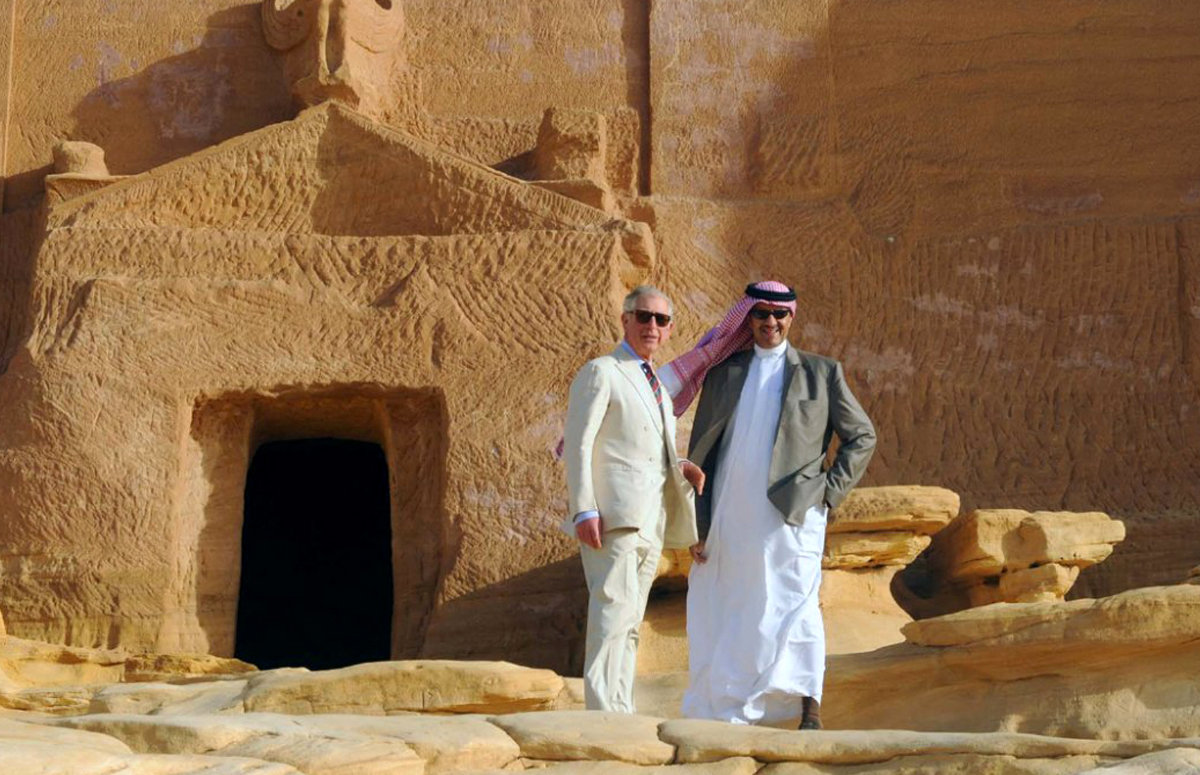
Prince Charles, accompanied by then Saudi tourism chief Prince Sultan bin Salman, tour the historical town of AlUla in Madinah province on Feb. 11, 2015. (AFP)
On a visit to Saudi Arabia in 2013, he enjoyed a tour of the Wadi Hanifa and watched with great interest a presentation on the Diriyah project, which is transforming the historic Wadi into a destination for global cultural tourism, with the preserved ruins of Diriyah, capital of the First Saudi State and birthplace of Saudi Arabia, at its heart.
Charles is a keen artist, and that interest is reflected on his personal website, princeofwales.gov.uk — in the throes of being updated to reflect his new standing — on which four watercolors he painted in the Middle East are showcased.
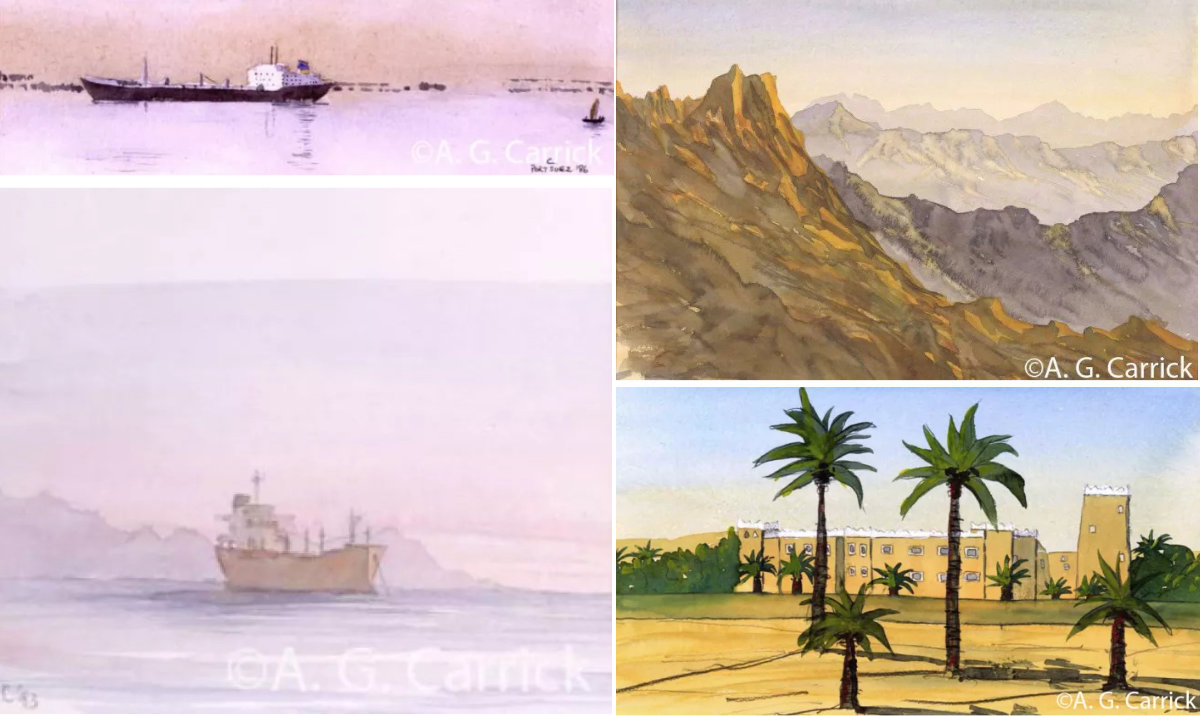
A combination of pictures from Prince Charles's personal website shows his paintings of the Middle East. Clockwise, from top left: Gulf of Aqaba, Jordan (1993); Port of Suez, 1986; overlooking Wadi Arkam, Asir Province, 1999; and Ad Diriyah, KSA, 2001.
The earliest, dated 1986, is of a ship in Port Suez, Egypt. Two others are landscapes painted in Saudi Arabia — a view of Wadi Arkam in the remote southwest Asir province in 1999, and a study of a historic palace in Diriyah, painted in 2001.
Since his investiture as Prince of Wales in 1969, Charles has made innumerable visits to countries in the region, formally and informally. Private visits aside, as Prince of Wales Charles made five official visits to Jordan, six to Qatar, seven to both Kuwait and the UAE, and 12 to Saudi Arabia.
It was a tradition that began in 1986 when he embarked on a nine-day tour of the Middle East, during which he visited Oman, Qatar, Bahrain, and Saudi Arabia with his then wife, Diana, Princess of Wales, from whom he would separate in 1992.
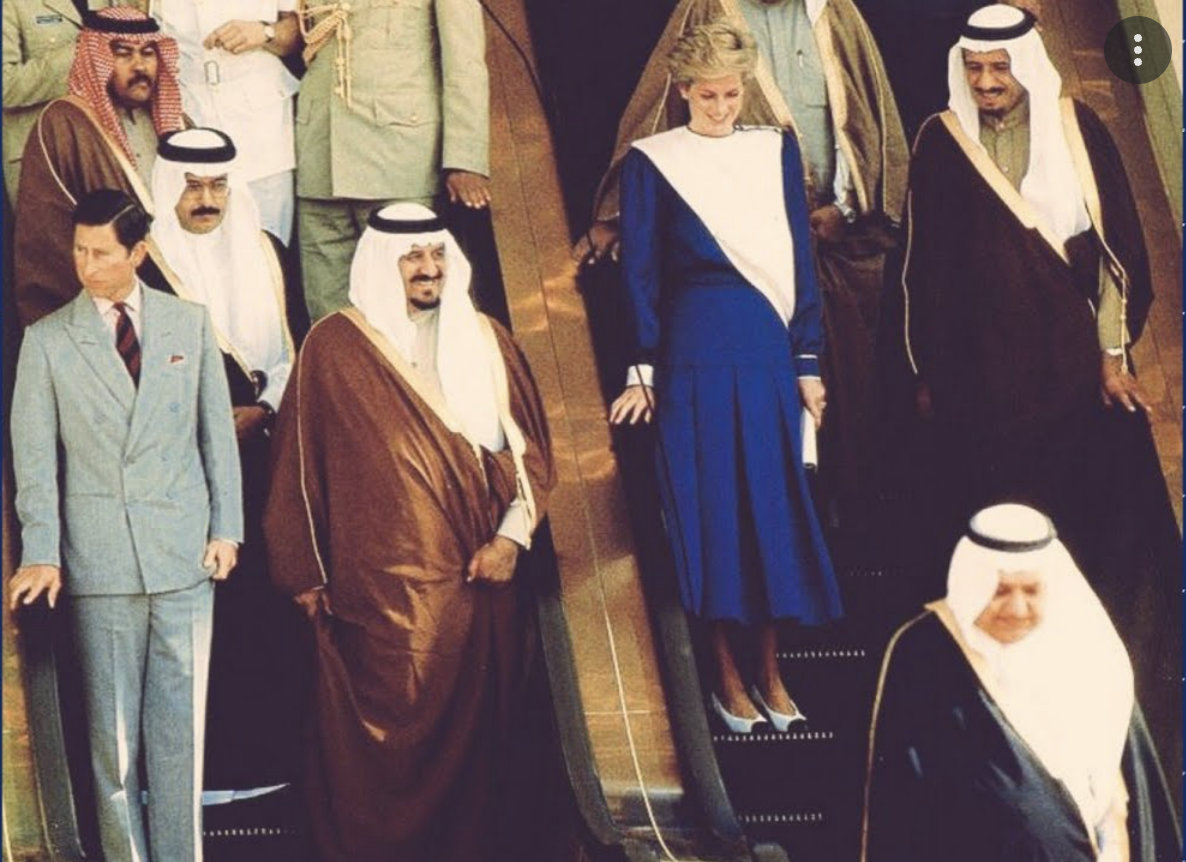
Prince Charles and Princess Diana in Jeddah in the late 80s. (Getty Images)
Just how seriously Charles takes his and Britain’s links with the region is underlined by the number of meetings he has had at home and abroad, with members of Middle Eastern royal families — more than 200 in the past decade, including with those of Bahrain, Jordan, Kuwait, Morocco, Qatar, Saudi Arabia, Oman, and the UAE.
As Prince of Wales, it was part of Charles’ job to promote the mutual interests of Britain and its allies, and in pursuit of that duty he paid many formal and informal visits to Saudi Arabia, the UK’s most influential ally in the region.
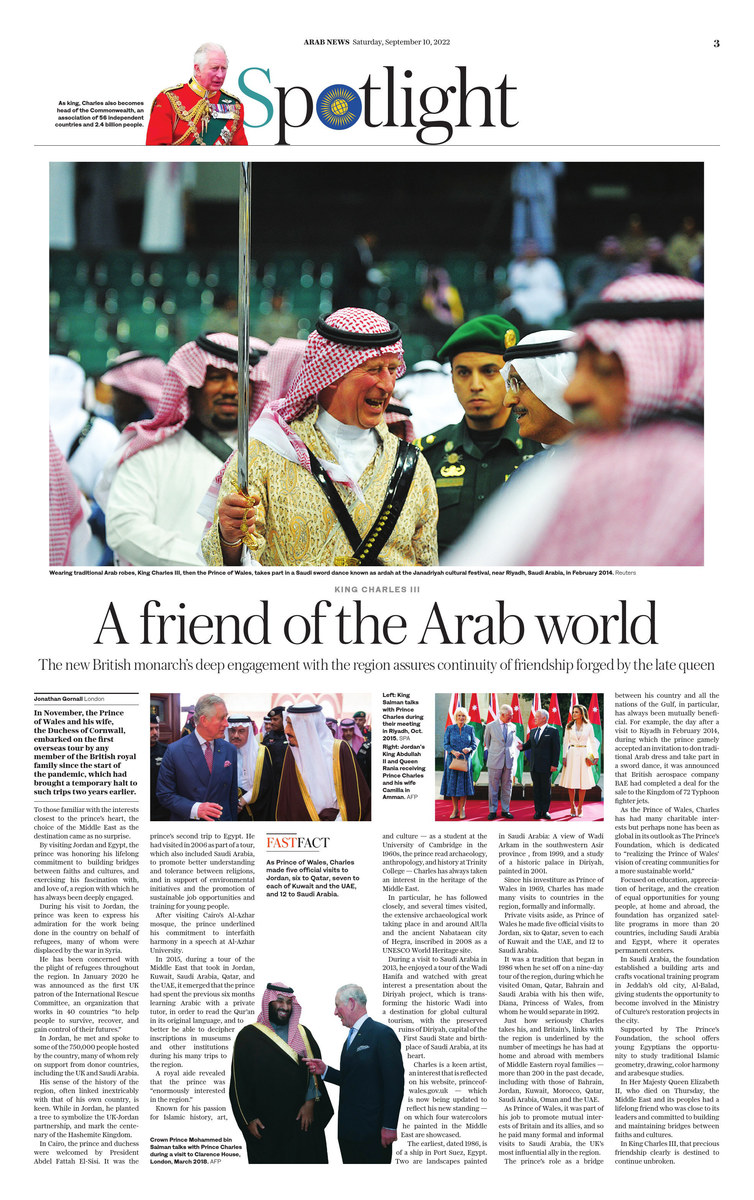
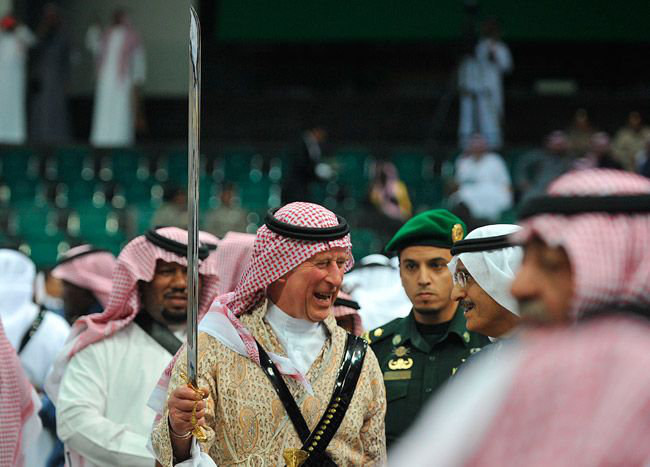
The prince’s role as a bridge between his country and all the nations of the Gulf, in particular, has always been mutually beneficial. For example, the day after a visit to Riyadh in February 2014, during which the prince gamely accepted an invitation to don traditional Arab dress and take part in a sword dance, it was announced that British aerospace company BAE had completed a deal for the sale to the Kingdom of 72 Typhoon fighter jets.
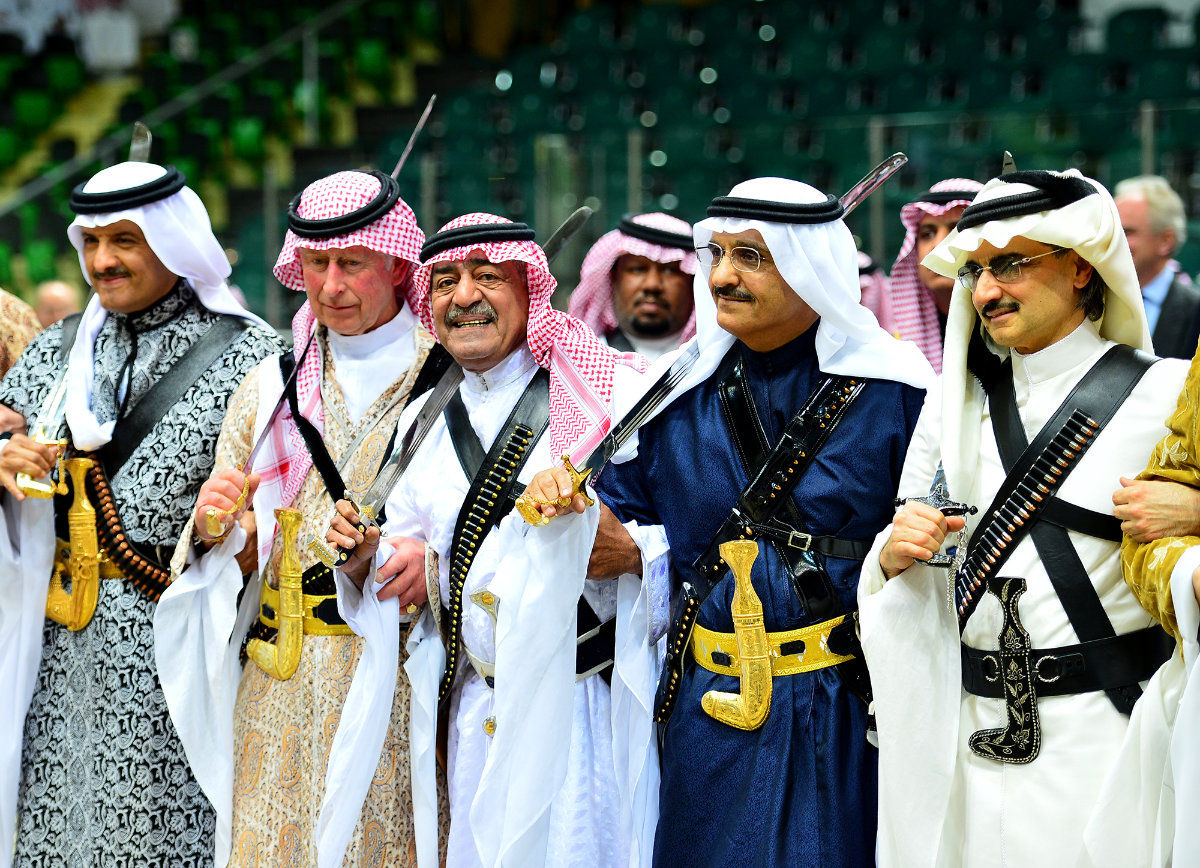
Wearing traditional Arab robes, then Prince Charles takes part in a Saudi sword dance known as ardah at the Janadriyah cultural festival near Riyadh in February 2014. (Reuters)
As the Prince of Wales, Charles has had many charitable interests, but perhaps none has been as global in its outlook as The Prince’s Foundation, dedicated to “realizing the Prince of Wales’ vision of creating communities for a more sustainable world.”
Focused on education, appreciation of heritage, and the creation of equal opportunities for young people, at home and abroad, the foundation has run satellite programs in more than 20 countries, including Saudi Arabia and Egypt, where it operates permanent centers.
In Saudi Arabia, the foundation established a building arts and crafts vocational training program in Jeddah’s old city, Al-Balad, giving students the opportunity to become involved in the Ministry of Culture’s restoration projects in the city.
During the Winter at Tantora festival, held in AlUla from Jan. 10 to March 21, 2020, the foundation staged an exhibition titled “Cosmos, Color and Craft: The Art of the Order of Nature in AlUla,” and ran a series of hands-on workshops in conjunction with the Royal Commission for AlUla.
In the UAE, since 2009 the foundation has been working with the Abu Dhabi Music and Arts Foundation to deliver traditional arts workshops in the capital.
On his visit to Egypt last year, the prince met young craftspeople from the Egyptian Heritage Rescue Foundation and The Jameel School. Supported by The Prince’s Foundation, the school teaches young Egyptians classes in traditional Islamic geometry, drawing, color harmony, and arabesque studies.
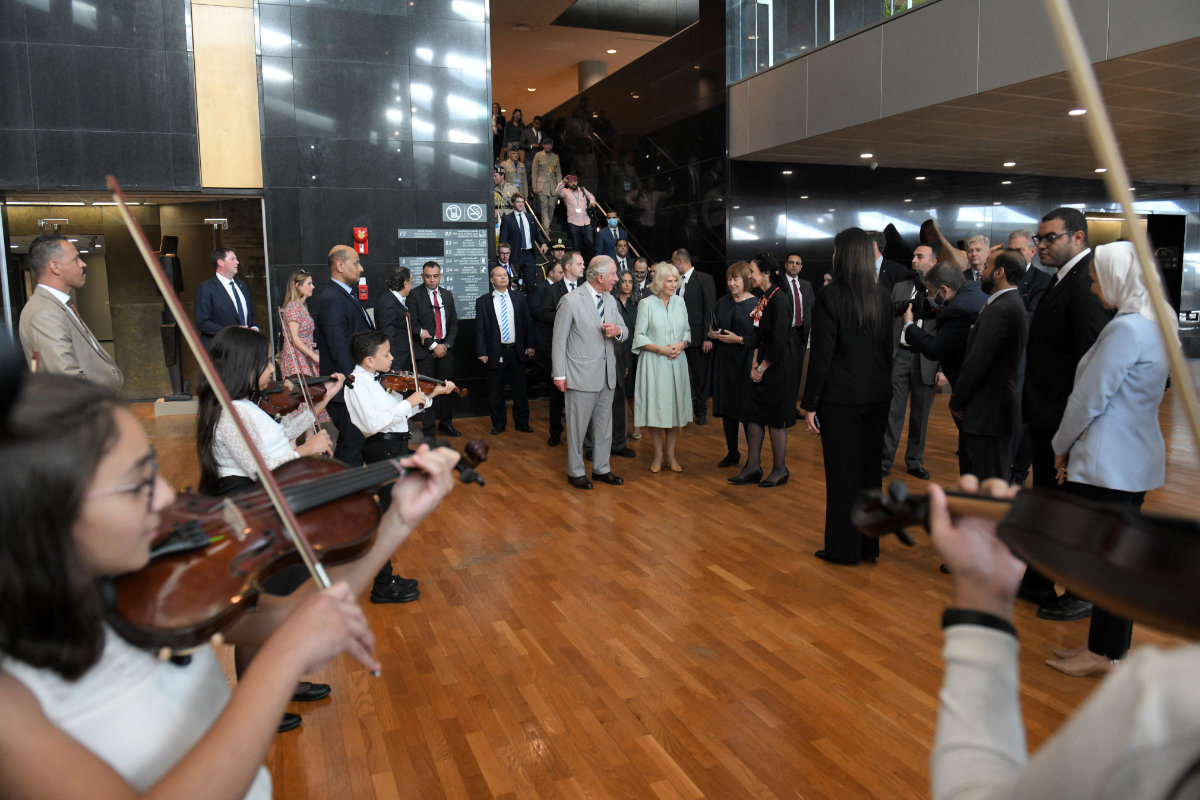
Prince Charles and his wife Camilla are greeted by officials and a children's quartet as they arrive to visit the Bibliotheca Alexandrina in Egypt on Nov. 19, 2021. (AFP)
Unsurprisingly, the foundation has attracted donations from many influential friends in the region. As the Prince of Wales, Charles’ bonds with the royal families of the region have always been deeper than the necessary ties demanded by wise diplomacy.
For example, he considered King Abdullah of Saudi Arabia as a personal friend and, after the monarch passed away in January 2015, flew to Riyadh to pay his final respects and express his condolences to his successor, King Salman, in person.
In Her Majesty Queen Elizabeth II, who died on Thursday, the Middle East and its peoples had a lifelong friend, close to its leaders and committed to building and maintaining bridges between faiths and cultures.
In King Charles III, that precious friendship clearly is destined to continue unbroken.