



RIYADH: Denmark’s ambassador in Saudi Arabia, Ole Emil Moesby, will bid the Kingdom farewell at the end of his tour of duty in Riyadh later this month.
“From the bottom of my heart, I want to say thank you,” he told Arab News. “I’ve had a fantastic time here — you usually get more or less emotional when you have to change, but if you are a diplomat, you’re quite used to it changing from one place to the other.
“I can’t think of any time when I felt this — that I am leaving something behind here — which I will miss because the way I’ve been treated and inspired, and the way I’ve been communicating with people, has been extraordinary,” Moesby said.
“The experience I have had has been fantastic, so my message is: Thank you.”
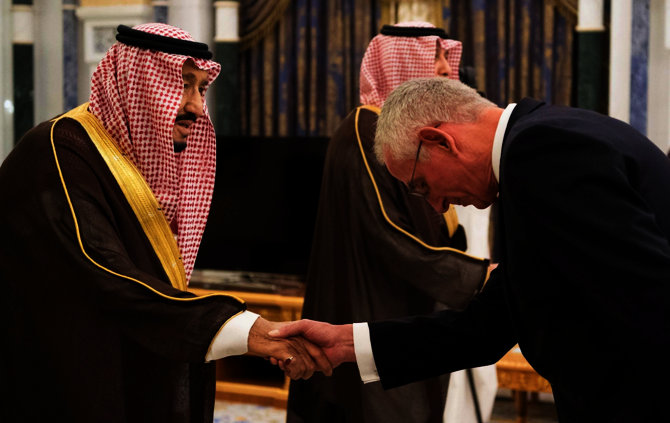
Ambassador Ole Emil Moesby paying a courtesy call to King Salman. (Supplied)
Moesby has been the ambassador of Denmark to Saudi Arabia, Oman, Bahrain, Kuwait, and Yemen since Sept. 5, 2017, and his final day of service is Aug. 31.
Talking to Arab News, Moesby highlighted some of his fondest memories in the Kingdom, where he has spent five years, from interacting with the local community and traveling, to being enriched by the culture and heritage of Saudi Arabia.
“It’s been a fantastic time to experience the development and the changes which I have seen in Saudi Arabia,” he said.
“AlUla of course has developed extremely (well) … But even places like Yanbu or Jeddah have actually changed a lot. Not to mention, of course, Riyadh.
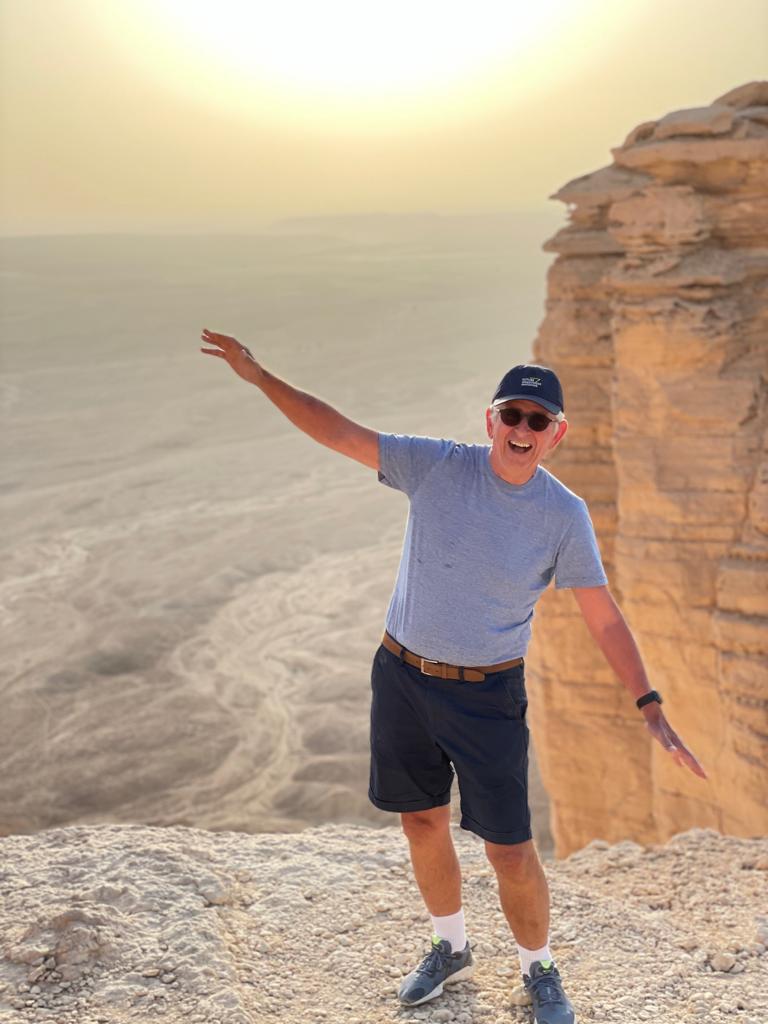
Balancing on the "Edge of the World", the Jebel Fihrayn which features 300-meter-high cliffs. It is part of Riyadh's Tuwaiq escarpment. (Supplied)
“It’s actually been interesting to see also how the development has changed attitudes and culture in these places, but yet, at the other side, have actually maintained the heritage of these places,” Moesby explained.
The ambassador witnessed many changes, including the opening of movie theaters in the Kingdom and the lifting of the ban on women driving in 2018.
“I think it’s been fantastic to see that development,” said the envoy. “I have been (here) in a period where I have been for premiers of films in the cinemas, and before … my staff here, which is mainly women, were actually being brought to the embassy in the morning — now they actually drive themselves,” he added.
“So instead of having a problem of traffic, as we had before, we now have a parking problem,” the ambassador joked.
“That’s a fantastic development, and which I will take with me in my memories when I leave.”
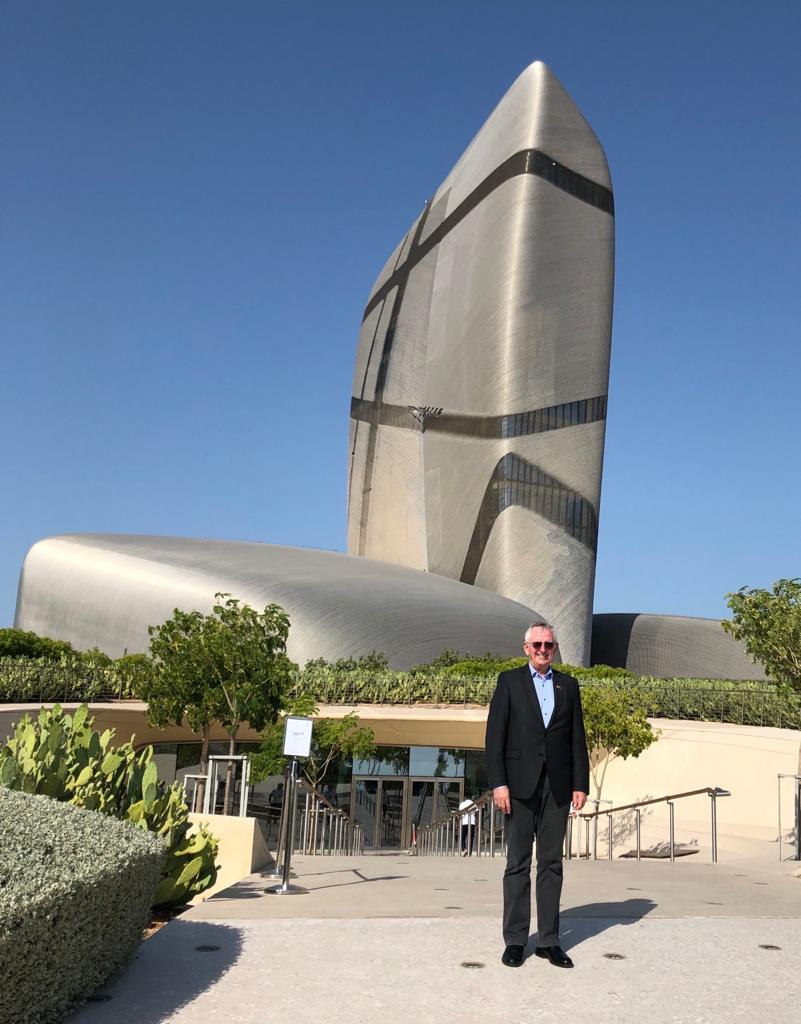
The ambassador had also been to Ithra, Ithra, the iconic King Abdulaziz Center for World Culture in Dhahran, which was built by Saudi Aramco. (Supplied)
Moebsy explained that he has also been a dedicated Arab News reader, making sure to pick up the newspaper every morning to catch up on events.
“Everything has actually changed since Sept. 5, 2017. So every day, Arab News has actually told me what is happening here. And it’s been a fantastic experience because of the changes that you have seen here,” he said.
The ambassador highlighted the ways his mission has strengthened bilateral relations between Denmark and Saudi Arabia through embassy-led initiatives and collaborations.
“As an ambassador, you have to understand what is happening in Saudi Arabia, and you have to convey that to people in Denmark, and you have to make people in Saudi Arabia understand what the thinking is in Denmark. That’s the way to develop a bilateral relationship,” he said.
Most of his efforts have been to put into trade, developing business partnerships, and promoting cultural exchanges.
One of these efforts was hosting a women’s football tournament in Saudi Arabia with 28 teams from all over the Kingdom, called the Global Goals World Cup.
“We’ve been very active in setting up football for females. The tournament that we had was a big success … because it also demonstrated the role that females can play in sports events,” he said.
In February, the embassy hosted celebrations of the Golden Jubilee of Queen Margrethe II of Denmark, and the ambassador invited young female Saudi artists to paint a picture of the queen to mark the event.
“It’s an amazing development of cultural abilities and possibilities in Saudi Arabia that can happen. And for the queen in Denmark, she would see that as a good signal of the long-term good relations that we have between Saudi Arabia and Denmark,” Moesby said.
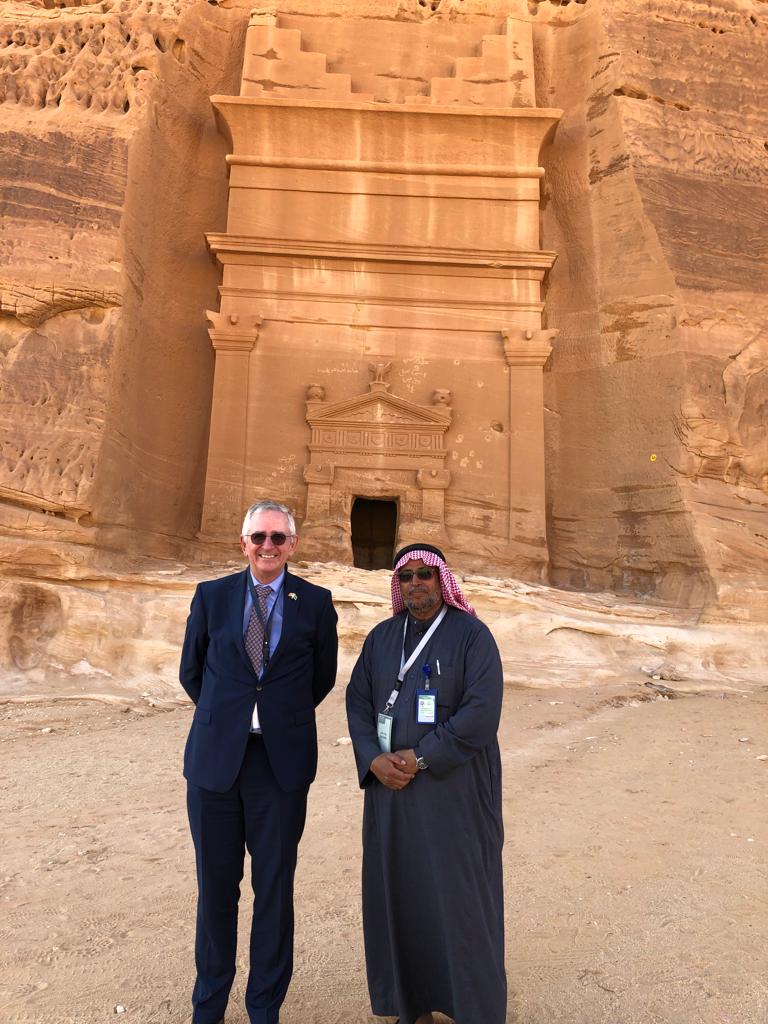
Ambassador Ole Emil Moesby has visited the ancient city of Al-'Ula, an archaeological wonder located in the northwestern region of Madinah. (Supplied)
He concluded his interview by leaving a message to his successor, Liselotte Kjaersgaard Plesner, who will be the next ambassador.
“My successor, she is one of our top diplomats in the Danish service,” Moesby said.
“I just hope she can just be half as happy as I am in being here, (then) I will be more than happy.
“An important message to say to her is that the perceptions that we sometimes all are under in Europe or Denmark, and in the US, you can’t get close to the reality unless you have seen it yourself,” he said.
The ambassador added that people should not form their opinions of a country without examining it and being a part of the culture first.
“You have to come here. You have to live here. You have to understand and communicate with people here, otherwise, it won’t happen,” he said.


