

TRSP 5th anniversary: Dayim Equipment Rental to build carbon neutral operations hub for TRSDC

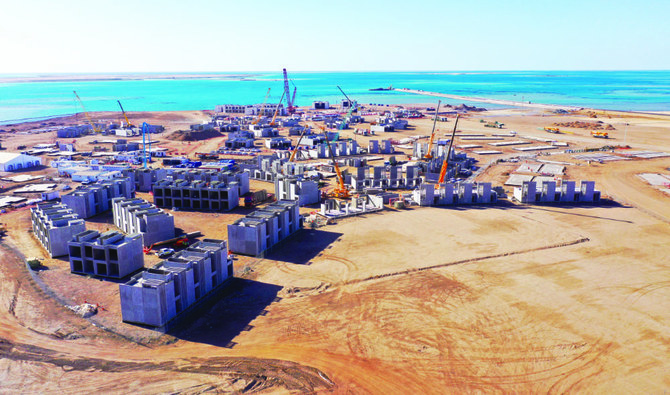
Dayim equipment rental Co. will manage all on- site logistics onshore and offshore, allowing trsDC to focus on its core business. (Supplied)
Short Url
Updated 31 July 2022
Follow

TRSP 5th anniversary: Dayim Equipment Rental to build carbon neutral operations hub for TRSDC

  • Facility will be powered by lithium-powered generators and solar panels, says official

RIYADH: Dayim Equipment Rental Co. has partnered with The Red Sea Development Co. to build an on-site, carbon neutral operations hub and provide managed services for The Red Sea Project and AMAALA.

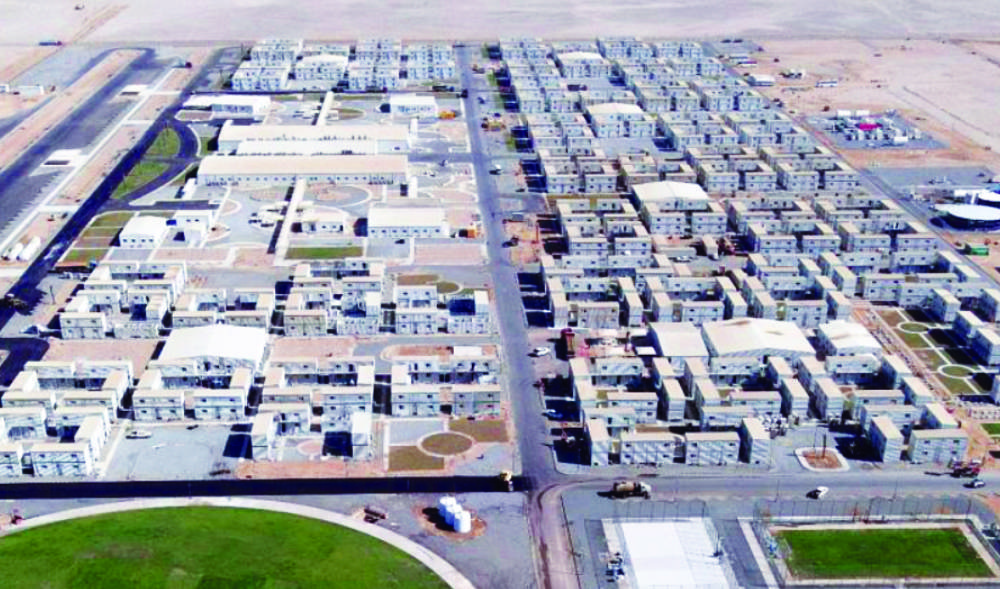
DER Regional General Manager Andy Carter said the company is constructing an office training and workshop complex on the allocated 10,000 square meters of space.

TRSDC stated on a LinkedIn post that DER’s operational hub would be one of the most carbon neutral fulfillment centers in the Gulf Cooperation Council, leveraging the company’s market-leading sustainable product offerings.

We are managing the site, carrying out inspections and working directly with subcontractors.

Andy Carter, Regional general manager at Dayim Equipment Rental Co.

The facility will be powered by lithium-powered generators and solar panels. Additionally, a diesel generator will provide backup only if the batteries need recharging or there is not enough sunlight, pointed out Carter.

In a social media post, TRSDC said: “Leveraging Dayim’s innovative green solutions, this hub will be one of the most carbon neutral of its kind and is part of our commitment to maximize the efficiency of our construction process.”


Andy Carter, Regional General Manager, Dayim Equipment Rental.

The post further said: “In addition to providing the required equipment to support our projects, Dayim will provide on-site training, testing and inspection for our staff and contractors.”

Carter noted that DER has an ISO 14001:2015 certification, which means it meets the requirements for an environmental management system that can improve an organization’s environmental performance.

DER is also certified with the quality management system ISO 9001 and the occupational safety and health standard ISO 45001.

As one of the first equipment rental companies in the Kingdom, DER offers green and sustainable products such as solar lighting, lithium batteries, gas generators, and a 100 percent recyclable washing facility.
“We are managing the site, carrying out inspections and working directly with subcontractors,” Carter said.

DER will manage all on-site logistics onshore and offshore, allowing TRSDC to focus on its core business. Among its managed services, the company tests and inspects all contractor’s equipment as it enters the project to ensure it is safe, leak-free, and fit for purpose, Carter added.

“Our carbon neutral operational hub offers TRSDC a full-service plant, machinery and vehicle solution, which matches the developer’s sustainability ethos,” Rida Said, executive chairman with Dayim Holdings Rida said.

India and US release a framework for an interim trade agreement to reduce Trump tariffs

Updated 58 min 25 sec ago
Follow

India and US release a framework for an interim trade agreement to reduce Trump tariffs

  • Under the deal, tariffs on goods from India would be lowered to 18 percent, from 25 percent, after Indian Prime Minister Narendra Modi agreed to stop buying Russian oil, Trump had said.

NEW DELHI: India and the United States released a framework for an interim trade agreement to lower tariffs on Indian goods, which Indian opposition accused of favoring Washington.
The joint statement, released Friday, came after US President Donald Trump announced his plan last week to reduce import tariffs on the South Asian country, six months after imposing steep taxes to press New Delhi to cut its reliance on cheap Russian crude.
Under the deal, tariffs on goods from India would be lowered to 18 percent, from 25 percent, after Indian Prime Minister Narendra Modi agreed to stop buying Russian oil, Trump had said.
The two countries called the agreement “reciprocal and mutually beneficial” and expressed commitment to work toward a broader trade deal that “will include additional market access commitments and support more resilient supply chains.” The framework said that more negotiations will be needed to formalize the agreement.
India would also “eliminate or reduce tariffs” on all US industrial goods and a wide range of food and agricultural products, Friday’s statement said.
The US president had said that India would start to reduce its import taxes on US goods to zero and buy $500 billion worth of American products over five years, part of the Trump administration’s bid to seek greater market access and zero tariffs on almost all American exports.
Trump also signed an executive order on Friday to revoke a separate 25 percent tariff on Indian goods he imposed last year.
Indian Prime Minister Narendra Modi thanked Trump “for his personal commitment to robust ties.”
“This framework reflects the growing depth, trust and dynamism of our partnership,” Modi said on social media, adding it will “further deepen investment and technology partnerships between us.”
India’s opposition political parties have largely criticized the deal, saying it heavily favors the US and negatively impacts sensitive sectors such as agriculture. In the past, New Delhi had opposed tariffs on sectors such as agriculture and dairy, which employ the bulk of the country’s population.
Meanwhile, Piyush Goyal, Indian Trade Minister, said the deal protects “sensitive agricultural and dairy products” including maize, wheat, rice, ethanol, tobacco, and some vegetables.
“This (agreement) will open a $30 trillion market for Indian exporters,” Goyal said in a social media post, referring to the US annual GDP. He said the increase in exports was likely to create hundreds of thousands of new job opportunities.
Goyal also said tariffs will go down to zero on a wide range of Indian goods exported to the US, including generic pharmaceuticals, gems and diamonds, and aircraft parts, further enhancing the country’s export competitiveness.
India and the European Union recently reached a free trade agreement that could affect as many as 2 billion people after nearly two decades of negotiations. That deal would enable free trade on almost all goods between the EU’s 27 members and India, covering everything from textiles to medicines, and bringing down high import taxes for European wine and cars.
India also signed a comprehensive economic partnership agreement with Oman in December and concluded talks for a free trade deal with New Zealand.