

Camels on the global stage as Saudi Arabia celebrates a national symbol

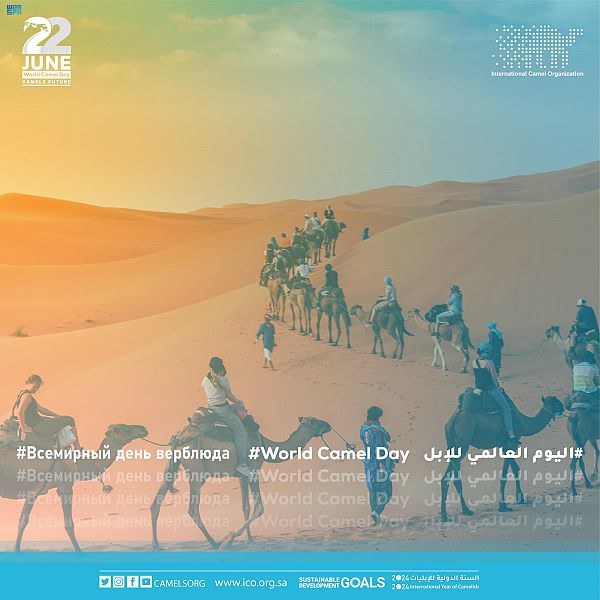
1 / 4
Poster of the World Camel Day. (Saudi Camel Club photo)
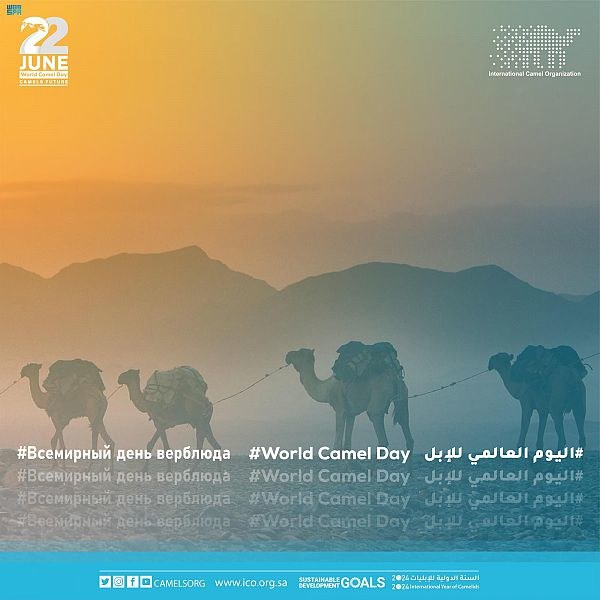
2 / 4
Poster of the World Camel Day. (Saudi Camel Club photo)
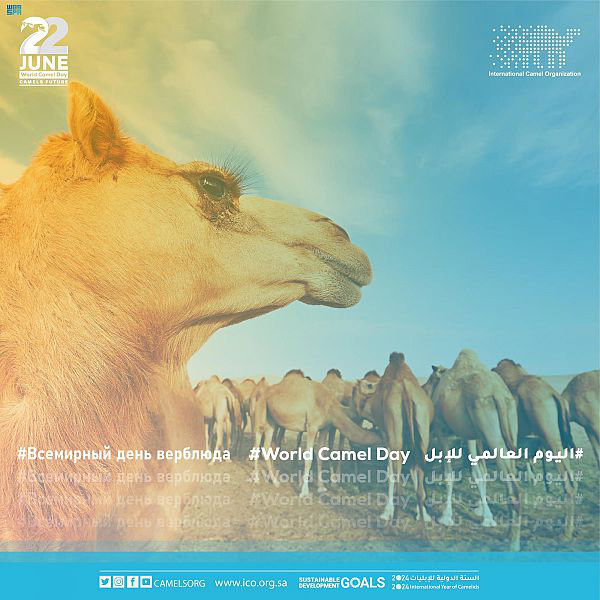
3 / 4
Poster of the World Camel Day. (Saudi Camel Club photo)
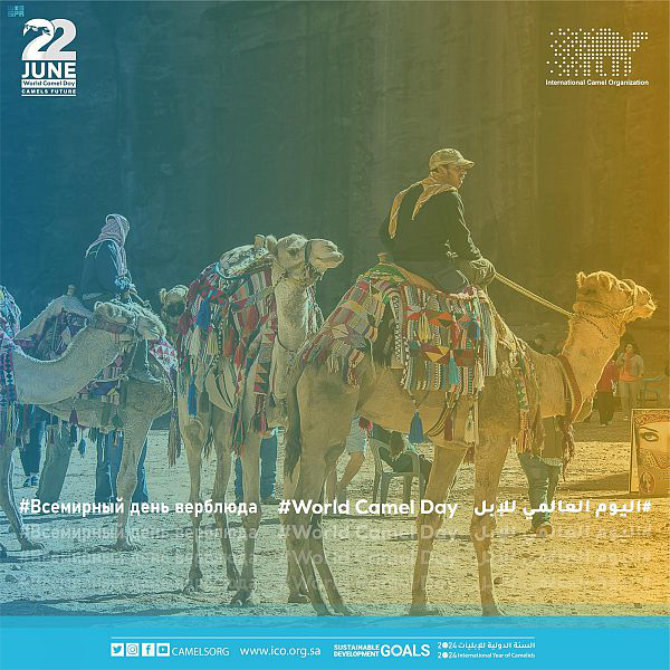
4 / 4
Poster of the World Camel Day. (Saudi Camel Club photo)
Short Url
Updated 23 June 2022
Follow

Camels on the global stage as Saudi Arabia celebrates a national symbol

  • World Camel Day on June 22 aims to chart the future of the desert animal by educating people about its history

RIYADH: The animal most closely associated with Saudi Arabia took center stage on Wednesday as the Kingdom joined worldwide celebrations to mark World Camel Day.

Camels have been man’s companion for thousands of years since playing an integral part in the rise of ancient cultures.

World Camel Day on June 22 aims to chart the future of the desert animal by educating people about its history, as well as improving its living environment so that people can benefit fully from its products.

Fahd bin Hithleen, chairman of the Saudi Camel Club, said that the day helps to remind people of camel’s role in their lives.


Bin Hithleen, who also founded the International Camel Organization, said that since the organization’s inception, efforts have been made to remind people of the importance of camels and to promote a “culture of camel care.”

The Saudi Camel Club hopes to capitalize on World Camel Day by connecting owners in the Kingdom with their counterparts worldwide, opening the door for greater international participation in the King Abdulaziz Camel Festival.

Camel owners from France, the US and Mexico competed in the international open round of the festival’s previous edition, with some winning prizes.

According to bin Hithleen, the Saudi Camel Club has paved the way for a “prosperous economic sector that reflects on camel owners, opens large markets for them, as well as providing veterinary equipment and preserving rare breeds.”

ICO, a nonprofit organization based in Riyadh, was founded in 2019 and has about 105 member countries worldwide.

Mohammed Al-Ruwaili, a member of the Abdulrahman Al-Sudairy Cultural Center, said that camels have played a central role in the economic and cultural lives of the people of the Arabian Peninsula, particularly those living in the desert regions.
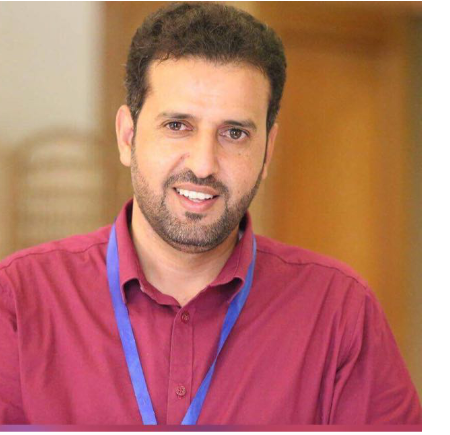


Mohammed Al-Ruwaili. (Supplied photo)

Al-Ruwaili, who is also a board member of Al-Jouf Literary and Cultural Club, highlighted the “pioneering initiative” launched by the late emir of Al-Jouf, Prince Abdulrahman Al-Sudairi, in holding the Kingdom’s first organized camel race in 1963.

Abdullah Alsharekh, who works in the department of archaeology at King Saud University, said camels have been a cultural, economic and national symbol of Arabia for thousands of years.

“The camel was a survival tool for the residents of Arabia and its desolate land. It was a source of food, a means of transport, and a vehicle used in warfare and hunting expeditions,” he said.

“A camel was sculpted in its natural size in Al-Jouf region, which came to be regarded as possibly the earliest life-sized sculpted camel in the world.”
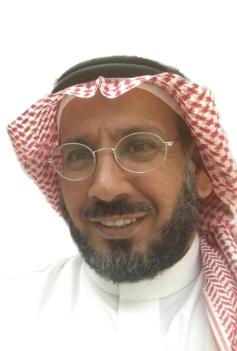


Dr. Abdullah M. Alsharekh. (Supplied photo)

He said that thousands of rock art engravings and drawings over the mountains of Saudi Arabia are testimony to the historical movement of people for trade, pilgrimage and travel across Arabia and beyond.

Camel herding and ownership are still practiced today, with breeders keeping detailed genealogies.

Alsharekh said that camels continue to play a major role in modern society through breeding, and as a source of meat, as well as traditional crafts and materials.

Talal Al-Sharhan, chairman of the Heritage Ambassadors Association, said that camels have a long and glorious history for Saudis, in particular, and for Arab people in general.
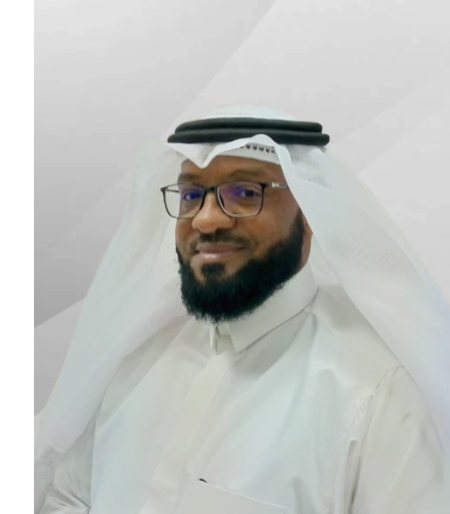


Talal Al-Sharhan. (Supplied photo)

“They are a source of livelihood, and Arabs in the past relied on them, and still benefit and cherish them. Camels are mentioned in the Holy Qur’an,” he said.

Al-Sharhan added: “A nation with no history has no future, and those with no connection to their past will be unable to build their future.”


Saudi space technology plays growing role in conflict and disaster zones: NSG executive

Hassan Al-Johani, vice president of business development at Neo Space Group, speaks to Arab News at the World Defense Show.
Updated 7 sec ago
Follow

Saudi space technology plays growing role in conflict and disaster zones: NSG executive

  • Company analyzes damage from natural disasters, including flash floods

RIYADH: Saudi-built space systems are moving beyond data collection to play a direct role in operational decision-making, particularly in high-stakes situations like conflict zones and natural disasters, according to one industry executive.

Hassan Al-Johani, vice president of business development at Neo Space Group, spoke on the sidelines of the World Defense Show in Riyadh, which has Arab News as a media partner, about how the company’s technology is used in real-life scenarios.

Al-Johani pointed to disaster management as an example of how integrated space services can directly influence outcomes on the ground.

The company uses high-resolution Earth observation imagery in optical, radio and infrared spectrums, to analyze damage from natural disasters, including flash floods.

He said this information can then be turned into actionable intelligence and shared directly with teams operating in affected areas, allowing them to assess damage to roads and determine the best routes for delivering equipment and emergency aid.

“We can utilize that in geospatial intelligence and communicate it to teams in the field using advanced satellite communications,” Al-Johani said.

The company’s satellite technology allows people to communicate in crisis-hit areas when traditional communication infrastructure has been damaged.

He added: “Even when communication fails, even when there’s disruption in infrastructure, we have the ability to understand what has happened, but also communicate it to people (who) need to take decisions in real time to save lives and property.”

Demonstrations at the World Defense Show, he said, were designed to show how this integrated approach worked in practice.

“We are not promoting one domain or one technology, but rather a unified architecture that brings together the best of the latest technologies,” he said.

The company’s technology has military uses, allowing users to determine the best locations for deploying troops and equipment, and its satellite technology allows secure communications in war zones.

He also highlighted the technical design choices behind ensuring continuity of service, particularly in contested or disrupted environments.

Artificial intelligence, he added, is increasingly part of the company’s system.

“We’re not utilizing just traditional geospatial intelligence, but rather AI-powered intelligence,” Al-Johani said.

This layered approach, he explained, is intended to reduce dependence on any single system or data source.

He added: “If one layer fails, then you have other layers to supplement and ensure the continuity of the value delivered to the clients.”

Beyond technology, Al-Johani said discussions at the World Defense Show reflected a broader shift in how Saudi Arabia approaches the space and defense sectors.

“Saudi Arabia has demonstrated that we are not looking to be buyers, but rather partners and builders,” he said.

“That means that we have to have an engaging dialogue with partners from around the world, understanding which parts of the ecosystem we need to build on.”

He said this approach ultimately supported local capability building and long-term sector development, adding that it was targeted at “finding a meaningful partnership that delivers win-win for everyone, (and) ultimately contributes to building this country, this industry and the space sector.”