

Saudi Arabian tourism could benefit from FIFA World Cup, says deputy minister

Short Url
Updated 10 June 2022
Follow

Saudi Arabian tourism could benefit from FIFA World Cup, says deputy minister

JEDDAH: The FIFA World Cup being held in Qatar can give a boost to Saudi tourism, according to Mahmoud Abdulhadi, the Kingdom’s deputy minister for investment attraction.

The tournament, set to kick-off on Nov. 21, is being held close to the Al-Ahsa region of Saudi Arabia, and Abdulhadi is confident this will encourage foreign travelers to explore tourist destinations in the Kingdom.

“The World Cup is coming and we plan to have some people stay in the Kingdom,”Abdulhadi told Arab News in an exclusive interview on the sidelines of the 116th Executive Council of the UNWTO.  

“If you'd like to go, see the matches and then come back…they (can) anchor their stay around key destinations within the Kingdom and one of them is Al-Ahsa, due to its proximity to Qatar.”  

The deputy minister added that significant hotel operators in the Kingdom will dramatically increase the number of room keys by 2025, as the Kingdom is steadily progressing toward achieving the goals outlined in Vision 2030.

“The major global operators will dramatically increase the number of room keys that we have in the Kingdom. We are looking at over 50,000 room keys entering the market by 2025. This is a major achievement,” he added.

He noted that the future tourism sector in Saudi Arabia will be a blend of domestic and international investments, as the country aims to be among the top five global tourism destinations by the end of this decade. 

He further made it clear that people are conservative regarding cross-border investments in the aftermath of the pandemic.

He, however, clarified that the Kingdom is emerging as a destination that attracts foreign investments.

“Post pandemic, people are a little bit more conservative internationally in terms of cross border investment. But we are proving to be a destination attracting quite a decent amount of interest. And now we’re working on converting that interest into actual investments,” Abdulhadi told Arab News.

He further noted: “Within the Kingdom, we have been very focused on making sure that we are building the right ecosystem to attract the right amount of investment and reforming it in a way that is beneficial from a visitor and investor experience perspective.”
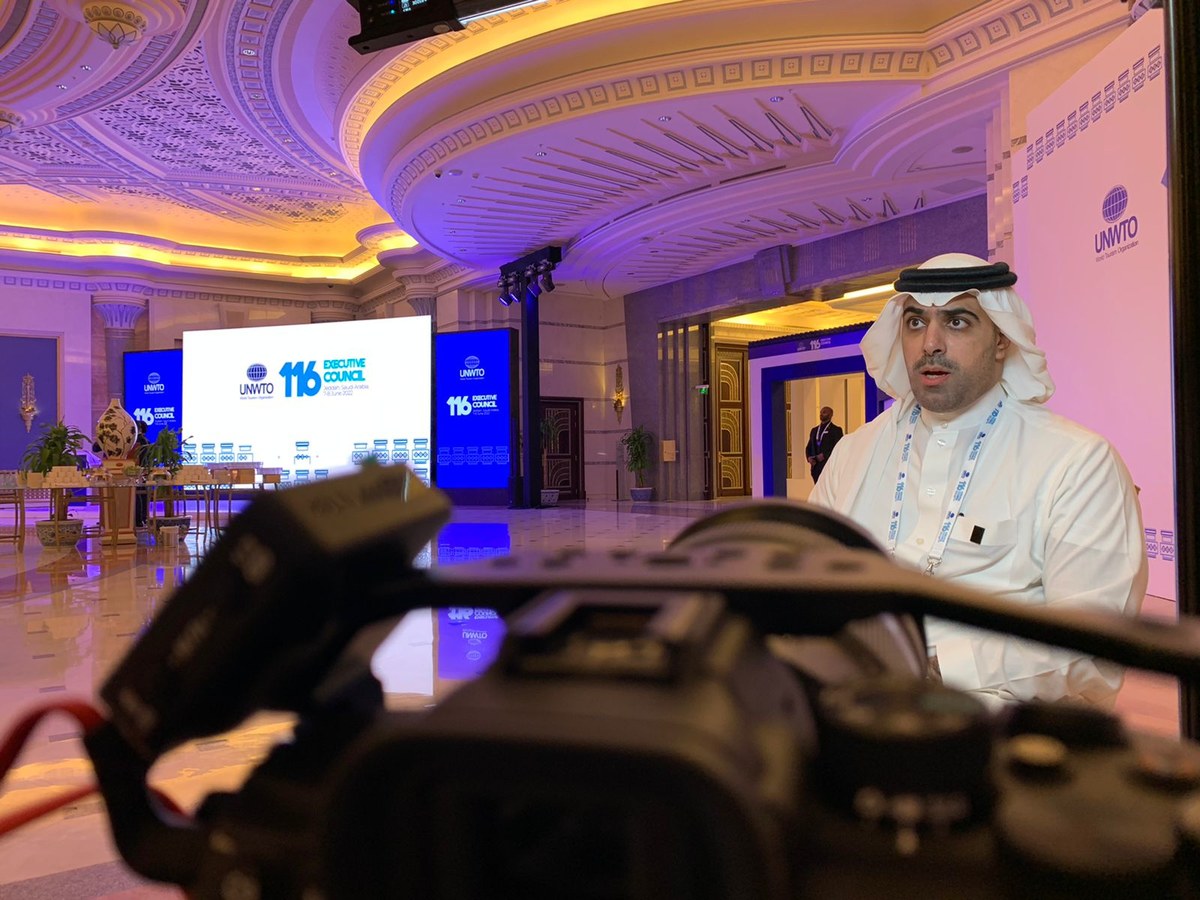
Abdulhadi added that the private sector drives the global tourism sector. He expects a similar transformation in the Kingdom, where large private entities and small and medium-sized enterprises also get a chance to contribute their part to the tourism industry.

“We want to move from what we have today, at least within the Kingdom where the private sector runs the tourism sector, on its own two feet. So we are keen on large private sector investment to come in. But we’re also cognizant that the whole sector is built on small and medium-sized enterprises,” added Abdulhadi.

Reaffirming the goals outlined in Vision 2030, Abdulhadi added that the Kingdom aims to generate 10 percent of the gross domestic product from the tourism sector.

He also confirmed that the Kingdom wants to attract over 100 million visitors by the end of this decade and create an additional 1 million jobs in the sector.


Lebanese social entrepreneur Omar Itani recognized by Schwab Foundation

Updated 23 January 2026
Follow

Lebanese social entrepreneur Omar Itani recognized by Schwab Foundation

  • FabricAID co-founder among 21 global recipients recognized for social innovation

DAVOS: Lebanon’s Omar Itani is one of 21 recipients of the Social Entrepreneurs and Innovators of the Year Award by the Schwab Foundation for Social Entrepreneurship.

Itani is the co-founder of social enterprise FabricAID, which aims to “eradicate symptoms of poverty” by collecting and sanitizing secondhand clothing before placing items in stores in “extremely marginalized areas,” he told Arab News on the sidelines of the World Economic Forum in Davos, Switzerland.

With prices ranging from $0.25 to $4, the goal is for people to have a “dignified shopping experience” at affordable prices, he added.

FabricAID operates a network of clothing collection bins across key locations in Lebanon and Jordan, allowing people to donate pre-loved items. The garments are cleaned and sorted before being sold through the organization’s stores, while items that cannot be resold due to damage or heavy wear are repurposed for other uses, including corporate merchandise.

Since its launch, FabricAID has sold more than 1 million items, reached 200,000 beneficiaries and is preparing to expand into the Egyptian market.

Amid uncertainty in the Middle East, Itani advised young entrepreneurs to reframe challenges as opportunities.

“In Lebanon and the Arab world, we complain a lot,” he said. Understandably so, as “there are a lot of issues” in the region, resulting in people feeling frustrated and wanting to move away. But, he added, “a good portion of the challenges” facing the Middle East are “great economic and commercial opportunities.”

Over the past year, social innovators raised a combined $970 million in funding and secured a further $89 million in non-cash contributions, according to the Schwab Foundation’s recent report, “Built to Last: Social Innovation in Transition.”

This is particularly significant in an environment of geopolitical uncertainty and at a time when 82 percent report being affected by shrinking resources, triggering delays in program rollout (70 percent) and disruptions to scaling plans (72 percent).

Francois Bonnici, director of the Schwab Foundation for Social Entrepreneurship and a member of the World Economic Forum’s Executive Committee, said: “The next decade must move the models of social innovation decisively from the margins to the mainstream, transforming not only markets but mindsets.”

Award recipients take part in a structured three-year engagement with the Schwab Foundation, after which they join its global network as lifelong members. The program connects social entrepreneurs with international peers, collaborative initiatives, and capacity-building support aimed at strengthening and scaling their work.