Arabian Travel Market: COVID-19 concerns to be key focus of four-day event

The event is set to host more than 20,000 visitors (@dubaitourism)
Short Url
Updated 09 May 2022
Follow

Arabian Travel Market: COVID-19 concerns to be key focus of four-day event

DUBAI: The Middle East’s largest travel and tourism exhibition has kicked off in Dubai, wth CEO of the Emirates Group Sheikh Ahmed bin Saeed Al Maktoum officially inaugurating the 29th edition of the Arabian Travel Market.

The event is set to host more than 20,000 visitors and 1,500 exhibitors from 112 destinations over four days, and will reflect the concerns and hopes of the industry in the wake of the COVID-19 pandemic.


Tourism Lift: As the recovery in Saudi tourism continues, the first quarter of 2022 witnessed over 130 percent of growth in the sector compared to pre-pandemic levels, the CEO of the Saudi Tourism Authority said during the Arabian Travel Market event.

Fahd Hamidaddin attributed the progress to “the absolute alignment between vision, leadership, resources, and talent.”

‘Guilt-Free’ Tourism: Managing Director of NEOM Tourism Andrew McEvoy said the megaproject's aim is to give travellers a regenerative holiday. He added that NEOM wants to provide travellers with a balanced, guilt-free holiday through regenerative tourism.
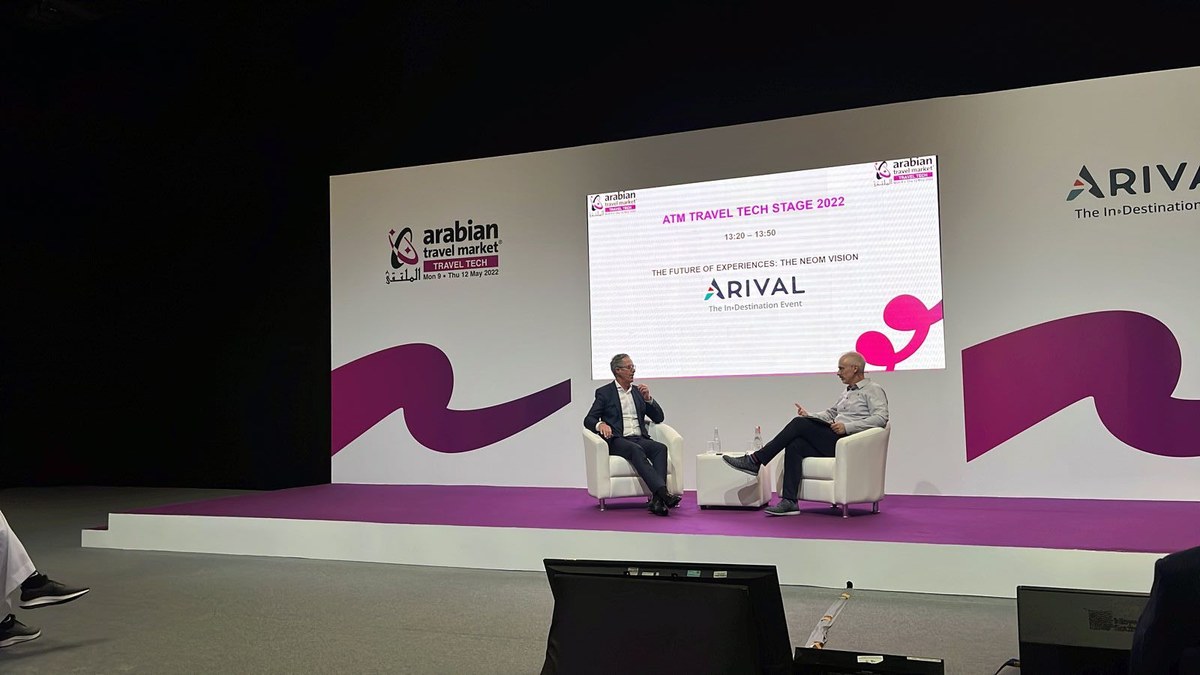


Managing Director of NEOM Tourism Andrew McEvoy (Arab News)


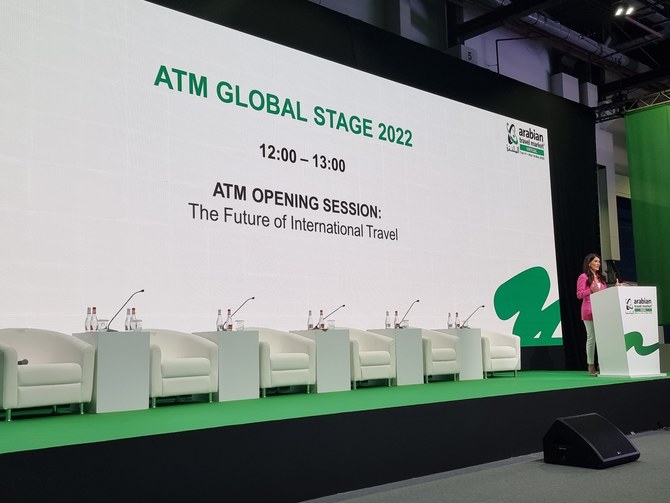
Pandemic battle: Issam Kazim, CEO of Dubai Corporation for Tourism and Commerce Marketing said at the opening session that Dubai managed COVID-19 quite well with record breaking numbers. 

He made the comments during a debate on “The Future of International Travel” alongside Chief Economist of Oxford Economics Scott Livermore, President of Middle East, Africa, & Turkey at Hilton Jochem-Jan Sleiffer, Industry Head, Travel & Tourism at Google Bilal Kabbani, and Regional Director Europe of Middle East & Oceania at World Travel & Tourism Council Andrew Brown.
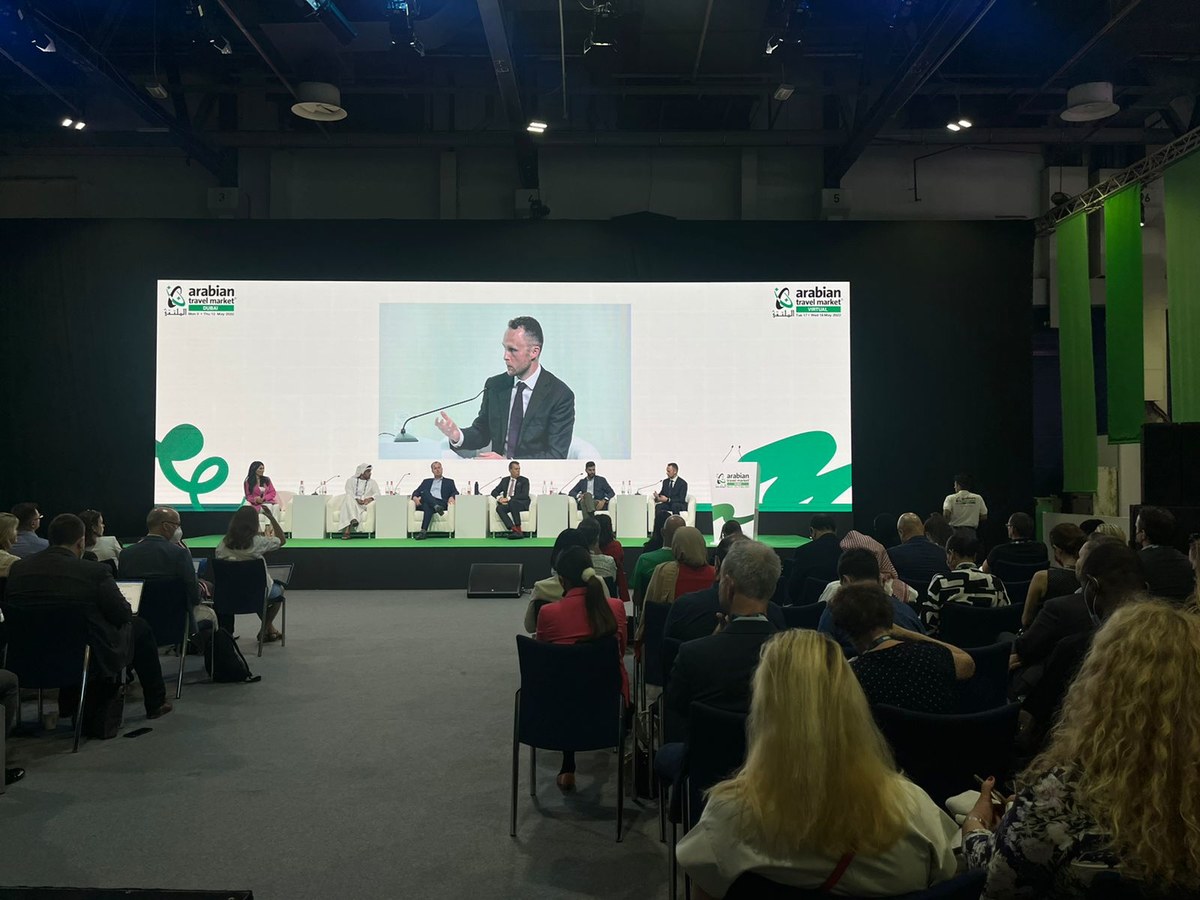


Issam Kazim speaking at the ATM (Arab News)


Saudi Arabia leads outcome-based education to prepare future-ready generations: Harvard Business Review

A Harvard sign is seen at the Harvard University campus in Boston, Massachusetts, on May 27, 2025. (AFP)
Updated 10 February 2026
Follow

Saudi Arabia leads outcome-based education to prepare future-ready generations: Harvard Business Review

  • The Riyadh-based school group developed a strategy that links every classroom activity to measurable student competencies, aiming to graduate learners equipped for the digital economy and real-world contexts

RIYADH: Saudi Arabia’s education system is undergoing a sweeping transformation aligned with Vision 2030, shifting from traditional, input-focused methods to outcome-based education designed to equip students with future-ready skills, Harvard Business Review Arabic reported.

The transformation is being adopted and spearheaded by institutions such as Al-Nobala Private Schools, which introduced the Kingdom’s first national “learning outcomes framework,” aimed at preparing a generation of leaders and innovators for an AI-driven future, the report said.

Al-Nobala has leveraged international expertise to localize advanced learning methodologies.

The Riyadh-based school group developed a strategy that links every classroom activity to measurable student competencies, aiming to graduate learners equipped for the digital economy and real-world contexts. The school’s group approach combines traditional values with 21st-century skills such as critical thinking, communication, innovation and digital fluency.

According to the report, the shift addresses the growing gap between outdated models built for low-tech, resource-constrained environments and today’s dynamic world, where learners must navigate real-time information, virtual platforms, and smart technologies.

“This is not just about teaching content, it’s about creating impact,” the report noted, citing how Al-Nobala’s model prepares students to thrive in an AI-driven world while aligning with national priorities.

The report noted that Saudi Arabia’s Ministry of Education has paved the way for this shift by transitioning from a centralized controller to a strategic enabler, allowing schools such as Al-Nobala to tailor their curriculum to meet evolving market and societal needs. This is part of the long-term goal to place the Kingdom among the top 20 global education systems.

Al-Nobala’s work, the report stated, has succeeded in serving the broader national effort to link education outcomes directly to labor market demands, helping to fulfill the Vision 2030 pillar of building a vibrant society with a thriving economy driven by knowledge and innovation.

Last February, Yousef bin Abdullah Al-Benyan, Saudi Arabia’s minister of education, said that the Kingdom was making “an unprecedented investment in education,” with spending aligned to the needs of growth and development. He said that in 2025, education received the second-largest share of the state budget, totaling $53.5 billion.