Lending to Saudi micro and small businesses to grow in 2022

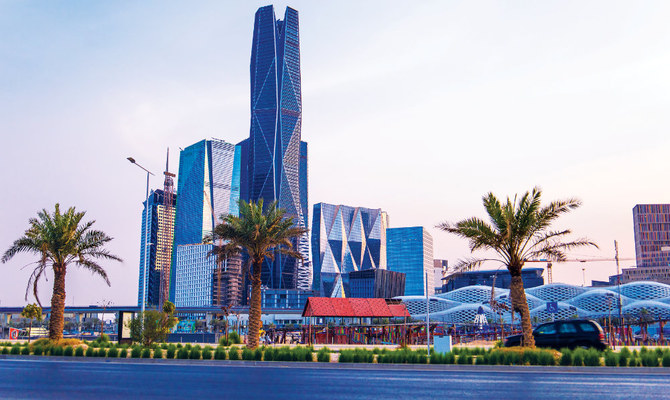
With consumer spending continuing to increase in Saudi Arabia, this is creating a pent-up demand for goods and services provided by the country’s MSME sector. (Shutterstock)
Short Url
Updated 10 April 2022
Follow

Lending to Saudi micro and small businesses to grow in 2022

  • Banks, finance companies extend loans worth $53bn in Q3 2021: SAMA

RIYADH: Saudi Arabia’s micro, small and medium enterprises continue to grow in 2022 on the back of strong consumer demand, as is evident from the steady increase in MSME lending by the country’s banks and financial companies. 

Last month alone, investment deals worth $13.8 billion were signed at the Global Entrepreneurship Congress held in Riyadh, which also saw global firms announce expansion plans into Saudi Arabia.


Read More: Kafalah Fund signs 10 agreements, MoUs worth $1.67bn to finance SMEs


The lending boom this year follows a similar trend last year. 

Saudi Arabia is ranked second in MENA in startup funding activities, providing SR2 billion ($533 million) to entrepreneurs in 2021, Abdulaziz Al-Nashwan, general manager of equity at Monsha’at, told Arab News last month on the sidelines of the Global Entrepreneurship Congress.

Saudi banks and finance companies have been on a lending spree over the last few years, with both collectively extending loans worth SR200.3 billion ($53.4 billion) to the MSME sector in the third quarter of 2021, up from SR175.7 billion in the third quarter of 2020, the latest Saudi Central Bank, or SAMA, data revealed. This is a 14-percent increase on a year-on-year basis. 

This included SR14.2 billion credit provided by financial companies to MSMEs in the third quarter of 2021. This came as an increase from around SR10.75 billion in the third quarter of 2020, recording 31-percent growth on a year-on-year basis. This amounts to almost 22 percent of finance companies’ total credit facilities. 
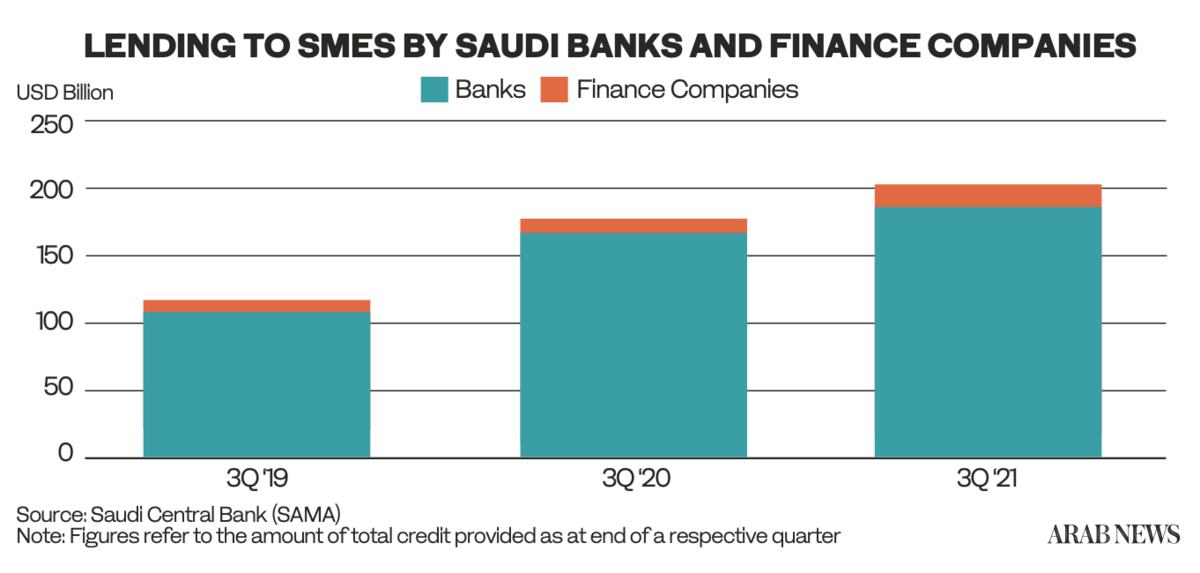
Recent surges in MSME credit indicate that the country’s business environment is improving despite COVID-infused challenges as the financial sector sees a strong capital liquidity value in lending to the Kingdom’s MSME sector.  

SAMA statistics indicated credit facilities provided by local commercial banks to MSMEs also grew to SR186.2 billion in the third quarter of 2021 from SR165 billion in the same period the previous year, recording a 12.9-percent increase. This value equates to roughly 7.9 percent of the banks’ total credit facilities. It comes on the back of credit facilities by banks to MSMEs spanning over three years from 2018 through 2020 increasing by a noticeable 69 percent.


Read More: Saudi Arabia doles out $533m on startups in 2021, says Monsha’at official


This indicates a steady expansion of monetary loans to MSMEs, providing a promising future to the sector, with loans from finance companies increasing by 53.2 percent over the same duration.

With consumer spending continuing to increase in Saudi Arabia, this is creating a pent-up demand for goods and services provided by the country’s MSME sector. This, in turn, is pushing companies to go for further lending to meet the growing demand in the market. 

This steady growth in MSME lending has been witnessed despite the Saudi Central Bank recently increasing the interest rates to tackle inflation. This event could be seen as a positive indicator of how the Kingdom’s financial sector can look for promising short-term revenues. This, in return, could aggrandize loans to MSME in the future as the economy and money market stabilize.


Global investors commit more than $3bn to King Salman Park as Saudi giga-project secures new deals

Updated 10 March 2026
Follow

Global investors commit more than $3bn to King Salman Park as Saudi giga-project secures new deals

RIYADH: The King Salman Park Foundation has secured more than $3.8 billion in new private-sector commitments at the MIPIM 2026 real estate conference, including a landmark $3 billion fund backed by international investors to develop a major mixed-use district in the heart of Riyadh.

According to a press release, the announcements bring total committed investment in the 17.2 sq. kilometers urban regeneration project to over $5.3 billion across five major packages.

Launched in 2019 under Saudi Vision 2030, the development is designed to be the world’s largest city park and aims to boost green space, improve quality of life, and feature over 1 million trees and extensive leisure facilities.

A $3 billion metro-connected district

The largest of the two packages, designated Package 5, will see a consortium led by Kolaghassi Development Co. deliver a residential-led district with a total built-up area exceeding 1 million sq. meters. 

It will provide approximately 3,700 residential units, a K–12 school, around 300 hospitality keys and more than 100,000 sq m of Grade A office space alongside a wide variety of retail and dining offerings.

The development is supported by a Saudi-domiciled, Capital Market Authority-regulated fund managed by Mulkia Investment Co. that has attracted leading investors from the Kingdom and across the world.

Kolaghassi Development Co. will lead the project alongside Al Othaim Investment, one of the Kingdom’s real estate players, and RXR, a New York-headquartered real estate investor and operator.

“Securing investment of this scale, supported by international capital and expertise, is an important milestone for King Salman Park,” said George Tanasijevich, CEO of King Salman Park Foundation. 

$850 million cultural district package

In a separate announcement, the Foundation confirmed the award of Package 4 to a consortium led by Retal Urban Development Co., with support from a fund managed by SAB Invest.

The project has a total value exceeding $850 million and will host more than 600 residential units, over 140 hotel keys, and almost 50,000 sq m of Grade A office space, alongside curated retail and food and beverage experiences.

“This opportunity reflects the maturity of Saudi Arabia’s real estate investment landscape and our confidence in culture-led, mixed-use urban destinations as a driver of sustainable returns,” said Abdullah Al-Braikan, CEO and founder of Retal Urban Development Co.

Ali Al-Mansour, CEO of SAB Invest, said the fund structure brings together “long-term capital, experienced development partners, and a shared commitment to place-making excellence” while contributing to Riyadh’s cultural vibrancy and the Kingdom’s quality-of-life ambitions under Vision 2030.