


Author: Haemin Sunim
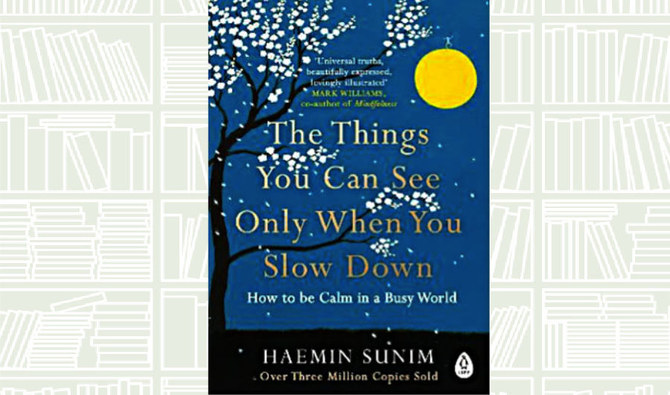
“The Things You Can See Only When You Slow Down: How to Be Calm in a Busy World” is a mindfulness guide written by Haemin Sunim, a South Korean Zen Buddhist monk.
The author guides the reader through a deep and mindful state in an ever-evolving and fast-paced world by using wise anecdotes and lessons.
The book is a collection of essays, with each discussing a different aspect of an individual’s life such as love, passion, mindfulness, spirituality, and the future.
Sunim offers the advice that slowing down is the key to self-reflection and better understanding our emotional state of mind on a more complex and deeper level.
He passes on his rich wisdom in the form of stanzas that help the reader confront everyday challenges with practical tools.
In almost every chapter, the reader is reminded of the book’s theme of self-reflection and consciously treading through life.
In one of his chapters, the author explains that if a person is so quick to notice somebody else’s character flaws then it most probably means that they too suffer from these flaws.
Another piece of advice says that if a person does not like you, it has nothing to do with you as it is a “them” problem not a “you” problem.
“The Things You Can See Only When You Slow Down” is Sunim’s first book. It was translated into over 35 different languages and has sold over 3 million copies worldwide.
Sunim was educated at Berkeley, Harvard, and Princeton, and received his monastic training from the Haein monastery in South Korea.
He is a Seon Buddhist teacher with 20 years of experience, and he spent seven years teaching Asian religions at Hampshire College.
He founded the nonprofit School of Broken Hearts in Seoul, which offers group counseling and pragmatic teaching on coping with life obstacles and learning from them.


