



RIYADH: Asir’s grape industry is expanding as growers increase production and adopt modern farming technologies while maintaining long-established cultivation practices, the Saudi Press Agency reported.
More than 500 farms in the region produce over 1,000 tonnes of grapes annually, strengthening local supply and supporting food security. Asir grapes have also gained a growing presence in local markets as production methods and quality continue to improve.
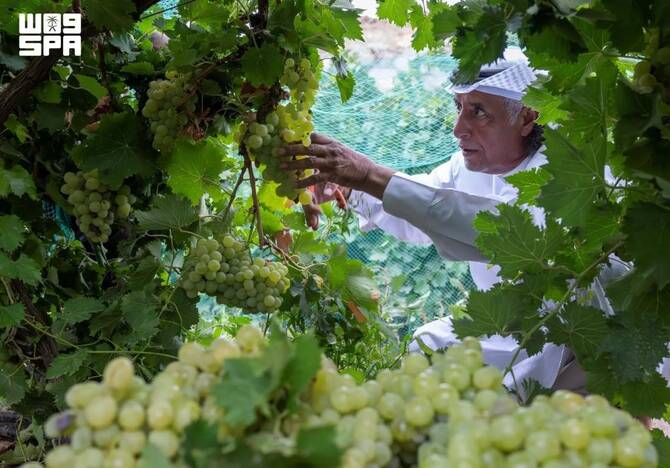
The region is among Saudi Arabia’s leading grape-producing areas. One of its main cultivation hubs is Al-Mawin, about 95 km north of Abha, where farmers grow Razqi, Italian, French, and other local and imported grape varieties.
Farmer Abdullah Al-Shaflot, who has cultivated grapes for more than 25 years, told SPA he began farming in 1998 with government support before expanding the operation into an integrated production project in 2014.
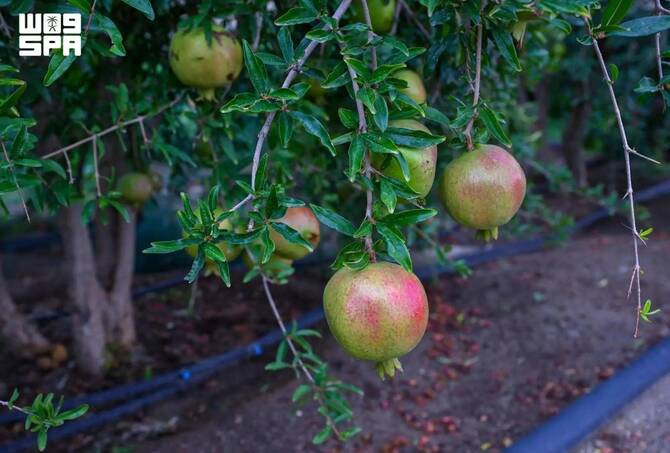
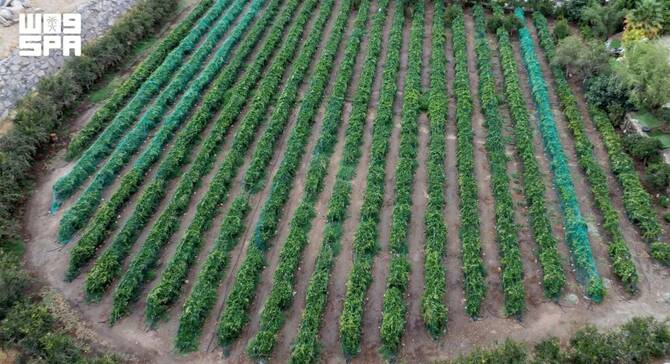
His farm now includes 1,125 grapevines alongside about 150 pomegranate, fig, mulberry, cherry, lemon and Arabian coffee trees.
Al-Shaflot said grape cultivation has long been a defining activity in Al-Mawin, where historic wells still reflect the area’s agricultural heritage.
He said modern irrigation and fertilization are managed through automated systems, while tree health is monitored daily and integrated pest management helps protect crop quality.
The farm conducts daily monitoring of tree health and applies integrated prevention programs against pests and diseases, the farmer said, noting that early prevention has become central to protecting crop quality.
The production cycle begins in winter with field cleaning and removing remnants of the previous season, followed by adding locally produced organic fertilizer after composting for several months and supplying micronutrients and calcium during growth stages.
In May, leaves are thinned to improve sunlight exposure and airflow around grape clusters before harvesting begins in July and continues for about two months.
The farm produces about 5,000 seedlings annually, registers cultivated varieties with the Ministry of Environment, Water and Agriculture, and follows modern harvesting methods focused on fruit quality and safety.


