



JEDDAH: Every thriving literary culture depends on the architecture that surrounds writers: editors, designers, publishers all have their roles to play. And one of the people now helping to build that framework in Saudi Arabia is, fittingly, a former architect.
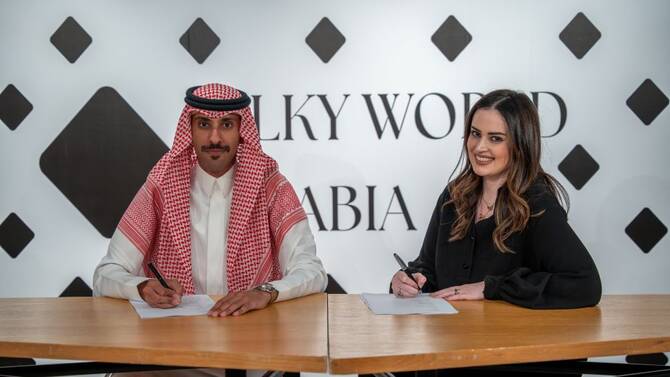
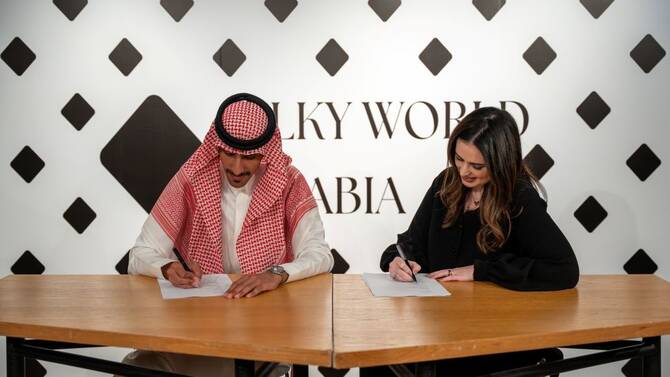
Salman AlArifi, 25, is the co-founder of SLKY World Arabia in Riyadh, the first overseas division of the American independent book publisher.
Mariana De’ Carli, founder of Florida-based SLKY World, said that the move was “an investment in a community that’s already producing world-class work.”
AlArifi’s understanding of Saudi talent and his ability to connect it with international audiences made him the right partner to lead the company’s new venture, she said.
Trained as an architect at King Saud University and recognized with the PIF Rising Star Award in 2024 as well as the Best Human-Centric Design Award for his contributions, his professional leap from architecture to literature is less strange than it first appears.
“To me, architecture and literature share the same purpose: both begin with an idea and shape how people experience the world,” AlArifi told Arab News.
“Through attending writers’ gatherings I saw an incredible amount of talent and passion. What surprised me was how many authors hesitated to publish because of their experiences with traditional publishing. That inspired me to help build a publishing house that puts authors first.
“I didn’t grow up as an avid reader, I grew up fascinated by the environments that shape people. As I explored that curiosity, I realized that books are the foundation of every field of knowledge.”
As Saudi Arabia invests in its creative industries, publishing presents a distinct challenge as it is as much an ecosystem as it is an art form. Authors may write or even publish alone but a robust literary culture relies on editorial expertise, rights protection, translation, distribution and long-term investment.
According to the Ministry of Culture’s State of Culture Report 2024, Saudi Arabia had 533 publishing houses at the end of that year, up 21 percent from 2023. More than than half of them were in Riyadh.
AlArifi said that one of the biggest challenges facing the industry was adopting international publishing standards that protect authors’ rights.
“Many talented writers hesitate to publish because they fear losing control of their work or being treated unfairly,” he said.
Trading sentimentality for a more prescriptive approach, he argued that building trust through “transparency, fairness, and ethical publishing practices is essential if we want more authors to confidently share their stories with the world.”
On the country’s evolving publishing industry, he said: “Our role is to build on that progress by applying the highest standards of transparency, quality and author protection.”
He said that SLKY World Arabia hoped to discover writers whose stories had historically struggled to find space in English-language publishing, “including those who have made Saudi Arabia their home.”
According to the General Authority for Statistics, about 44 percent of the Kingdom’s population of 35 million in 2024 were non-Saudis.
“There are many talented writers whose voices remain unheard, not only in Saudi Arabia but across the Middle East, Africa, Southeast Asia and the Pacific, where exceptional stories have historically been underrepresented in English-language publishing,” AlArifi said, adding that “great stories often exist beyond the traditional literary networks.”
Finding new voices is only the first step. The credibility of a publishing house rests ultimately on what happens once a manuscript is acquired, and AlArifi intends to be “very hands-on.”
“We want every title we publish to have a clear purpose and leave a meaningful impact on its readers.”
He said he also hoped that authors would continue to celebrate Saudi culture.
“Some stories can preserve culture directly, while others do so more subtly by weaving Saudi values, history and identity into compelling narratives. Those are often the stories that leave the deepest impact.”
AlArifi said he hoped that the imprint’s first titles would provide international readers with a door into Saudi culture.
“I want them to discover the true depth of Saudi Arabia, its rich culture, creativity, values and talented people. Beyond the headlines, I hope our stories reveal a Kingdom full of imagination, humanity and voices that deserve to be heard on the global stage.”
He cited the work of 2024 Ibn Arabi Prize-winning Saudi poet Hatem Al-Shehri, who translated his own poetry into Spanish and Portuguese, as an example of a “deeply traditional Saudi literary voice” reaching outward.
In 2011, the Makkah-born novelist Raja Alem became the first woman to win the International Prize for Arabic Fiction, for “The Dove's Necklace,” a novel that mapped Makkah back alleys with the same density Cairo or Beirut had long received in Arabic novels.
What that prize demonstrated is that Saudi stories were never short of international appetite, only the infrastructure to deliver them consistently simply hadn't caught up.
AlArifi said that success would not be measured by awards or sales alone.
“(Success) means building trust with authors, giving new voices the confidence to publish and helping Saudi stories reach readers around the world. If we can inspire more writers to believe in their work … that will be our greatest achievement.”
The publishing house’s upcoming projects includes a collaboration with African author Lamana Ali on Al-Andalus mythology and, in September, the first public readings of Saudi writer Fahad Fatani’s debut novel, “Something About Mars.”
“Our goal is not only to publish great books but to inspire a stronger reading culture in Saudi Arabia,” AlArifi said.
“We hope to encourage more people to read, write and see literature as an essential part of everyday life.”
According to the General Authority for Statistics, 48.5 percent of Saudis read a book in 2024, while that year’s Riyadh International Book Fair welcomed more than 1 million visitors.
Whether a single publishing house can meaningfully shift what actually reaches Saudi bookshelves remains to be seen. But the scale of investment in cultural infrastructure and the generational shift, represented by people like AlArifi, suggest there is a genuine break from how the region’s literary sector has operated for most of its modern history.
“If, years from now, we are remembered for raising publishing standards, earning authors’ trust and bringing Saudi voices to the world, that will be the legacy I’m most proud of,” AlArifi said.


