

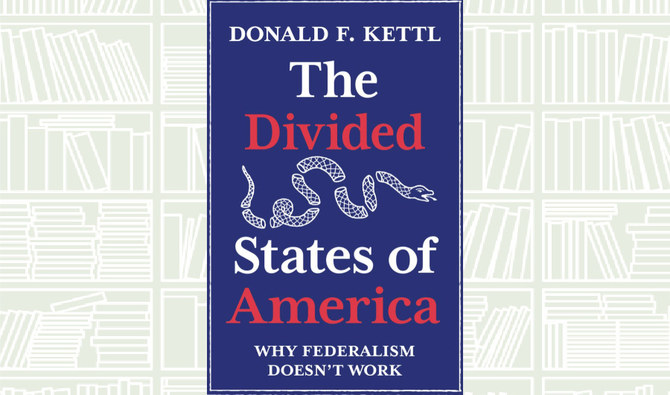

Federalism was James Madison’s great invention. An innovative system of power sharing that balanced national and state interests, federalism was the pragmatic compromise that brought the colonies together to form the US. Yet, even beyond the question of slavery, inequality was built into the system because federalism by its very nature meant that many aspects of an American’s life depended on where they lived. Over time, these inequalities have created vast divisions between the states and made federalism fundamentally unstable. In The Divided States of America, Donald Kettl chronicles the history of a political system that once united the nation—and now threatens to break it apart.
Exploring the full sweep of federalism from the founding to today, Kettl focuses on pivotal moments when power has shifted between state and national governments—from the violent rebalancing of the Civil War, when the nation almost split in two, to the era of civil rights a century later, when there was apparent agreement that inequality was a threat to liberty and the federal government should set policies for states to enact.


