

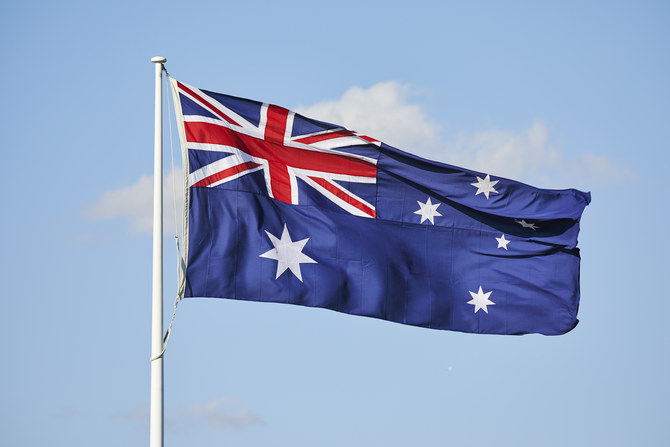
Australia adopts target of net zero emissions by 2050 but won't legislate goal

Getty Images
Short Url
Updated 26 October 2021
Follow

Australia adopts target of net zero emissions by 2050 but won't legislate goal

  • The investment will reduce the costs of technologies such as clean hydrogen and increase their use

Australia, long under fire as one of world's top producers of coal and gas, said it will target net zero carbon emissions by 2050, but added it will not legislate the goal and instead rely on consumers and companies to drive emission reductions.


The adoption of the target will ease international criticism after Australia earlier refused to join countries in pledging to meet the target ahead of the United Nations COP26 climate conference in Glasgow from Oct. 31 to Nov. 12.


Prime Minister Scott Morrison said Australia, one of the world's largest emitters of greenhouse gases on a per capita basis, will achieve the target largely through technology development, with the government investing A$20 billion ($15 billion).


The investment will reduce the costs of technologies such as clean hydrogen and increase their use, he said.


Morrison has been in a political bind over climate change. He needs the support of rural votes who oppose the reducing emissions as he heads into an election that must take place by May, but much of the wider Australian population wants to see more action.


A widely watched poll on Monday showed Morrison is on course to lose to the centre-left Labor party.


On Tuesday, Morrison, sought to downplay any threat to domestic industries and jobs as a result of reducing emissions.


"Australians want action on climate change. They’re taking action on climate change, but they also want to protect their jobs and their livelihoods,” he told reporters in Canberra.

Morrison also said Australia will not strengthen its 2030 target of reducing emissions by 26-28 percent from 2005 levels but added the country looks like it will reduce emissions by 30-35 percent.


Critics said Morrison's plan was too weak and does not prepare the Australian economy for a rapidly evolving world.


“Unless the government sets the wheels in motion to cut our emissions in half by 2030, it is making climate change worse and turning its back on the opportunities," said Kelly O’Shanassy, chief executive officer of the Australian Conservation Foundation.


Somalia’s capital votes in first step toward restoring universal suffrage

Updated 1 sec ago
Follow

Somalia’s capital votes in first step toward restoring universal suffrage

MOGADISHU: Residents of Somalia’s capital Mogadishu will vote on Thursday ​in municipal elections meant to pave the way for the East African country’s first direct national polls in more than half a century.
With the exception of votes in the semi-autonomous region of Puntland and the breakaway region of Somaliland, Somalia last held direct elections in 1969, months before military general, Mohamed Siad Barre, took power in a coup.
After years of civil ‌war that ‌followed Barre’s fall in 1991, indirect elections ‌were ⁠introduced ​in ‌2004. The idea was to promote consensus among rival clans in the face of an Islamist insurgency, although some Somalis say politicians prefer indirect elections because they create opportunities for corruption.
Under the system, clan representatives elect lawmakers, who then choose the president. The president, in turn, has been responsible for appointing Mogadishu’s mayor.
The vote in Mogadishu, a ⁠city of some 3 million people where security conditions have improved in recent years ‌despite continuing attacks by Al-Qaeda-linked al ‍Shabab militants, is seen as ‍a test run for direct elections at the national level.
Around ‍1,605 candidates are running on Thursday for 390 posts in Mogadishu’s district councils, said Abdishakur Abib Hayir, a member of the National Electoral Commission. Council members will then choose a mayor.
“It shows Somalia is standing ​on its feet and moving forward,” Hayir told Reuters. “After the local election, elections can and will take place in ⁠the entire country.”
A 2024 law restored universal suffrage ahead of federal elections expected next year. However, President Hassan Sheikh Mohamud reached a deal in August with some opposition leaders stipulating that while lawmakers would be directly elected in 2026, the president would still be chosen by parliament.
Opposition parties have argued the rapid introduction of a new electoral system would benefit Mohamud’s re-election prospects.
They also question whether the country is safe enough for mass voting given Al-Shabab’s control over vast areas of the countryside and regular strikes ‌on major population centers.