Somalia’s capital votes in first step toward restoring universal suffrage

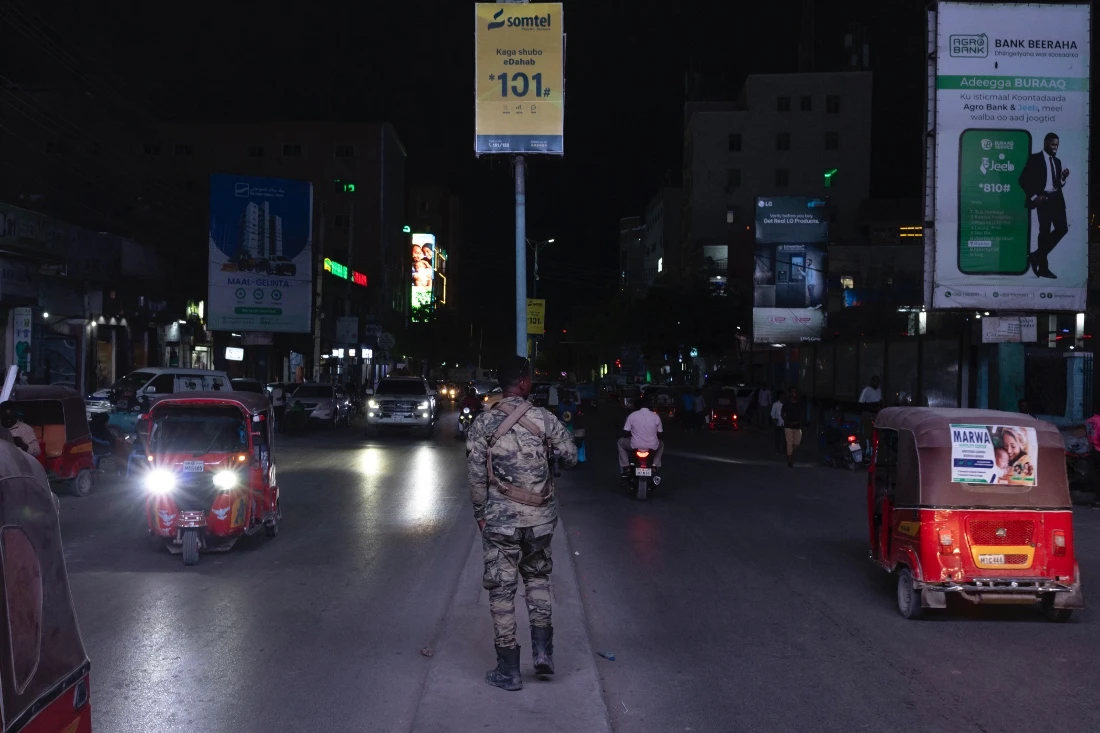
A Somali police officer patrols along a busy street at night in Mogadishu, Somalia. (AFP)
Short Url
Updated 25 December 2025
Follow

Somalia’s capital votes in first step toward restoring universal suffrage

  • After years of civil ‌war that ‌followed Barre’s fall in 1991, indirect elections ‌were ⁠introduced ​in ‌2004

MOGADISHU: Residents of Somalia’s capital Mogadishu will vote on Thursday ​in municipal elections meant to pave the way for the East African country’s first direct national polls in more than half a century.
With the exception of votes in the semi-autonomous region of Puntland and the breakaway region of Somaliland, Somalia last held direct elections in 1969, months before military general, Mohamed Siad Barre, took power in a coup.
After years of civil ‌war that ‌followed Barre’s fall in 1991, indirect elections ‌were ⁠introduced ​in ‌2004. The idea was to promote consensus among rival clans in the face of an Islamist insurgency, although some Somalis say politicians prefer indirect elections because they create opportunities for corruption.
Under the system, clan representatives elect lawmakers, who then choose the president. The president, in turn, has been responsible for appointing Mogadishu’s mayor.
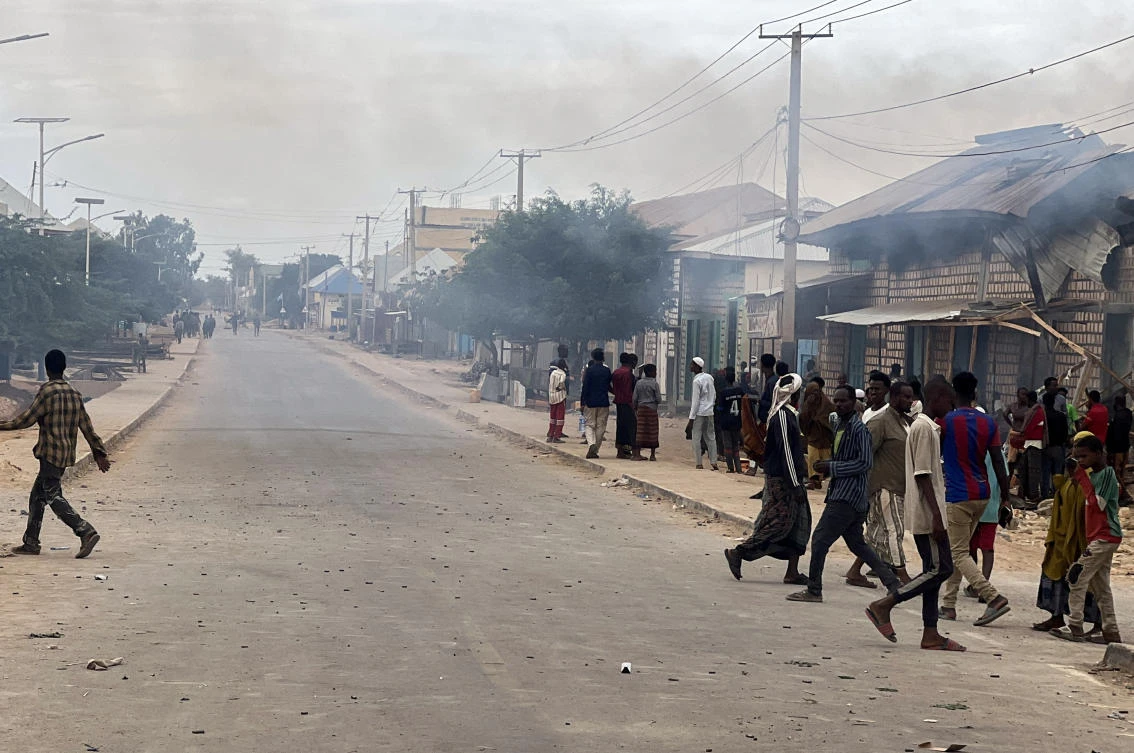
The vote in Mogadishu, a ⁠city of some 3 million people where security conditions have improved in recent years ‌despite continuing attacks by Al-Qaeda-linked al ‍Shabab militants, is seen as ‍a test run for direct elections at the national level.
Around ‍1,605 candidates are running on Thursday for 390 posts in Mogadishu’s district councils, said Abdishakur Abib Hayir, a member of the National Electoral Commission. Council members will then choose a mayor.
“It shows Somalia is standing ​on its feet and moving forward,” Hayir told Reuters. “After the local election, elections can and will take place in ⁠the entire country.”
A 2024 law restored universal suffrage ahead of federal elections expected next year. However, President Hassan Sheikh Mohamud reached a deal in August with some opposition leaders stipulating that while lawmakers would be directly elected in 2026, the president would still be chosen by parliament.
Opposition parties have argued the rapid introduction of a new electoral system would benefit Mohamud’s re-election prospects.
They also question whether the country is safe enough for mass voting given Al-Shabab’s control over vast areas of the countryside and regular strikes ‌on major population centers.


India plans AI ‘data city’ on staggering scale

Updated 56 min 27 sec ago
Follow

India plans AI ‘data city’ on staggering scale

  • ‘The data city is going to come in one ecosystem ... with a 100 kilometer radius’

NEW DELHI: As India races to narrow the artificial intelligence gap with the United States and China, it is planning a vast new “data city” to power digital growth on a staggering scale, the man spearheading the project says.

“The AI revolution is here, no second thoughts about it,” said Nara Lokesh, information technology minister for Andhra Pradesh state, which is positioning the city of Visakhapatnam as a cornerstone of India’s AI push.

“And as a nation ... we have taken a stand that we’ve got to embrace it,” he said ahead of an international AI summit next week in New Delhi.

Lokesh boasts the state has secured investment agreements of $175 billion involving 760 projects, including a $15 billion investment by Google for its largest AI infrastructure hub outside the United States.

And a joint venture between India’s Reliance Industries, Canada’s Brookfield and US firm Digital Realty is investing $11 billion to develop an AI data center in the same city.

Visakhapatnam — home to around two million people and popularly known as “Vizag” — is better known for its cricket ground that hosts international matches than cutting-edge technology.

But the southeastern port city is now being pitched as a landing point for submarine internet cables linking India to Singapore.

“The data city is going to come in one ecosystem ... with a 100 kilometer radius,” Lokesh said. For comparison, Taiwan is roughly 100 kilometers wide.

Lokesh said the plan goes far beyond data connectivity, adding that his state had “received close to 25 percent of all foreign direct investments” to India in 2025.

“It’s not just about the data centers,” he explained while outlining a sweeping vision of change, with Andhra Pradesh offering land at one US cent per acre for major investors.