


BEIRUT: A Russian-brokered ceasefire came into force on Wednesday in Daraa province, the cradle of Syria’s uprising where regime forces have been battling holdout rebels, a war monitor and state media said.
The southern province of Daraa, held for years by opposition forces, was returned to government control in 2018 under a previous Moscow-backed ceasefire that had allowed rebels to stay in some areas.
But since late July armed groups have exchanged artillery fire with government forces and the regime has imposed a crippling siege on Daraa city’s southern district of Daraa Al-Balad.
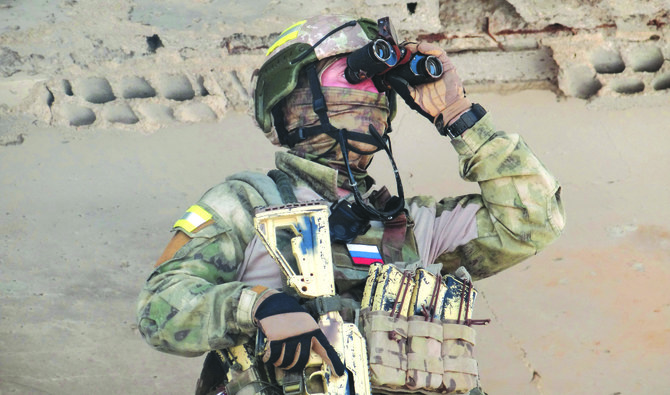
On Wednesday, the warring parties appeared to reach a new truce, with Russia deploying military police in Daraa Al-Balad after weeks of mediating talks, said the Britain-based Syrian Observatory for Human Rights.
The deployment came after dozens of rebels were bussed from the district to opposition-held territory in Syria’s north last week before intense fighting resumed at the weekend, hampering ceasefire efforts.
“Implementation has started of the latest ceasefire agreement with the deployment of Russian military police inside Daraa Al-Balad,” said observatory head Rami Abdul Rahman.
Under the terms of the deal, the Syrian government would erect three checkpoints inside Daraa Al-Balad, having left the area for years under the control of former rebel fighters, said the observatory.
Opposition fighters that choose to remain in Daraa Al-Balad would have to surrender their firearms, the Observatory added, saying those who reject a deal will be evacuated. The official SANA news agency on Wednesday published photos of crowds at so-called “reconciliation centers” setup in Daraa Al-Balad.
“Armed fighters in Daraa Al-Balad started handing over their weapons and settling their status at reconciliation centers,” it said.
FASTFACT
Since late July, the Syrian regime has imposed a crippling siege on Daraa Al-Balad.
The UN humanitarian agency OCHA said last week that 38,600 people — more than half of them children — had fled Daraa Al-Balad and been registered in and around the city.
The UN and aid groups have also warned of dire humanitarian circumstances inside the district, where a regime siege had threatened supplies of food and medicine.
Opposition activist Omar Al-Hariri said the new truce in Daraa Al-Balad suggested a regime push to end rebel influence over several parts of the province where the state has yet to fully deploy.
The agreement “cancels the exceptional status that Daraa gained three years ago,” by allowing rebels to keep their weapons and remain in control of several areas, including Daraa Al-Balad, he said.
“The Syrian regime is now expected to aim at opposition hubs in Daraa’s western countryside with the goal of securing the same results,” the activist added.
Daraa, which borders Jordan and is close to the Israeli-occupied Golan Heights, is widely seen as the cradle of the 2011 uprising in Syria, which sparked a decade-long civil war that has killed almost half a million people.


