Beyond IKEA: How Sweden’s culture of innovation affects daily life in Saudi Arabia

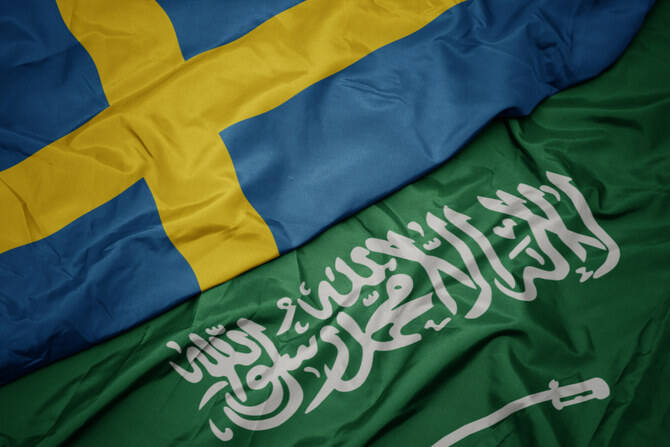
File photo showing the flags of Sweden and Saudi Arabia. (Shutterstock)
Short Url
Updated 11 December 2025
Follow

Beyond IKEA: How Sweden’s culture of innovation affects daily life in Saudi Arabia

  • Sweden positions itself as global leader in innovation, knowledge advancement
  • Sweden’s Ambassador to Saudi Arabia Petra Menander speaks to Arab News

RIYADH: Sweden: The land of build-it-yourself furniture and the Arctic Circle.

For many in Saudi Arabia, the European Kingdom of Sweden might be synonymous with IKEA, meatballs and the polar night.

But Swedish innovations quietly shape the world in ways most people never realize, from the moment they wake up until the moment they fall asleep, extending far beyond flat-pack furniture and Arctic landscapes.

Ever since Swedish scientist Alfred Nobel invented dynamite and established the legacy of the Nobel Prize, Sweden has positioned itself as a global leader in innovation and knowledge advancement.

And with Saudi scientist Omar Yaghi becoming the Kingdom’s first national to be awarded the prize by Sweden’s king on Wednesday, the ties between the two countries are in the spotlight now perhaps more than ever. 

Ambassador of Sweden to Saudi Arabia Petra Menander told Arab News that her country’s leading role in innovation could be attributed to the country’s education system and culture of creativity.

She said: “All children grow up with the same chances in life, from preschool to free higher education, and this education system encourages critical thinking, creativity and problem solving.”

Consider a normal morning routine for someone living in Saudi Arabia: they wake up and check the temperature outside, which soars above 40 C in the summer months.

The degree Celsius is a Swedish invention named after its creator Anders Celsius. Saudi Arabians then get dressed, maybe in the Swedish brand H&M with clothes or accessories fastened with the Swedish invention, the zipper.

When they are dressed, they might head to the Swedish invention of the modern absorption refrigerator, which was developed as a master’s thesis by two students at the KTH Royal Institute of Technology in Stockholm and first produced in 1925.

When reaching for fresh milk or juice at breakfast, it is likely found in a carton made by the Swedish company Tetra Pak.

With breakfast completed, commuters head out to their car and put on their Swedish three-point seatbelt for safety.

This lifesaving device was so important that Volvo made the patent freely available to all car manufacturers, prioritizing safety over profits and saving countless lives.

To make the car ride more entertaining, drivers connect their phones to speakers with Swedish Bluetooth — developed by the telecommunication giant Ericsson and named after Viking King of Denmark and Norway Harald “Bluetooth” Gormsson.

Then they might open Spotify, the Swedish music streaming service founded in 2006.

While listening to music, there is a good chance that many of the songs in your playlist are exported from Sweden, which is one of the four countries in the world that exports more music than it consumes.

A simple morning routine reveals the depth of Swedish innovation and how Sweden has spread its knowledge and products far beyond its borders, with its influence continuing to grow across the region.

One major Swedish company with a presence in Saudi Arabia is Tetra Pak, which has been active in the Kingdom for 45 years.

According to Alia Gamil, head of communication at Tetra Pak Arabia, the company works with more than 80 percent of the food and beverage producers in the Middle East.

Gamil said: “Our mission is committing to make food safe and available everywhere. And we promise to protect what’s good: food, people and the planet.” 

The Swedish Embassy in Riyadh works closely with entities in Saudi Arabia to help create platforms for innovation to grow, with a deep-rooted belief in education and research encouraging a culture of lifelong learning.

Menander said: “I see that the collaboration, the partnership is growing. There’s a new dimension now where more new actors are coming up from both sides looking at opportunities for collaboration.

“But then I also think that there are more things to learn that we can get from Saudi Arabia in terms of the very fast transformation that is happening here.”

Maybe it is the education system and free higher education, or maybe it is the legacy of Alfred Nobel and the drive for exploration that inspires Swedish innovation.

One new startup inspires another, and then the ball keeps on rolling. The Global Startup Ecosystem Index Report 2024 ranked Sweden as the leading startup ecosystem in the EU and the sixth best globally.

Nevertheless, Sweden’s climate of innovation is defined by safety, openness, collaboration and a willingness to explore new ideas, with cross-border cooperation culminating in ideas and designs that last.

Menander said that she hopes for the future relationship between Sweden and Saudi Arabia to flourish due to mutual interests.

On the question of how she hoped Saudis viewed Sweden, she said: “As a trusted and close friend; and partner, where we share experiences that help both of our kingdoms to thrive.”


Jeddah Book Fair 2025 opens with expanded cultural program

Updated 6 sec ago
Follow

Jeddah Book Fair 2025 opens with expanded cultural program

  • Bassam Al-Bassam: Since the Literature, Publishing, and Translation Commission began organizing Saudi book fairs in 2021, we have witnessed a significant increase in visitor numbers, as well as a noticeable rise in publishing-house sales
  • Al-Bassam: The commission provides a package of supportive initiatives across literature, publishing, and translation to support the sector, improve quality, and elevate outcomes

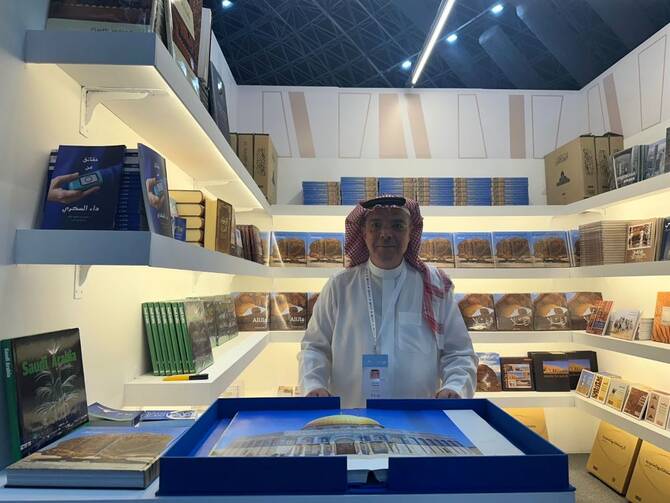
JEDDAH: Under the slogan “Jeddah Reads,” the Literature, Publishing, and Translation Commission inaugurated the Jeddah Book Fair 2025 on Thursday at the Jeddah Superdome, launching one of the city’s largest annual cultural gatherings. 

This year’s edition brings together more than 1,000 local and international publishing houses and agencies from 24 countries, spread across 400 booths, reinforcing the fair’s position as a major regional hub for creativity, knowledge exchange, and cultural engagement. 

Bassam Al-Bassam, general manager of the Publishing General Department, praised the steady development of the fair since the commission assumed responsibility for organising Saudi book fairs in 2021. 

“Since the Literature, Publishing, and Translation Commission began organizing Saudi book fairs in 2021, we have witnessed a significant increase in visitor numbers, as well as a noticeable rise in publishing-house sales,” he told Arab News. 

Commenting on the broader publishing landscape in the Kingdom, Al-Bassam said the sector is undergoing structural improvements. 

“The commission provides a package of supportive initiatives across literature, publishing, and translation to support the sector, improve quality, and elevate outcomes.” 

He also highlighted the commission’s work on regulatory reforms. “We are currently developing the sector’s core regulations and policies to facilitate the publishing process in Saudi Arabia … and enhance the sector’s overall value.” 

Regarding international partnerships, Al-Bassam said: “We provide proper infrastructure and host book fairs across various regions of the Kingdom ... opening doors for Saudi publishers to pursue international cooperation and partnerships, ultimately exporting Saudi culture abroad.” 

He added that the commission’s participation in leading global book fairs further supports the global presence of Saudi publications. 

For the first time, the fair is hosting a dedicated program for local film production, featuring daily screenings of acclaimed Saudi films supported by the “Dhaw” Film Support Program and organized in collaboration with the Film Commission. 

The initiative highlights the rise of Saudi visual storytelling and strengthens the integration between cultural and artistic sectors. 

With more than 170 cultural events, including panel discussions, lectures, poetry evenings, and specialized workshops, the fair continues to expand its role as a full-spectrum cultural platform. 

A dedicated children’s area offers interactive activities that nurture creativity and foster a love of reading among young visitors. 

Cultural institutions, universities, and community organizations are also showcasing their latest publications and initiatives during the fair. 

Other features include a manga and anime zone, a discounted books section, and a Handicrafts Corner celebrating the 2025 Year of Handicrafts by introducing visitors to traditional crafts and supporting Saudi artisans. 

Among participating publishing houses is Kadi and Ramadi, a Saudi specialist in children's books, which celebrates its 20th anniversary this year. 

Founder Thuraya Batarji expressed her joy at returning to the fair during such a milestone. 

She said the publishing house has released special anniversary editions of key titles, noting their continued commitment to both the Jeddah and Riyadh book fairs. 

As a prominent figure in children’s literature, Batarji emphasized the importance of reading from infancy. “The secret to instilling the value of reading in children is to start at a very early age, even from three to six months.” 

She added that shared reading sessions between parents and children strengthen their bond with books and foster critical-thinking skills as young readers grow. 

The opening day also drew young visitors who had grown up attending the Jeddah Book Fair. 

Sara Al-Malki, 16, from Jeddah, described the event as an essential part of her life. 

“I’ve been coming to this fair since I was a little girl,” she said. “Starting the weekend here feels special. The atmosphere, the books, the publishers I love, it all brings back memories and makes me excited for what’s new.” 

She said that visiting her favourite publishing houses on opening day has become a personal tradition, adding that the fair has influenced her love of reading and her dream of becoming a writer. 

“This fair feels like home,” she said. “Every year it grows, and every year I grow with it.”