BEIRUT: Fighting between government forces and former rebels in the Syrian province of Daraa has displaced more than 38,000 people over the past month, the UN said on Tuesday, as truce talks falter.
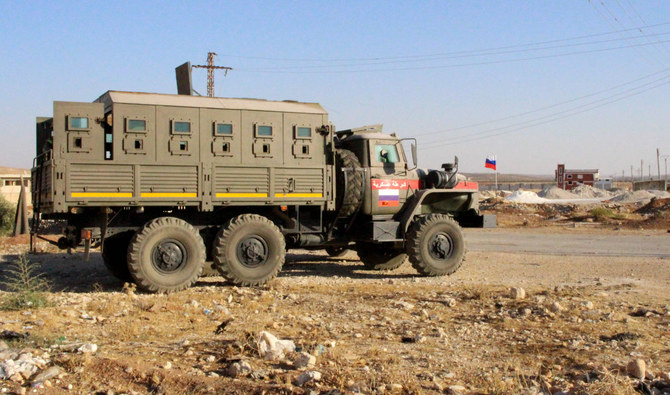
Daraa, retaken by government forces in 2018, has emerged as a new flashpoint in recent weeks as government forces tightened control over Daraa Al-Balad, a southern district of the provincial capital, a hub for former rebel fighters. Clashes, including artillery exchanges, between the two sides since late July have marked the biggest challenge yet to the Russian-brokered deal that returned the southern province to government control but allowed rebels to stay on in some areas.
Russian-sponsored truce talks launched in the wake of the latest fighting have made little headway as the government has stepped up its campaign to root out remaining rebel fighters from Daraa Al-Balad.
The UN Office for the Coordination of Humanitarian Affairs (OCHA) said that 38,600 internally displaced persons are registered in and around Daraa, with most having fled from Daraa Al-Balad. “This includes almost 15,000 women, over 3,200 men and elderly and over 20,400 children,” OCHA said.
It warned of a critical situation in the volatile district, saying that access to goods and services, including food and power, is “extremely challenging.”
The Britain-based Syrian Observatory for Human Rights said that government forces are restricting the entry of goods into Daraa Al-Balad, where it says 40,000 people still live.
“They are living under siege with families facing shortages of food, medical services, potable water, power and internet,” said the monitor, which relies on a network of sources inside Syria.
The Observatory said that many in Daraa Al-Balad reject the truce terms being set by the government and its Russian ally.


![]()

Fighting in Syria’s Daraa displaces 38,000
Short Url
https://arab.news/7mvnr
Fighting in Syria’s Daraa displaces 38,000
- Russian-sponsored truce talks launched in the wake of the latest fighting have made little headway


Latest updates


© 2026 SAUDI RESEARCH & PUBLISHING COMPANY, All Rights Reserved And subject to Terms of Use Agreement.