AMMAN: Syria’s military bombarded the last rebel enclave in the southern city of Daraa on Sunday, killing at least six people in one of the deadliest attacks in its siege of the birthplace of the country’s uprising, residents said.
The army declined to comment on the reports but said in a statement it was losing patience with what it called “armed groups and terrorists” in the neighborhood.
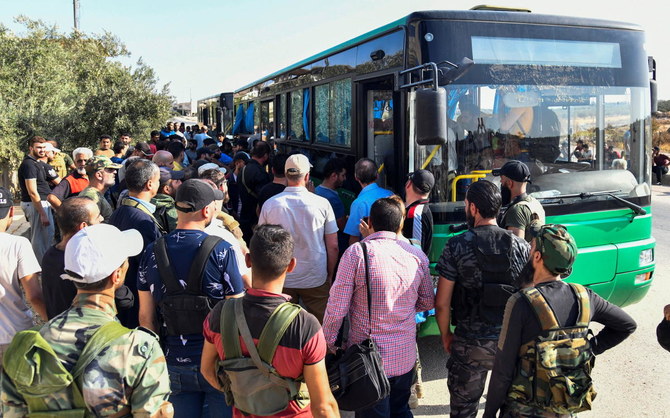
An elite division of the army, backed by Iranian militias, has been blocking food and fuel deliveries to Daraa al Balad to press rebels to surrender three years after government forces retook the rest of the area near the border with Jordan.
“They are using so-called elephant rockets indiscriminately,” Abu Jehad al Horani, a local official told Reuters, referring to improvised missiles. Explosions could be heard in the background.
Residents said bodies of six people were pulled out of bombarded houses in the center of the Daraa neighborhood which saw the first peaceful protests against the rule of President Bashar Assad in 2011.
The Syrian military’s pro-Iranian Fourth Division, the main force in the southern province, backed by Tehran-financed local militias, have encircled the bastion for two months.
Local officials, residents and some army officials, speaking on condition of anonymity, have said the offensive is an attempt to undermine Russian efforts to resolve the standoff without an all-out assault.
Russian generals holding talks with local figures and army commanders announced a plan on Aug. 14 that would allow the army to enter but giving guarantees to residents against reprisals and offering safe passage to former rebels to leave for other opposition areas in northwest Syria.
In 2018, the Syrian army, aided by Russian air power and Iranian militias, retook control of the southern province which also borders Israel’s Golan Heights.
Moscow gave guarantees to Israel and Washington at the time that it would prevent Iranian-backed militias from expanding their influence in the area.
That deal forced thousands of Western-backed rebels to hand over heavy weapons but kept the army from entering Daraa al Balad, whose administration remained in rebel hands.
“We hold Russia responsible for any child who gets injured This war is being imposed on us by Iran and the Russians are watching,” Abu Yusef al Masalmeh, an elder said.
Washington and major Western powers have expressed concern about Assad forces’ military campaign in Daraa, which they say tests Russia’s pledges to maintain stability and rein in Iranian-militias in the border area.


![]()

Syrian army bombards rebels in birthplace of uprising
Short Url
https://arab.news/rvjs7
Syrian army bombards rebels in birthplace of uprising
- Residents said bodies of six people were pulled out of bombarded houses in the center of the Daraa


Latest updates


© 2026 SAUDI RESEARCH & PUBLISHING COMPANY, All Rights Reserved And subject to Terms of Use Agreement.