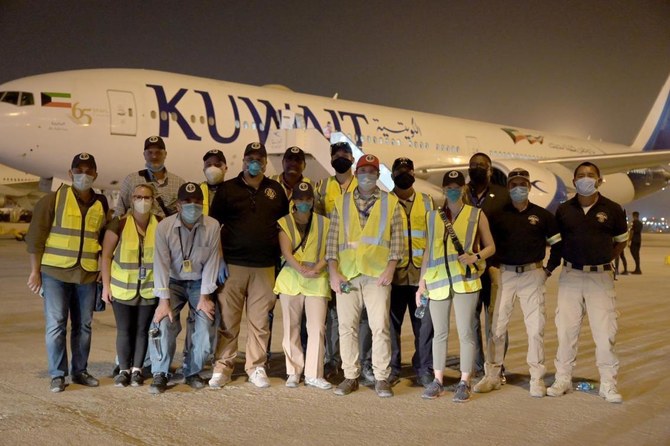
LONDON: Five flights carrying more than 850 Americans and employees from the US embassy in Kabul have left Kuwait on their way home.
The US ambassador to Kuwait Alina Romanowski thanked “our Kuwaiti partners, our dedicated diplomats and Department of Defense colleagues working around the clock to ensure US citizens and our partners get home safely.”
The US on Saturday urged its citizens in Afghanistan to avoid traveling to Kabul airport due to “potential security threats” near its gates.
“We are advising US citizens to avoid traveling to the airport and to avoid airport gates at this time unless you receive individual instructions from a US government representative to do so,” the US embassy alert said.
Conditions outside Hamid Karzai International Airport have been chaotic amid the crowds of people hoping to flee Afghanistan after the Taliban took control of the country a week ago.


![]()
![]()
![]()
![]()

Five evacuation flights from Afghanistan carrying American citizens leave Kuwait for US


Short Url
https://arab.news/gea2t
Five evacuation flights from Afghanistan carrying American citizens leave Kuwait for US
- The US on Saturday urged its citizens in Afghanistan to avoid traveling to Kabul airport due to “potential security threats” near its gates


Latest updates


Recommended


© 2026 SAUDI RESEARCH & PUBLISHING COMPANY, All Rights Reserved And subject to Terms of Use Agreement.