

IRBIL, Iraq: It is perhaps just a matter of time before the volatile states of the Middle East begin to feel the reverberations of the Taliban’s swift conquest of almost all of Afghanistan. The implications of the Sunni Islamist group’s triumph will not be lost on non-state actors and violent extremists active in the countries where the US still has troops.
Afghanistan’s US-trained and equipped military failed to hold the line against the Taliban’s lightning offensive, as city after city fell in rapid succession. The government in Kabul quickly collapsed, paving the way for a second era of Taliban rule, just under 20 years after the end of the first.
The principal lesson other militant groups will likely draw from America’s bungled withdrawal from Afghanistan is this: If they can hold out long enough against the enemy’s superior technology and firepower, the latter will eventually grow weary and withdraw, leaving its client regimes to crumble.
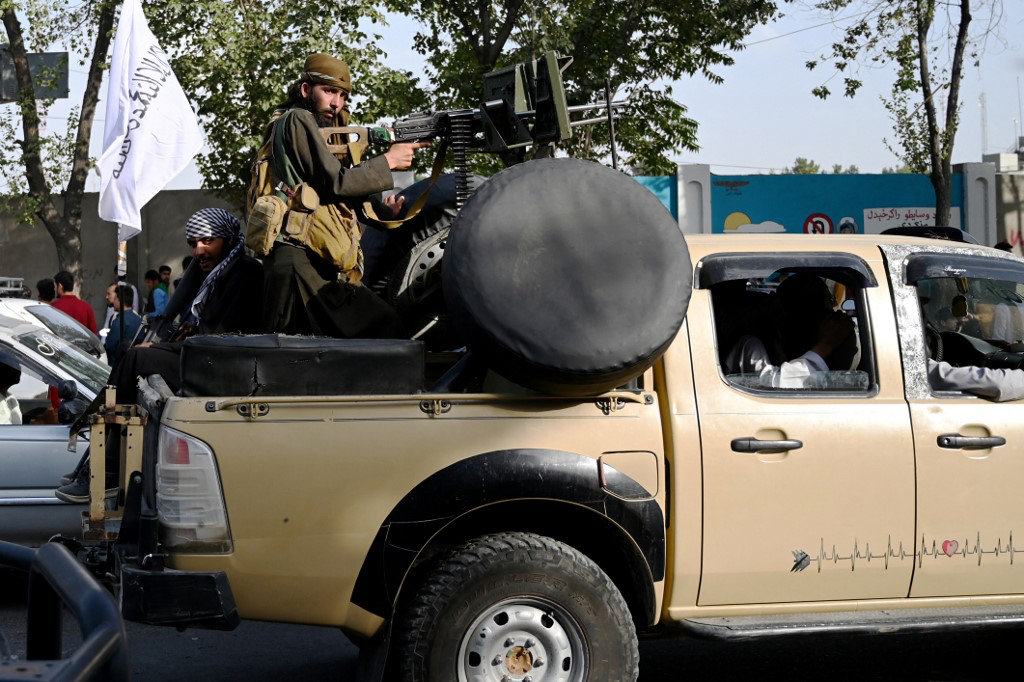
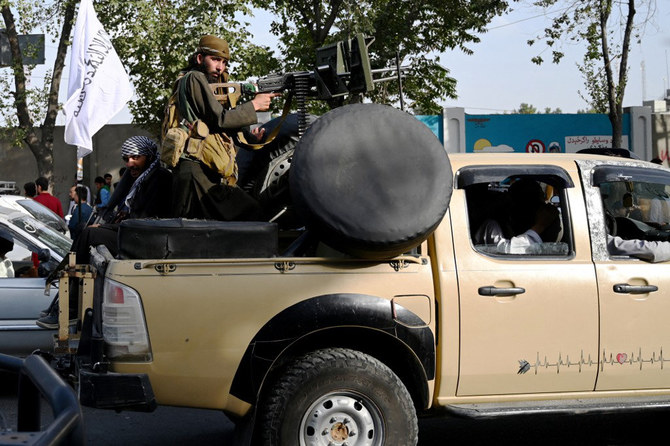
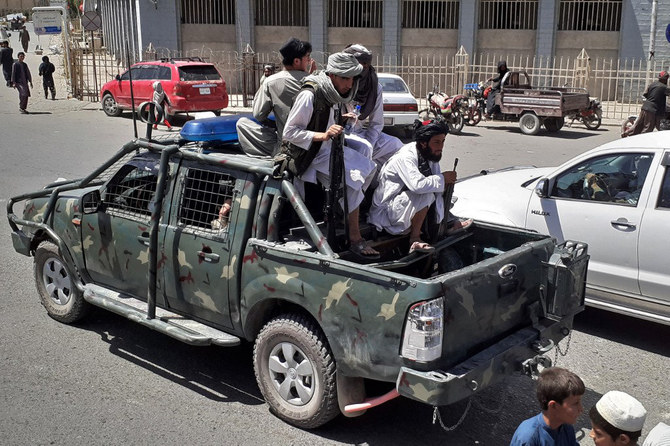
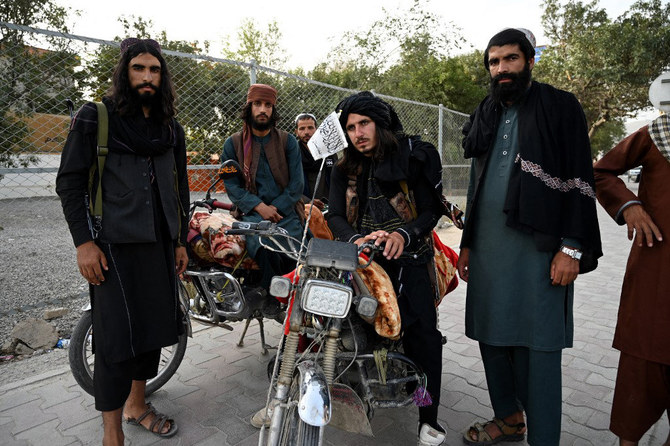
The Taliban’s military success in Afghanistan is reverberating across the region. (AFP)
If this is the thinking among some Shiite militia leaders in Iraq, who have long demanded the departure of US forces, it can hardly be dismissed as pure fantasy. After all, there is a fairly recent precedent of a swift insurgent offensive quickly overwhelming the Iraqi military.
Daesh was able to conquer a third of Iraq, including its second city Mosul, in the summer of 2014. The Iraqi army, which was much larger and better equipped, withdrew without a fight.
Although Baghdad was able to recapture the bulk of these territories by 2017, with extensive US support, the campaign against Daesh gave rise to a new force, Al-Hashd Al-Shaabi (Popular Mobilization Forces), which could prove capable of toppling the Iraqi government.
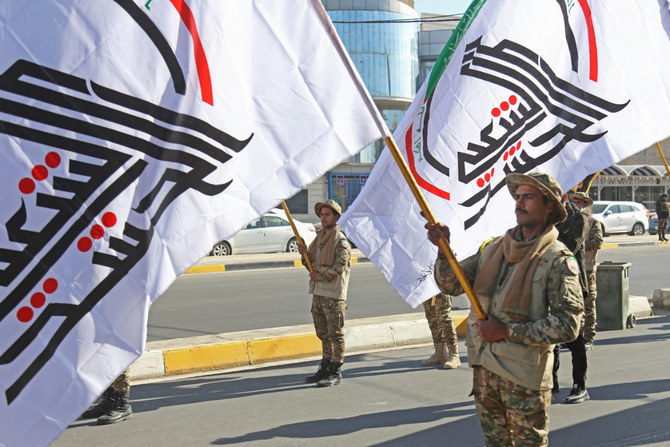
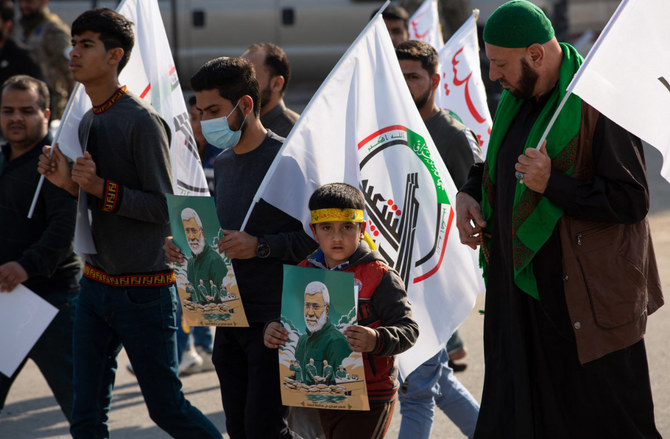
Hashd Al-Shaabi was formed in 2014 to help fight Daesh after the army’s notorious failure to defend Mosul. The umbrella organization of predominantly Shiite militias went on to liberate large swathes of Iraq’s predominantly Sunni regions, and was later incorporated into Iraq’s security apparatus.
However, some of the more powerful factions within the Hashd have long been equipped and financed by the Islamic Revolutionary Guard Corps (IRGC) to advance Iran’s military and political objectives in the region.
Iraq watchers fear these factions may outgun the regular Iraqi army and morph into a powerful state within a state, resembling Hezbollah in Lebanon.
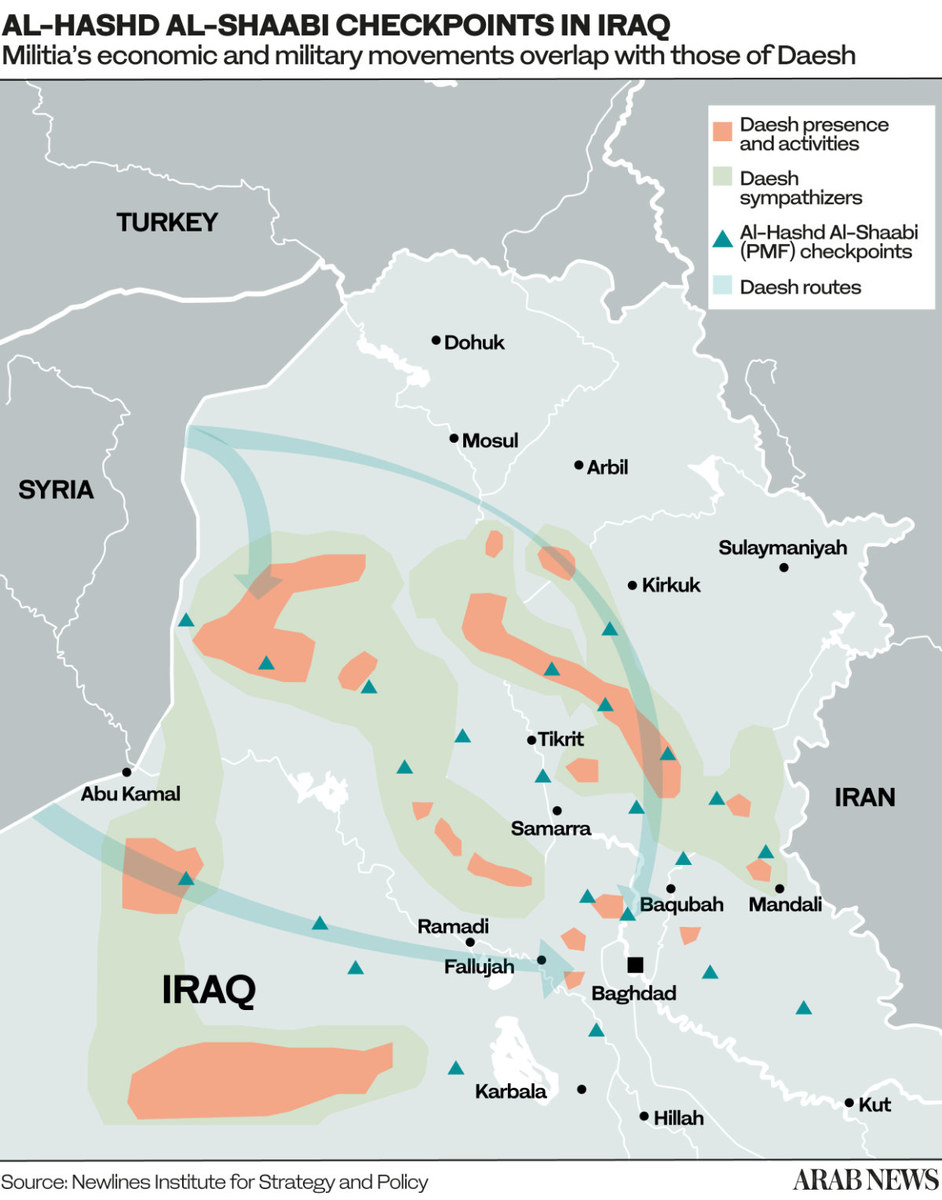
They have at their disposal large stocks of Iran-supplied surface-to-surface missiles and armed drones, some of which have been used in recent years to attack US military targets within Iraq.
Fortunately for a Baghdad government burdened with the task of balancing the interests of both its American and Iranian patrons, the Biden administration does not look to be in as much of a hurry to withdraw from Iraq as it was from Afghanistan.
Moreover, according to political analysts, there are several major distinctions between the two cases that strongly suggest a Taliban-style takeover in Iraq by pro-Iran militias is probably not on the cards — at least not any time soon.
First and foremost, these factions have a lot to gain from maintaining the status quo. “The pro-Iran Hashd factions do not want to take over the government. Their goal is to join the ruling parties and get their cut of the state, both legal and illegal,” Joel Wing, author of the online blog Musings on Iraq, told Arab News.
“They are already an official part of the security forces, which means government funding. They want more fighters on the payroll. They want contracts and graft.”
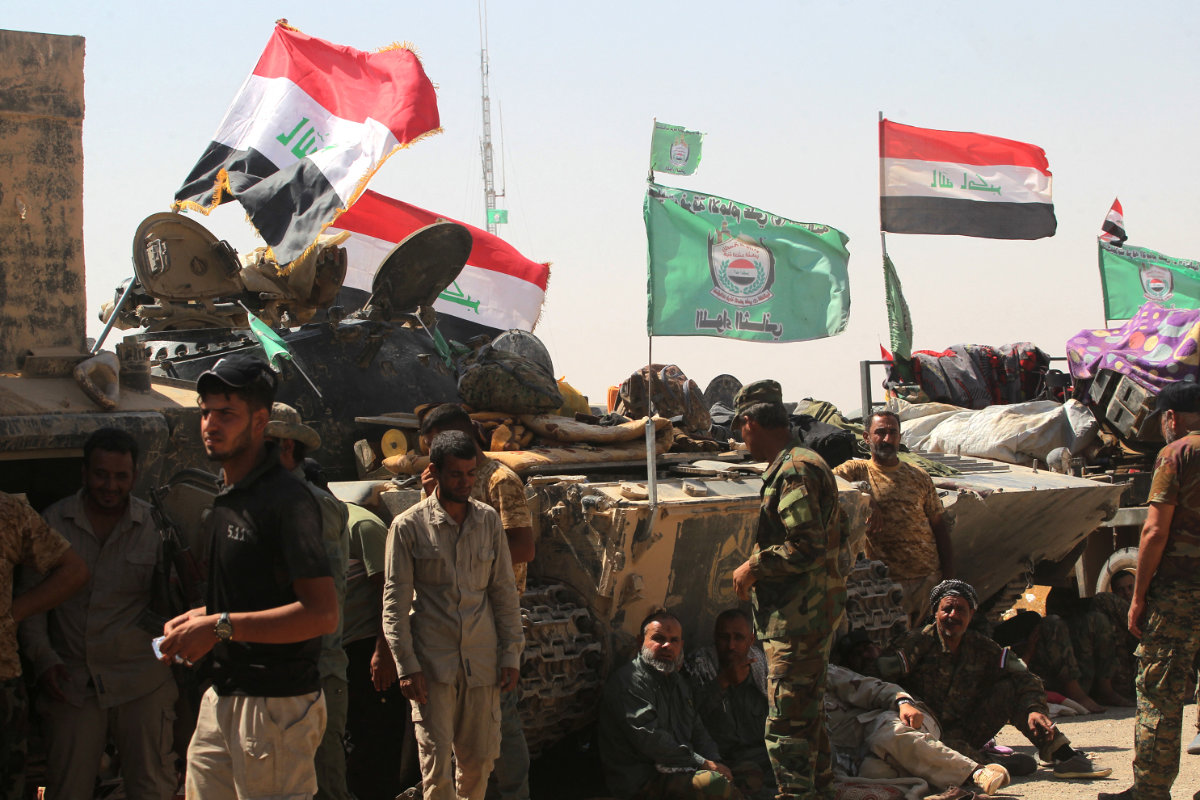
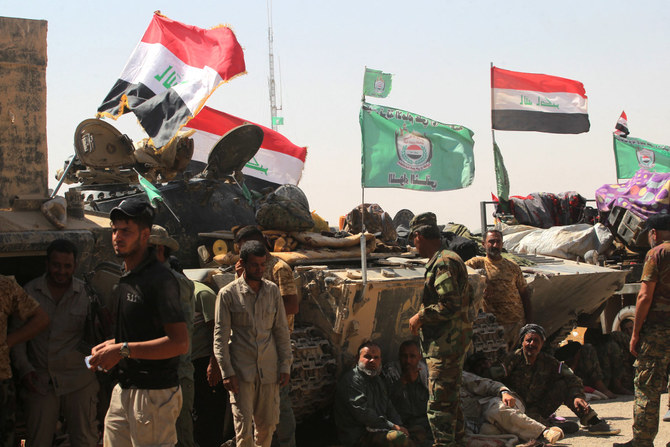
Iraq's Hashd militias are an official part of the country's security forces and are funded by the government. (AFP)
Alex Almeida, an Iraq security analyst at energy consultancy Horizon Client Access, is also skeptical that Hashd will attempt a takeover.
“Barring a repeat of 2014, or some sort of militia coup scenario or a siege of the international zone (in Baghdad), it’s highly unlikely we will see a similar situation develop in Iraq, primarily because we would then be dealing with a rogue faction of the Iraqi state rather than an external takeover by an insurgent force,” he said.
Rodger Baker, senior vice president of strategic analysis at Stratfor at RANE, agrees and points out that many Hashd groups “are integrated into the security forces of Iraq, and not merely outside insurgents” like the Taliban fighters were in Afghanistan.
INNUMBERS
2014 Year Hashd Al-Shaabi was formed.
40 Groups under Hashd Al-Shaabi umbrella.
128,000 Strength of Hashd Al-Shaabi.
“They do not hold territory in the same way the Taliban did in Afghanistan, even if they operate in relatively defined geographic areas,” Baker said. “They have close alliances with elements of the Iraqi parliament.
“In short, at least with many of the larger Hashd groups, they are integrated into the Iraqi political and security infrastructure. Thus, they are not necessarily seeking the overthrow of the regime, but rather the assertion of their (and often Iran’s) interests in Iraq.”
Baker is also more confident about the capabilities of the Iraqi armed forces compared with the Afghan security forces, noting that Iraq’s military has “undergone a significant transformation since it largely collapsed amid the early Daesh offensive” in 2014.
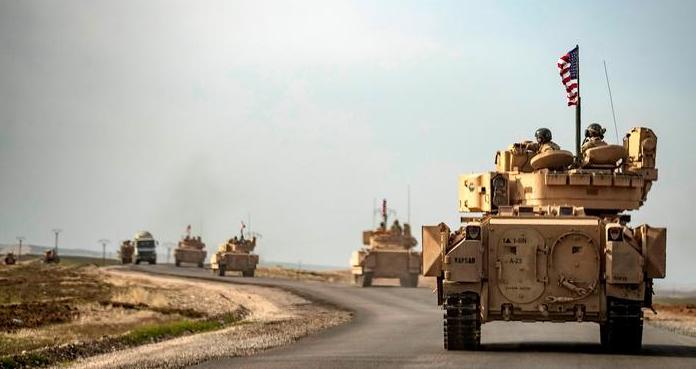
Fortunately for Baghdad, the Biden administration does not appear to be in a hurry to withdraw from Iraq. (AFP)
“After that failure, the Iraqis and the US military underwent a significant reform of training and leadership in the Iraqi security forces, and these forces largely proved their mettle several years later in their routing of Daesh from key cities and areas,” he said.
“There is today much more cohesion and sense of common purpose among the Iraqi security forces than there was among the Afghan security forces.”
There is another crucial difference between the current Iraq and (pre-Taliban takeover) Afghanistan situations. It is no secret that Pakistan’s powerful military intelligence agency, the ISI, has long supported the Taliban, often to the detriment of US strategic objectives.
However, unlike the ISI’s comparatively laissez-faire approach, Baker believes Iran holds its Iraqi militia proxies on a far shorter leash, dictating the limits of their activities.
“Iran’s support of the Hashd groups is much stronger than Pakistan’s support for the Taliban — likely stronger even than Pakistan’s Taliban support in the late 1990s,” Baker said.
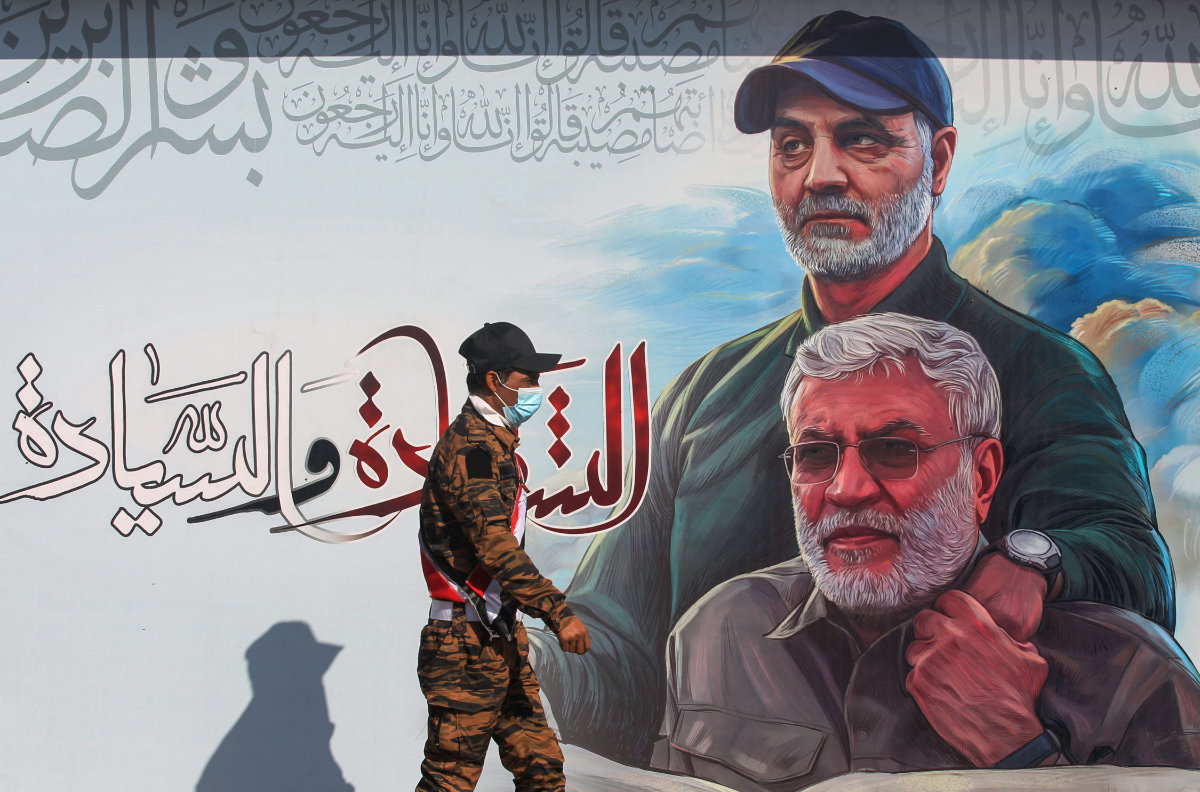
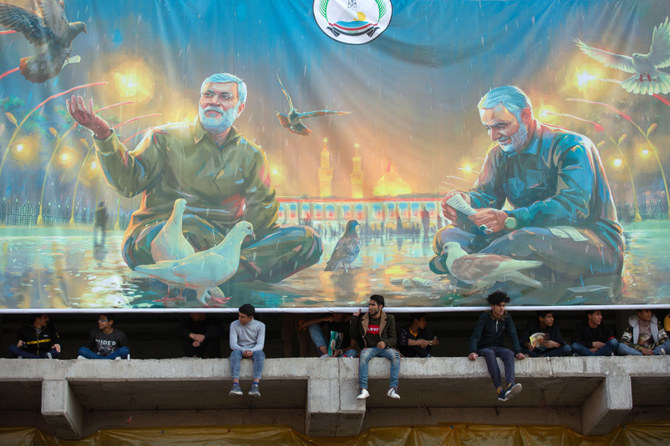
A Hashd fighter walks past a poster depicting late Iraqi commander Abu Mahdi al-Muhandis (R) and Iranian IRGC commander Qasem Soleimani in Baghdad. (AFP)
Besides arming and training them, Iranian officials openly meet with elements of Hashd groups in Iraq. “This also may constrain the actions of the larger Hashd groups, as Iran is not necessarily seeking the overthrow of Iraq’s (government), and is definitely not seeking more destabilization,” Baker said.
“Rather, these groups are part of a collection of elements that Iran uses to maintain influence and protect its strategic interests in Iraq.”
Nevertheless, Baghdad should draw some broad lessons from events in Afghanistan to ensure it does not suffer a similar fate as Kabul, analysts say.
“Perhaps the most significant lesson is the importance of rooting out corruption in the government at all levels, and of ensuring cohesion among various ethnic, regional and sectarian groups in the government,” Baker said.
Afghanistan’s lack of internal unity was plain for all to see in the hours before Kabul fell. Several top officials, including President Ashraf Ghani, opted to flee the country, while others sought to negotiate with the approaching Taliban. Others still, such as Ahmad Massoud, armed themselves and headed for the mountains to launch another phase of resistance.
“The lack of cohesion and perception of corruption left many of the Afghan citizenry unable to trust the government. The same could be said about the bureaucracy and security forces,” Baker said.
Perhaps the most critical distinction between the two cases is that the US does not plan a complete withdrawal from Iraq anytime soon.
“The recent US-Iraq talks show that Washington is not planning on withdrawing from Iraq,” Wing said. “Attacks by pro-Tehran factions are complicating that because the Americans are focusing on protecting themselves rather than assisting the Iraqis right now. But even then, there’s no sign they want to end the mission.”
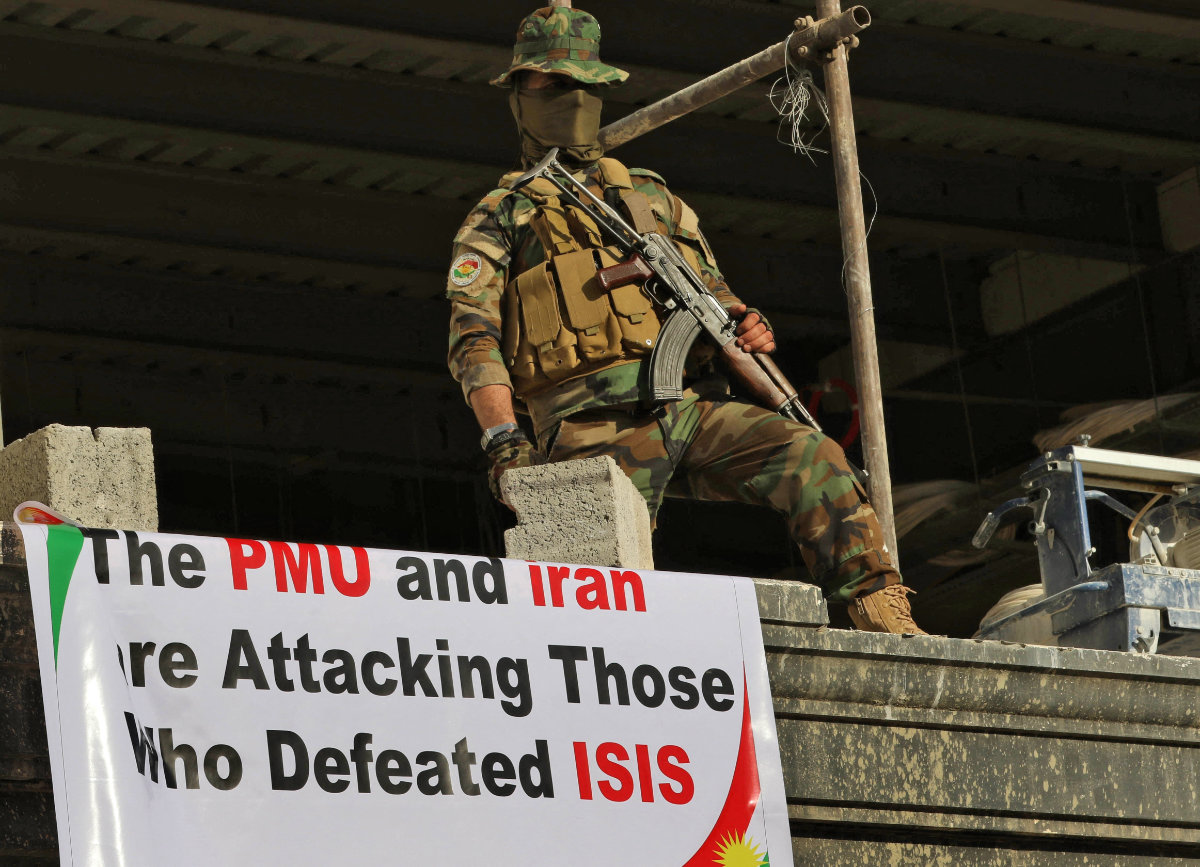
Placards denouncing the Hashd are shown during a demonstration by Iraqi Kurds outside the US consulate in Irbil, the capital of autonomous Iraqi Kurdistan. (AFP file photo)
Almeida believes the disastrous retreat from Afghanistan “will make the Biden administration a lot more cautious about how it handles the mechanics of a further US withdrawal in Iraq, particularly drawing down to a small diplomatic footprint without in-country military support.”
For his part, Baker thinks the decision to leave Iraq “will be based more on the US strategic realignment of priorities than on the political fallout from the Afghan withdrawal, particularly as Iraq is in a much stronger shape than the Afghan government was.”
“The larger risk for Iraq is long-term regional and sectarian differences, and demands for greater federalism or distribution of power,” he said.
“Economic resources are spread unequally across Iraq, and these geographic differences will continue to shape the future security and stability environment.”
____________
• Twitter: @pauliddon