

The impact of the pandemic on Olympic advertising

1 / 3
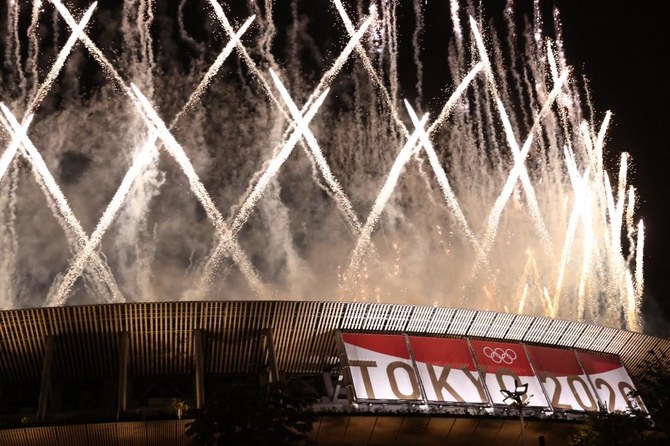
Fireworks light up the sky over the Olympic Stadium during the opening ceremony of the Tokyo 2020 Olympic Games, in Tokyo. (File/AFP)
2 / 3
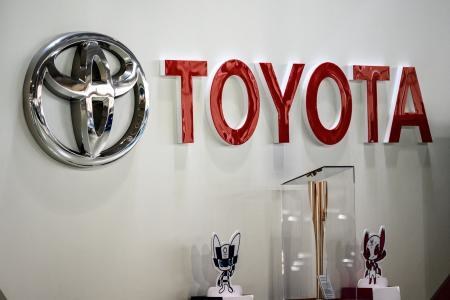
Japanese companies including Panasonic, Toyota, and Fujitsu distanced themselves from the games last month. (File/AFP)
3 / 3
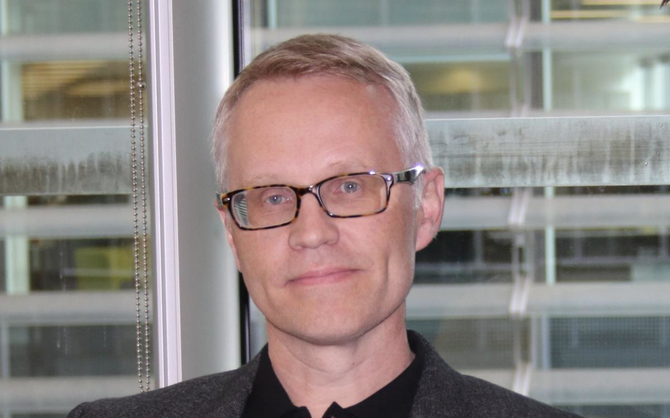
Managing director of FirmDecisions MEA Stewart Morrison. (File/AFP)
Short Url
Updated 06 August 2021
Follow

The impact of the pandemic on Olympic advertising

  • With brands like Toyota distancing themselves from the games, what is next for event and media contracts?

DUBAI: After a year of virtual events, the 2020 Tokyo Olympics are finally taking place, a year late, amid much debate. 
With rising coronavirus disease (COVID-19) cases in Japan, many people and organizations have voiced both concerns and criticism; according to data analytics and consulting firm Kantar, 63 percent of people in the US, for instance, are interested in watching the games, but 53 percent think they should be postponed or canceled.
The Summer Olympics, among the world’s premier sporting events, generates millions in advertising revenue. The Tokyo Olympics are likely to produce $2.25 billion in advert revenue for live broadcasts alone — a more than 20 percent increase from the 2016 Rio Olympics — according to Kantar.
Although brands should exercise caution around advertising given the rising number of COVID-19 cases and consumer sentiment around the games, much of it was already committed to prior to the pandemic. NBC, the official US broadcaster, stated that it had already sold $1.25 billion in advertising by March 2020.
However, Japanese companies including Panasonic, Toyota, and Fujitsu distanced themselves from the games last month.


They and many others did not send executives to the opening ceremony, whilst Toyota also canceled all Olympic-related advertising in Japan.
Arab News spoke to Stewart Morrison, managing director of FirmDecisions MEA, about what it means for brands to pull out of their media contracts.

How does Toyota’s decision to pull out of advertising affect media contracts for future sporting events?
Advertising by brands in conjunction with sponsorship or events activity is becoming a smaller part of the marketing budget, mainly due to it being a difficult advertising medium to measure success in, in contrast to digital advertising.
There are, however, industries that continue to undertake sponsorship and event activity, such as the automotive industry where event activations are the best way for their consumers to see, touch and feel the products.
Advertisers sponsoring these types of events usually will have their own additional media advertising activities, incorporating permission to use the logos in that advertising. Cancelation of the sponsorship contract will also mean that a brand cancels its own media investment activities.
Long before the Olympics, media contract cancelation clauses have been tested to their fullest during the pandemic, when brands canceled media buying activities on a large scale globally.
However, for the foreseeable future, the event and sponsorship industry will likely be in a state of flux with event organizers constantly being unsure of whether their events will go ahead whilst the pandemic is still hanging around. This, in turn, will give advertisers the upper hand and a stronger case for a penalty-free exit clause in their agreements.
But, not all media sponsorship agreements are the same: Some are short term one-off partnerships, others like the English Premier League are multi-year partnerships that require considerable investments in infrastructure development. It’s one issue for a brand to cancel their partnership with a sporting event to support the will of the people, but equally, if those community initiatives are canceled then the advertiser is in a very difficult position. They will also be wondering how any action they take will be viewed in different countries.
What’s the right procedure to follow when a brand wants to pull out of an event? Can they renegotiate their contract?
There are usually two agreements advertisers will have in place when sponsoring events like the Olympics. The sponsorship agreement between the advertiser and event owner will give the advertiser branding rights to the events, referees, the stadiums/venues, Olympic-related marketing collateral such as adverts, use of event logos, possibly naming rights to trophies, etc.
Separately, the advertiser will likely have its own media agency contract to buy media and show its own product-related adverts, such as the latest products, and during the games they will add Olympic-related campaigns to their marketing plans.
There will always be cancelations of events for a variety of reasons; event organizers naturally want as much money upfront as possible to cover their costs whilst advertisers know only too well the risks involved in events being delayed or not going ahead. Besides pandemic-related issues, security, safety, (and) weather among others can lead to an event being canceled.
Contracts can be onerous in their interpretations about what happens when an event is canceled, and so it is the responsibility of each party to protect themselves as best as possible with insurance, staggered payments, penalties and/or return of any payments.
It is not in the interests of the organizer or brand to enter protracted costly legal negotiations unless one of the parties was trying to exit a costly multi-year agreement without reason. From an organizer’s perspective, for events like the Olympics, there are few brands with big enough investment and a strategic plan to align themselves to such an event so it would not serve as a deterrent to force a brand to continue. A mutually agreed separation is best all around.
With COVID-19 regulations easing around the world, physical events are becoming more common. What do event organizers and brands need to keep in mind?
Besides the natural considerations of health and safety, they need to consider current government policies, the actions those governments can take at very short notice, and the potential impact of the event not going ahead.
For a brand, that is going to mean the strongest possible exit clauses and retrieval of all invested money in the agreement. Event organizers will not have the upper hand in these negotiations in the near term as, quite simply, the events will not go ahead without the brand’s money.
There will be an imbalance in negotiating power for the foreseeable future as a legacy of COVID, and event organizers should seek to insure themselves appropriately, as the Wimbledon Tennis Association did in 2020.


MenaML hosts 2026 Winter School in Saudi Arabia to boost AI education, collaboration in region

Updated 16 January 2026
Follow

MenaML hosts 2026 Winter School in Saudi Arabia to boost AI education, collaboration in region

  • Second edition of Winter School will be hosted in partnership with KAUST

DUBAI: The Middle East and North Africa Machine Learning Winter School will host its second edition in Saudi Arabia this year, in partnership with the King Abdullah University of Science and Technology.

The non-profit held its inaugural edition in Doha last year in partnership with the Qatar Computing Research Institute.

The initiative began when like-minded individuals from Google DeepMind and QCRI came together to launch a platform connecting a “community of top-tier AI practitioners with a shared interest in shaping the future of the MENA region,” Sami Alabed, a research scientist at Google DeepMind and one of the co-founders of MenaML, told Arab News.

Along with Alabed, the core team includes Maria Abi Raad and Amal Rannen-Triki from Google DeepMind, as well as Safa Messaoud and Yazan Boshmaf from QCRI.

Maria Abi Raad

Messaoud said that the school has three goals: building local talent in artificial intelligence, enhancing employability and connection, and reversing brain drain while fostering regional opportunity.

AI has dominated boardrooms and courtrooms alike globally, but “AI research and education in MENA are currently in a nascent, yet booming, stage,” she added.

Launched at a pivotal moment for the region, the initiative was timed to ensure “regional representation in the global AI story while cultivating AI models that are culturally aligned,” said Rannen-Triki.

The school’s vision is to cultivate researchers capable of developing “sophisticated, culturally aligned AI models” that reflect the region’s values and linguistic and cultural diversity, said Messaoud.

This approach, she added, enables the region to contribute meaningfully to the global AI ecosystem while ensuring that AI technologies remain locally relevant and ethically grounded.

MenaML aims to host its annual program in a different city each year, partnering with reputable institutions in each host location.

“Innovation does not happen in silos; breakthroughs are born from collaboration that extends beyond borders and lab lines,” said Alabed.

“Bringing together frontier labs to share their knowledge echoes this message, where each partner brings a unique viewpoint,” he added.

This year, MenaML has partnered with KAUST, which “offers deep dives into specialized areas critical to the region, blending collaborative spaces with self-learning and placement programs,” said Abi Raad.

The program, developed in partnership with KAUST, brings together speakers from 16 institutions and focuses on four key areas: AI and society, AI and sciences, AI development, and regional initiatives.

“These themes align with the scientific priorities and research excellence pillars of KAUST as well as the needs of regional industries seeking to deploy AI safely and effectively,” said Bernard Ghanem, professor of electrical and computer engineering and computer science at KAUST and director of the Center of Excellence in Generative AI.

The program will also highlight efficiency in AI systems, with the overall goal of equipping “participants with the conceptual and practical understanding needed to contribute meaningfully to next-generation AI research and development,” he told Arab News.

For KAUST, hosting the MenaML Winter School aligns with Saudi Arabia’s ambition to become a global hub for AI research under Vision 2030.

By attracting top researchers, industry partners, and young talent to the Kingdom, it helps cement the Kingdom’s position as a center for AI excellence, Ghanem said.

It also aligns closely with Vision 2030’s “goals of building human capital, fostering innovation, and developing a knowledge-based economy” and “contributes to the long-term development of a world-leading AI ecosystem in Saudi Arabia,” he added.

Although the program accepts students from around the world, participants must demonstrate a connection to the MENA region, Abi Raad said.

The goal is to build bridges between those who may have left the region and those who remain, enabling them to start conversations and collaborate, she added.

A certain percentage of spots is reserved for participants from the host country, while a small percentage is allocated to fully international students with no regional ties, with the objective of offering them a glimpse into the regional AI ecosystem.

Looking ahead, MenaML envisions growing from an annual event into a sustainable, central pillar of the regional AI ecosystem, inspired by the growth trajectory of global movements like TED or the Deep Learning Indaba, a sister organization supporting AI research and education in Africa.

Boshmaf said MenaML’s long-term ambition is to evolve beyond its flagship event into a broader movement, anchored by local MenaMLx chapters across the region.

Over time, the initiative aims to play a central role in strengthening the regional AI ecosystem by working with governments and the private sector to support workforce development, AI governance and safety education, and collaborative research, while raising the region’s global visibility through its talent network and international partnerships.

He added: “If TED is the global stage for ‘ideas worth spreading,’ MenaML is to be the regional stage for ‘AI ideas worth building.’”

The MenaML Winter School will run from Jan. 24 to 29 at KAUST in Saudi Arabia.