

New center to lead Saudi role in ‘4th industrial revolution’, economic minister says

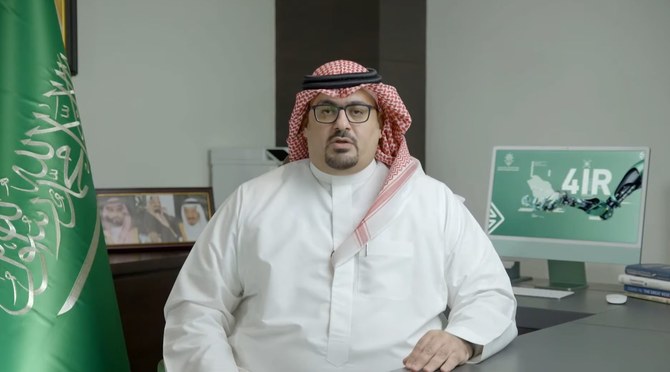
Minister of Economy and Planning Faisal bin Fadel Al-Ibrahim. (Screengrab)
Short Url
Updated 30 July 2021
Follow

New center to lead Saudi role in ‘4th industrial revolution’, economic minister says

  • The Saudi minister said the new center will contribute to global discussions on the use of 4IR technology, such as 5G and artificial intelligence

DUBAI: The Saudi Centre for the Fourth Industrial Revolution (4IR) will lead the Kingdom’s role in utilizing advanced technologies and their local and global implications, Minister of Economy and Planning Faisal bin Fadel Al-Ibrahim said.

The Saudi minister said the new center will contribute to global discussions on the use of 4IR technology, such as 5G and artificial intelligence, especially amid the COVID-19 pandemic that has introduced new challengers to countries.

“COVID-19 intensified the need for data and evidence-based iterative policymaking supported by technology-driven and innovation-based solutions,” he said at the first Saudi 4IR forum held in Riyadh.

The Kingdom has become a global role model in deploying digital technology at peak of the health crisis, Al-Ibrahim said, enumerating Saudi efforts to manage the pandemic.
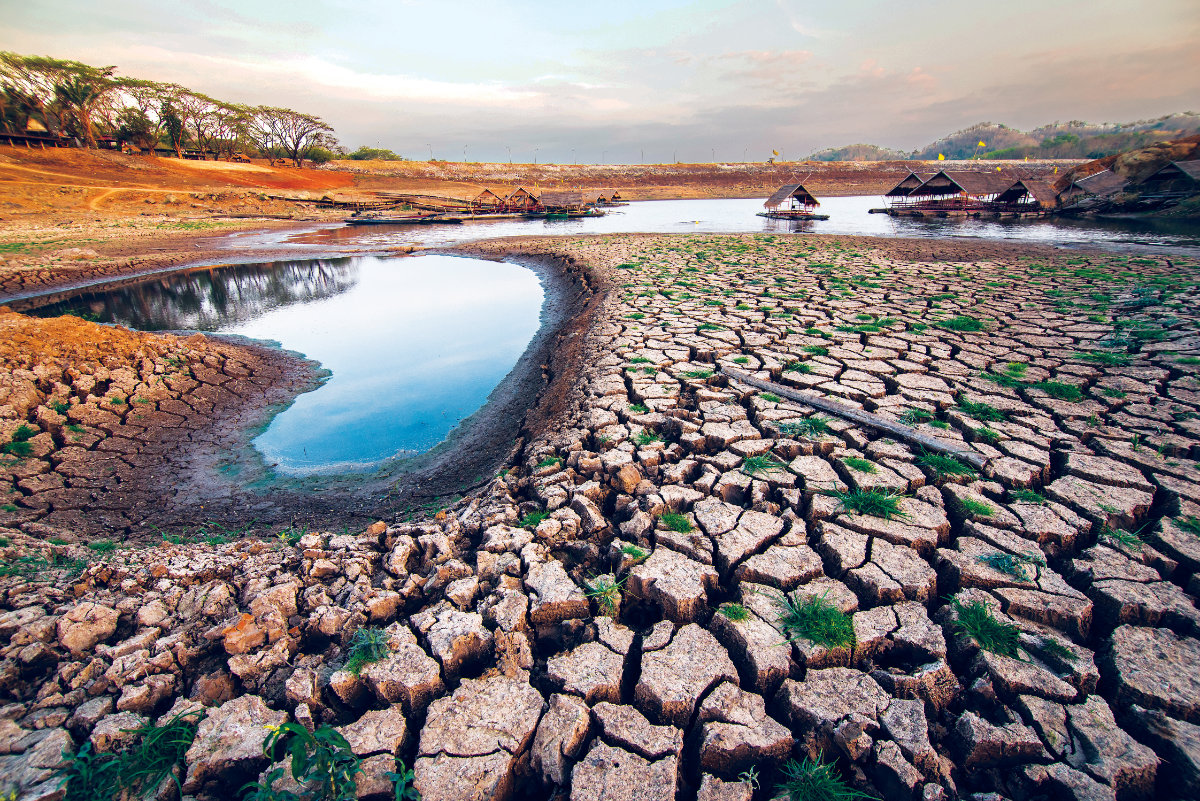


The Kingdom is known for its energy security as it has been endowed with huge energy resources, but when it comes to food and water security, the country is facing challenges.
(Shutterstock)

Saudi Arabia ranks 4th in the world in 5G connectivity, he added, and a robust digital infrastructure helped the Kingdom overcome challenges in the education and finance sectors.

Over 850 thousand daily classes were executed for over 6 million students in 2020, and around 2.8 billion digital payment transactions were made.

“This demonstrates Saudi`s leadership in having the most modern digital platform and world class capabilities to design local and global solutions at the technological frontier,” the minister said.

A recent report by the United Nations Conference on Trade and Development said the technology market could reach the value of 3.2 trillion dollars in 2025, increasing by almost 10 times from 2018 figures.

Al-Ibrahim said the Saudi economy could benefit from this by capturing a slice of the industry over the next five years.

The Kingdom is already in a good position, he explained, saying it “has its work cut out for it to move up the Global Innovation Index rankings where we plan to be among the leading pack of our G20 peers.”

“We are passionate about the objectives and vision of the Center, and look forward to working closely with its team in bringing the public and private sectors as well as the science and technology community together,” he added.


First EU–Saudi roundtable on critical raw materials reflects shared policy commitment

Updated 16 January 2026
Follow

First EU–Saudi roundtable on critical raw materials reflects shared policy commitment

RIYADH: The EU–Saudi Arabia Business and Investment Dialogue on Advancing Critical Raw Materials Value Chains, held in Riyadh as part of the Future Minerals Forum, brought together senior policymakers, industry leaders, and investors to advance strategic cooperation across critical raw materials value chains.

Organized under a Team Europe approach by the EU–GCC Cooperation on Green Transition Project, in coordination with the EU Delegation to Saudi Arabia, the European Chamber of Commerce in the Kingdom and in close cooperation with FMF, the dialogue provided a high-level platform to explore European actions under the EU Critical Raw Materials Act and ResourceEU alongside the Kingdom’s aspirations for minerals, industrial, and investment priorities.

This is in line with Saudi Vision 2030 and broader regional ambitions across the GCC, MENA, and Africa.

ResourceEU is the EU’s new strategic action plan, launched in late 2025, to secure a reliable supply of critical raw materials like lithium, rare earths, and cobalt, reducing dependency on single suppliers, such as China, by boosting domestic extraction, processing, recycling, stockpiling, and strategic partnerships with resource-rich nations.

The first ever EU–Saudi roundtable on critical raw materials was opened by the bloc’s Ambassador to the Kingdom, Christophe Farnaud, together with Saudi Deputy Minister for Mining Development Turki Al-Babtain, turning policy alignment into concrete cooperation.

Farnaud underlined the central role of international cooperation in the implementation of the EU’s critical raw materials policy framework.

“As the European Union advances the implementation of its Critical Raw Materials policy, international cooperation is indispensable to building secure, diversified, and sustainable value chains. Saudi Arabia is a key partner in this effort. This dialogue reflects our shared commitment to translate policy alignment into concrete business and investment cooperation that supports the green and digital transitions,” said the ambassador.

Discussions focused on strengthening resilient, diversified, and responsible CRM supply chains that are essential to the green and digital transitions.

Participants explored concrete opportunities for EU–Saudi cooperation across the full value chain, including exploration, mining, and processing and refining, as well as recycling, downstream manufacturing, and the mobilization of private investment and sustainable finance, underpinned by high environmental, social, and governance standards.

From the Saudi side, the dialogue was framed as a key contribution to the Kingdom’s industrial transformation and long-term economic diversification agenda under Vision 2030, with a strong focus on responsible resource development and global market integration.

“Developing globally competitive mineral hubs and sustainable value chains is a central pillar of Saudi Vision 2030 and the Kingdom’s industrial transformation. Our engagement with the European Union through this dialogue to strengthen upstream and downstream integration, attract high-quality investment, and advance responsible mining and processing. Enhanced cooperation with the EU, capitalizing on the demand dynamics of the EU Critical Raw Materials Act, will be key to delivering long-term value for both sides,” said Al-Babtain.

Valere Moutarlier, deputy director-general for European industry decarbonization, and directorate-general for the internal market, industry, entrepreneurship and SMEs at European Commission, said the EU Critical Raw Materials Act and ResourceEU provided a clear framework to strengthen Europe’s resilience while deepening its cooperation with international partners.

“Cooperation with Saudi Arabia is essential to advancing secure, sustainable, and diversified critical raw materials value chains. Dialogues such as this play a key role in translating policy ambitions into concrete industrial and investment cooperation,” she added.