
PARIS: French Prime Minister Sebastien Lecornu on Friday inched closer to forcing his budget bill through parliament without a vote while desperately seeking a way to avoid being toppled by parliament as a result.
The eurozone’s second-largest economy has been bogged down in political crisis since President Emmanuel Macron called a snap poll in 2024, in which he lost his parliamentary majority.
In a bid to survive being toppled by parliament like his two predecessors, Lecornu last year pledged to seek parliament approval for a 2026 austerity budget — and not ram it through without a vote.
He managed to get a bill on social security spending approved by year end but lawmakers have failed to reach a compromise on state expenses.
The center-right government said late on Thursday it would be “impossible to adopt a budget by a vote” and that it had given itself until Tuesday to examine two alternative options.
One is to use a constitutional power under “Article 49.3” to push the legislation through parliament without a vote, as for previous budgets.
That can trigger a no-confidence vote, which could topple the government and its spending bill with it.
The other option is for the first time to issue a decree that forces the budget directly into law.
That too could spark a no-confidence vote, but the budget would remain even if the cabinet was ousted.
- Appealling to Socialists -
Lecornu appeared on Friday to be working on concessions to secure the backing of the Socialists, a key swing group in parliament, to survive any motion to topple him.
The prime minister would be “making one-euro university meals available to all students” as part of the final budget bill, an adviser said, evoking a measure the Socialists had requested.
The party had in 2024 put forward a bill for all students to pay just one euro ($1.16) for a meal, not just some with scholarships or within lower income brackets. Other students now pay 3.30 euros.
A poll of around 800 people that year found that a third of students at times skipped a meal “for lack of money.”
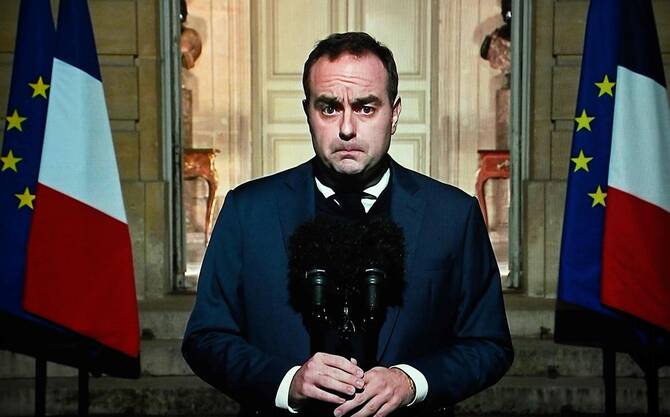
Lecornu, who has warned that kicking him out would spark early elections, defended the “responsible” budget while announcing further social benefits in a televised speech later Friday.
An additional 400 million euros would go toward social housing providers and low-income earners would see a top-up benefit increased by an average of 50 euros per month, he said while assuring there would be “no increase in taxes on households.”
Existing tax breaks to pensioners would also be preserved, along with student grants, he said.
Lawmakers from across the political spectrum have emerged exasperated after months of back and forth, and are looking for a swift resolution.
“I’m tired of having the same debate over and over again,” said right-wing Republicans lawmaker Marie-Christine Dalloz.
“I’m really looking forward to the end of this episode.”
Greens member of parliament Steevy Gustave said he felt like a “robot” repeating the same thing every day.
“If only there had been results, some compromises — but no,” he said.